Monetary policy mechanisms are crucial tools used by central banks to regulate the economy. Understanding these mechanisms helps businesses and individuals make informed financial decisions.
What is Monetary Policy?
Monetary policy refers to the actions undertaken by a central bank to manipulate the money supply, interest rates, and credit conditions to achieve macroeconomic objectives like price stability, economic growth, and financial stability. It works by influencing the amount of money circulating in the economy. Adjustments to the money supply can impact interest rates, consumer and business spending, and consequently, inflation and economic growth.
Key Mechanisms of Monetary Policy
Monetary policy operates through several key mechanisms:
- Open Market Operations (OMO): This involves the central bank buying or selling government bonds in the open market to increase or decrease the money supply. When the central bank buys bonds, it injects money into the banking system, lowering interest rates and encouraging investment and spending. Conversely, selling bonds reduces the money supply, raising interest rates, and curbing inflation.
- Reserve Requirements: The central bank mandates that commercial banks hold a certain percentage of customer deposits as reserves. Changes to this ratio affect banks’ lending capacity. A higher reserve requirement reduces the amount available for lending, while a lower ratio encourages lending.
- Discount Rate: This is the interest rate at which the central bank lends money to commercial banks. A high discount rate makes borrowing more expensive, while a low rate encourages borrowing.
Objectives of Monetary Policy
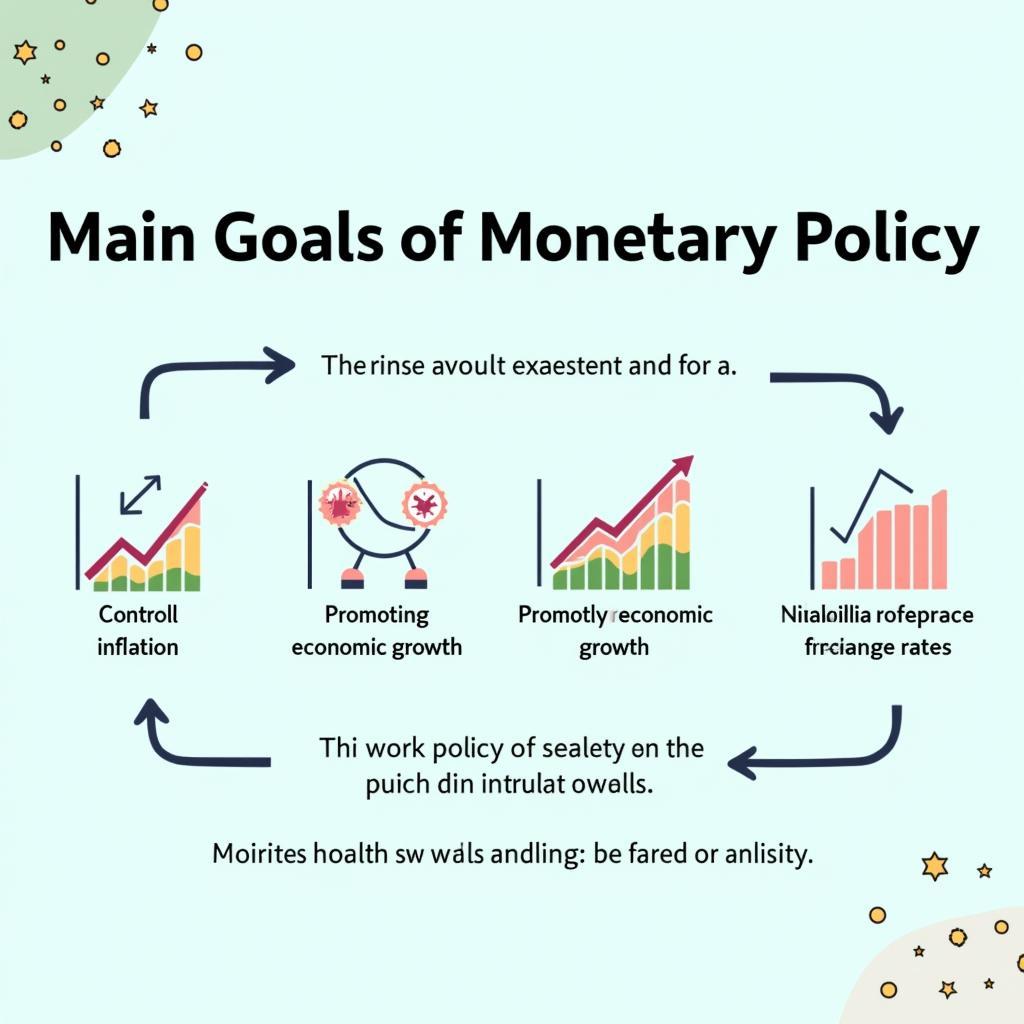
Monetary policy aims to achieve the following key objectives:
- Controlling Inflation: This is the primary objective. High inflation erodes the value of money and creates economic instability.
- Promoting Economic Growth: Monetary policy can stimulate investment and spending, thereby fostering economic growth.
- Stabilizing Exchange Rates: Monetary policy can influence exchange rates by affecting international capital flows.
Monetary policy objectives chart
Monetary Policy and Hanoi Trucks
Monetary policy impacts the truck market through interest rates. Low interest rates encourage businesses to invest in trucks for business expansion. Similar to the [policy update in April 2019], adjustments to monetary policy can influence businesses’ purchasing decisions. The [policy for ethnic minorities in mountainous areas] can affect the accessibility of loans for people in these regions to purchase trucks for production purposes.
Conclusion
Monetary policy mechanisms play a vital role in regulating the economy. Understanding these mechanisms empowers businesses and individuals to make sound financial decisions. A grasp of monetary policy also allows businesses in the transportation sector, such as Hanoi Trucks, to anticipate market trends and adapt their business strategies accordingly.
FAQ
- What is monetary policy?
- What are the main instruments of monetary policy?
- What are the objectives of monetary policy?
- Who is responsible for conducting monetary policy?
- How does monetary policy affect interest rates?
- How does monetary policy impact the economy?
- How does monetary policy differ from fiscal policy?
For assistance, please contact us at Phone: 0968239999, Email: [email protected] or visit us at: TT36 – CN9 Road, Tu Liem Industrial Zone, Phuong Canh Ward, Nam Tu Liem District, Hanoi. We have a 24/7 customer service team.









