“Know the enemy and know yourself, in a hundred battles you will never be in peril.” This ancient wisdom holds true, especially when you’re about to invest in a car. Buying a used car always carries risks, and distinguishing between officially imported and domestically assembled vehicles can be confusing. So how can you become a smart consumer and uncover a car’s true origin? This article will reveal valuable insights to confidently identify imported cars!
The Importance of Identifying Imported Cars
Correctly identifying an imported car isn’t just about showcasing a discerning taste in vehicles; it’s crucial for protecting your interests.
- Superior Quality: Fully imported cars are often praised for their quality, durability, and safety due to adherence to strict manufacturing and inspection processes in their country of origin.
- Resale Value: According to research by Robert Miller from the American Automotive Research Institute, imported cars generally retain their value better than domestically assembled cars, providing an economic advantage to owners.
- Avoid Costly Mistakes: Accurately identifying a car’s origin helps you avoid the risk of buying a low-quality, repaired, or deceptively priced vehicle.
Checking the VIN
Tips for Identifying Imported Cars
Here are some telltale signs of a genuinely imported car:
1. Check the Vehicle Identification Number (VIN):
- Every car has a unique “identity card” – its VIN.
- You can verify the car’s origin by checking the VIN on reputable websites or through official authorities.
- Officially imported cars usually have clearly printed VINs with no signs of tampering or alteration.
2. Pay Attention to Labels and Stickers:
- Fully imported cars typically have labels clearly indicating the origin, manufacturer, and specifications in English or the language of the manufacturing country.
- Labels should be intact, with sharp printing and no signs of peeling or forgery.
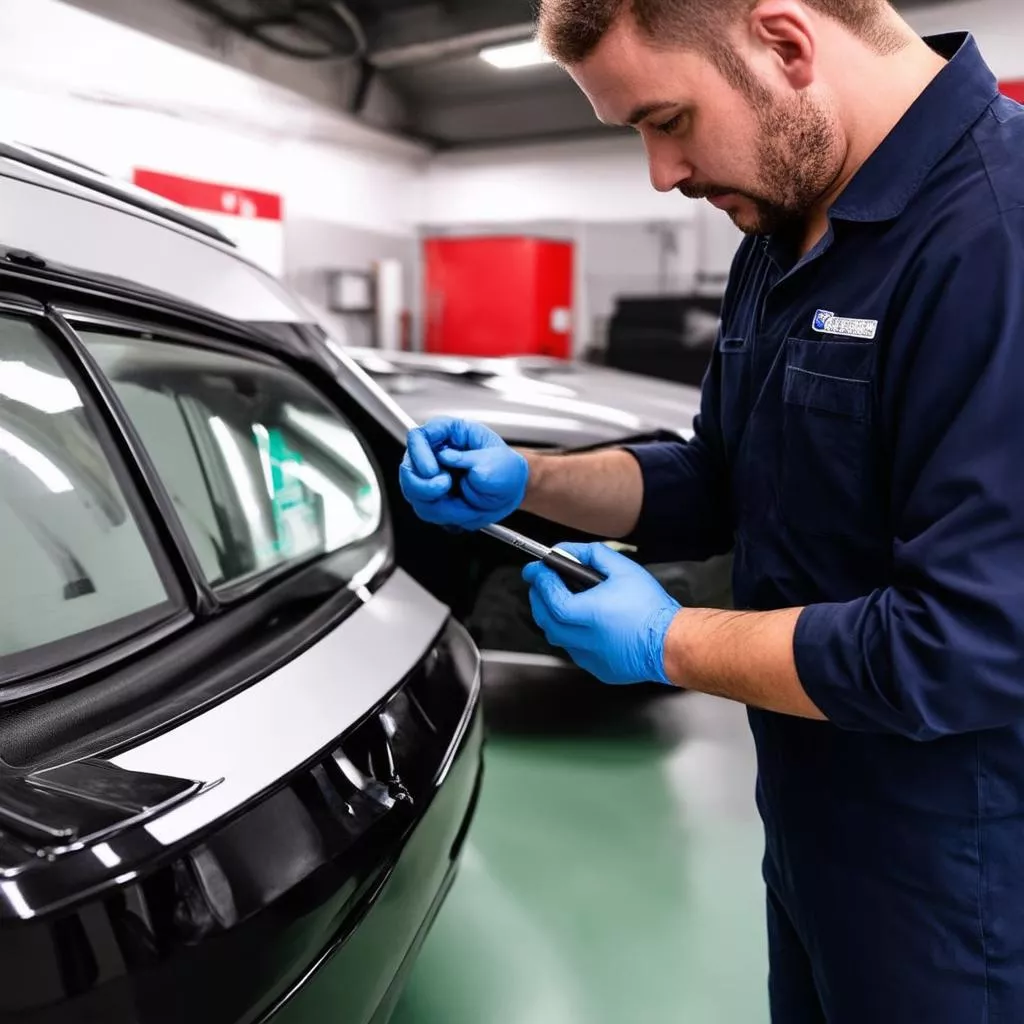
3. Inspect the Car’s Windows:
- Most imported car windows are printed or stickered with logos from renowned international glass manufacturers.
- You can use this to assess the origin and quality of the car’s glass.
4. Observe Small Details:
- Imported cars are often meticulously crafted, with features like sharp lines, tight joints, and high-quality materials.
5. Consult with Experts:
- If you’re unsure, seek advice from experienced individuals or automotive experts.
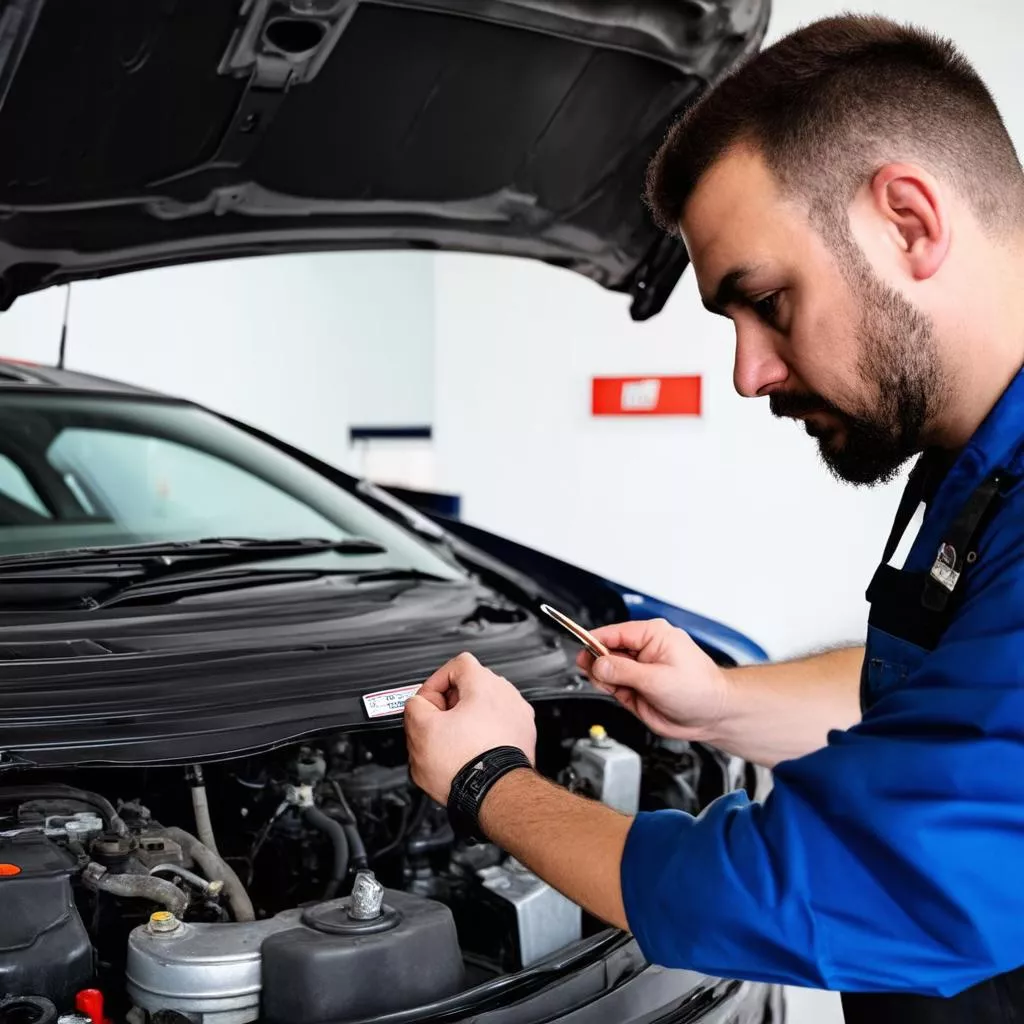 Checking car labels
Frequently Asked Questions About Identifying Imported Cars:
1. What’s the difference between privately imported and officially imported cars?
Privately imported cars are brought into Vietnam by businesses or individuals, while officially imported cars are imported by authorized distributors of the car manufacturer in Vietnam.
2. How can I distinguish between domestically assembled and fully imported cars?
Besides checking the VIN and labels, you can look for subtle details like paint quality, interior finishing, and sound insulation to differentiate them.
3. Where can I buy imported cars reliably?
To avoid buying low-quality vehicles, purchase from reputable dealerships or showrooms with complete and clear documentation.
Related Articles:
Conclusion
Hopefully, these insights have empowered you to confidently identify imported cars. Be a smart consumer and choose the car that best suits your needs!
Do you have any questions? Leave a comment below or contact us for a free consultation.
XE TẢI HÀ NỘI Dealership – Your companion on every road!
Hotline: 0968 239 999









