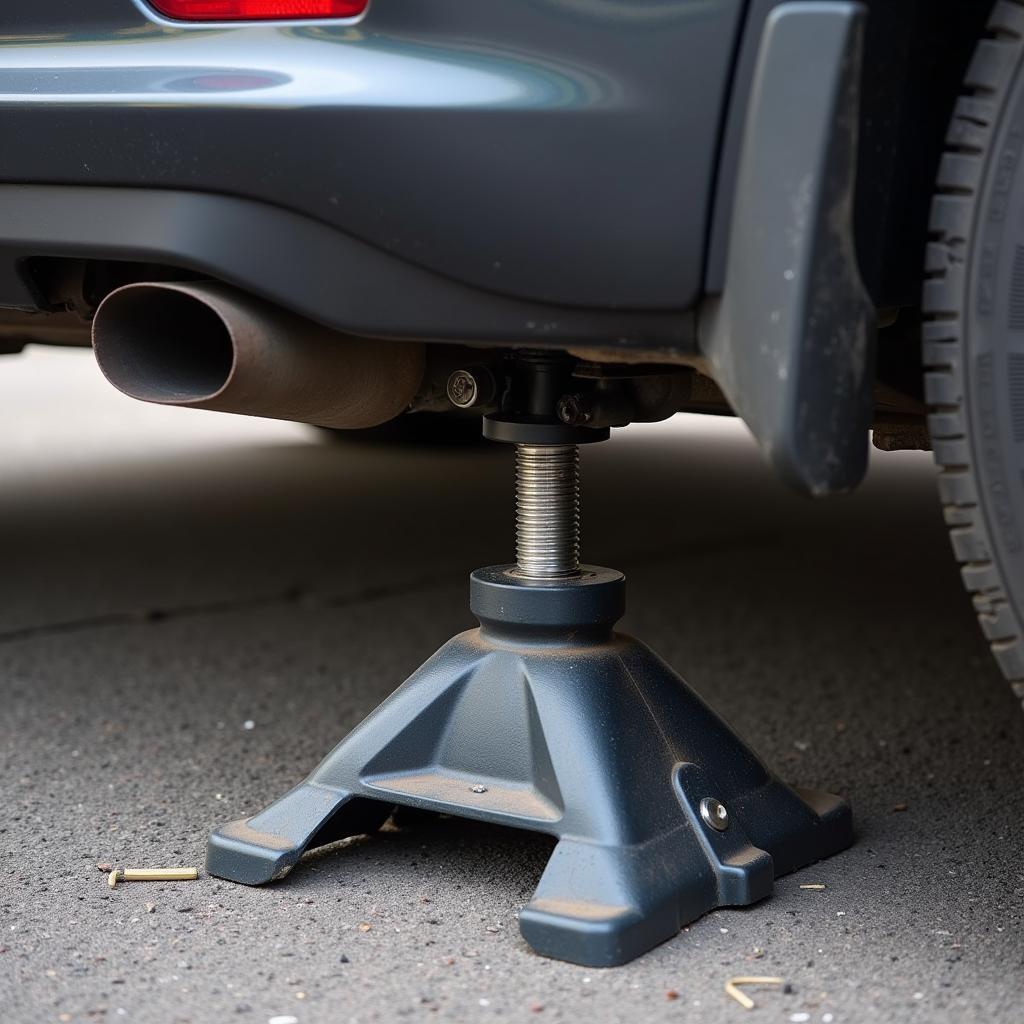
Experiencing a flat tire while driving can be frustrating. However, instead of panicking, you can confidently handle the situation if you know how to safely and effectively change a flat tire.
Essential Tools
Before you begin, ensure you have the following tools:
- Spare Tire: Regularly check your spare tire to ensure it’s in good condition and properly inflated.
- Car Jack: Choose a jack with a weight capacity suitable for your vehicle.
- Lug Wrench: Used to loosen the lug nuts on the wheel.
- Tire Repair Kit: Includes a tire plugging tool, sealant, and plugs.
- Tire Inflator: Used to inflate the tire after it’s been repaired.
- Gloves: Protect your hands from dirt and grease.
Step-by-Step Guide to Changing a Flat Tire
1. Park in a Safe Location
If you notice a flat tire, calmly reduce your speed and find a safe, level location to park. Turn on your hazard lights and engage the parking brake.
2. Prepare for Tire Change
Place heavy objects like bricks or blocks behind the wheel diagonally opposite the flat tire to prevent the car from rolling.
Positioning the car jack
3. Loosen the Lug Nuts
Using the lug wrench, turn it counterclockwise to loosen the lug nuts on the wheel. Don’t remove them completely; just loosen them enough for easy removal after the car is lifted.
4. Lift the Vehicle
Place the car jack in the designated spot on the vehicle’s frame. Consult your owner’s manual for the correct jack point. Slowly raise the vehicle until the flat tire is off the ground.
5. Remove the Wheel
Now, you can completely remove the lug nuts and gently pull the wheel off the axle.
6. Locate the Puncture
Carefully inspect the tire surface to find the object causing the puncture. You can use soapy water to locate the leak; bubbles will form at the puncture site.
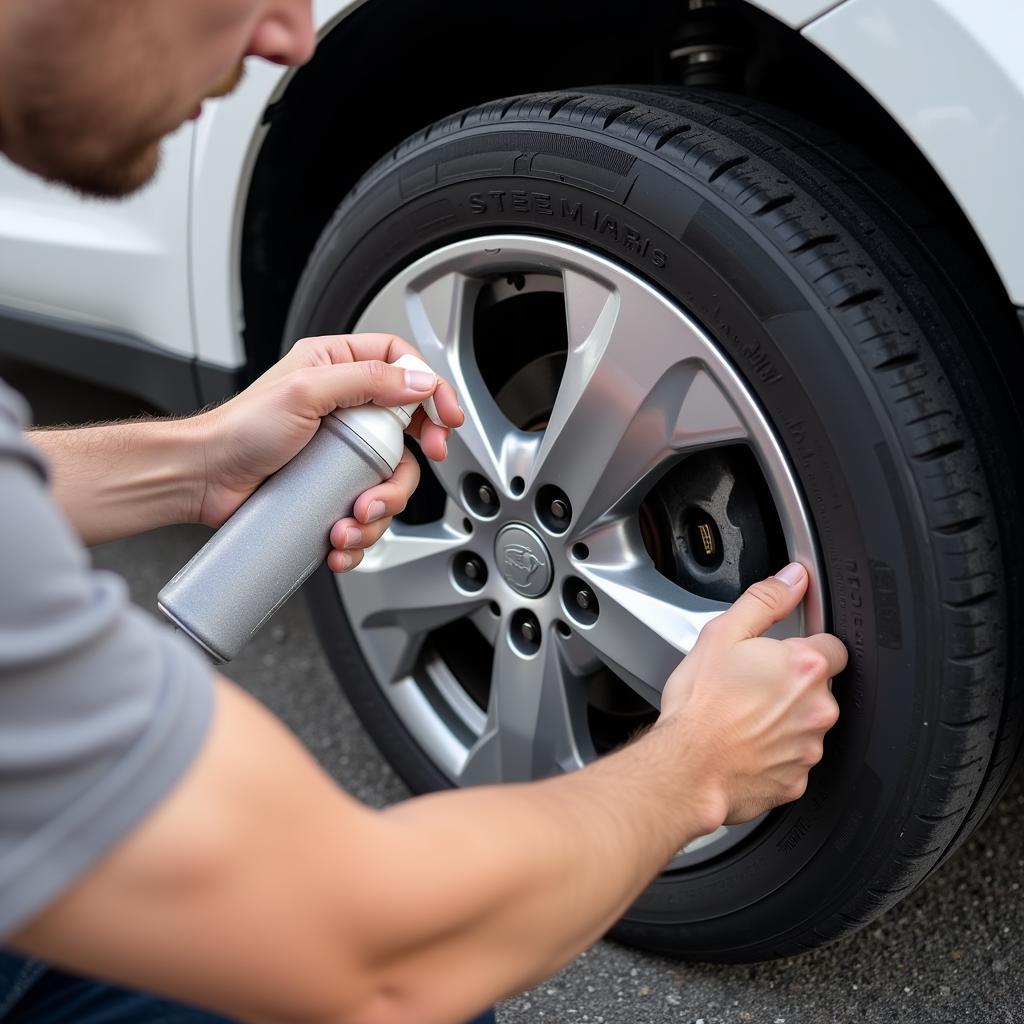 Identifying the puncture in the tire
7. Repair the Tire
- If using a temporary tire repair kit: Insert the sealant into the tire according to the product instructions. Then, inflate the tire using the inflator.
- If using a tire plug: Use the plugging tool to insert the plug into the puncture. Inflate the tire and check for leaks.
8. Reinstall the Wheel and Lower the Jack
Place the wheel back onto the axle and hand-tighten the lug nuts. Slowly lower the jack until the tire touches the ground.
9. Tighten the Lug Nuts
Using the lug wrench, tighten the lug nuts in a star pattern to ensure the wheel is securely fastened.
10. Check Tire Pressure
Use a tire pressure gauge to inflate the tire to the recommended pressure. You can find the recommended tire pressure on the doorjamb sticker or in your owner’s manual.
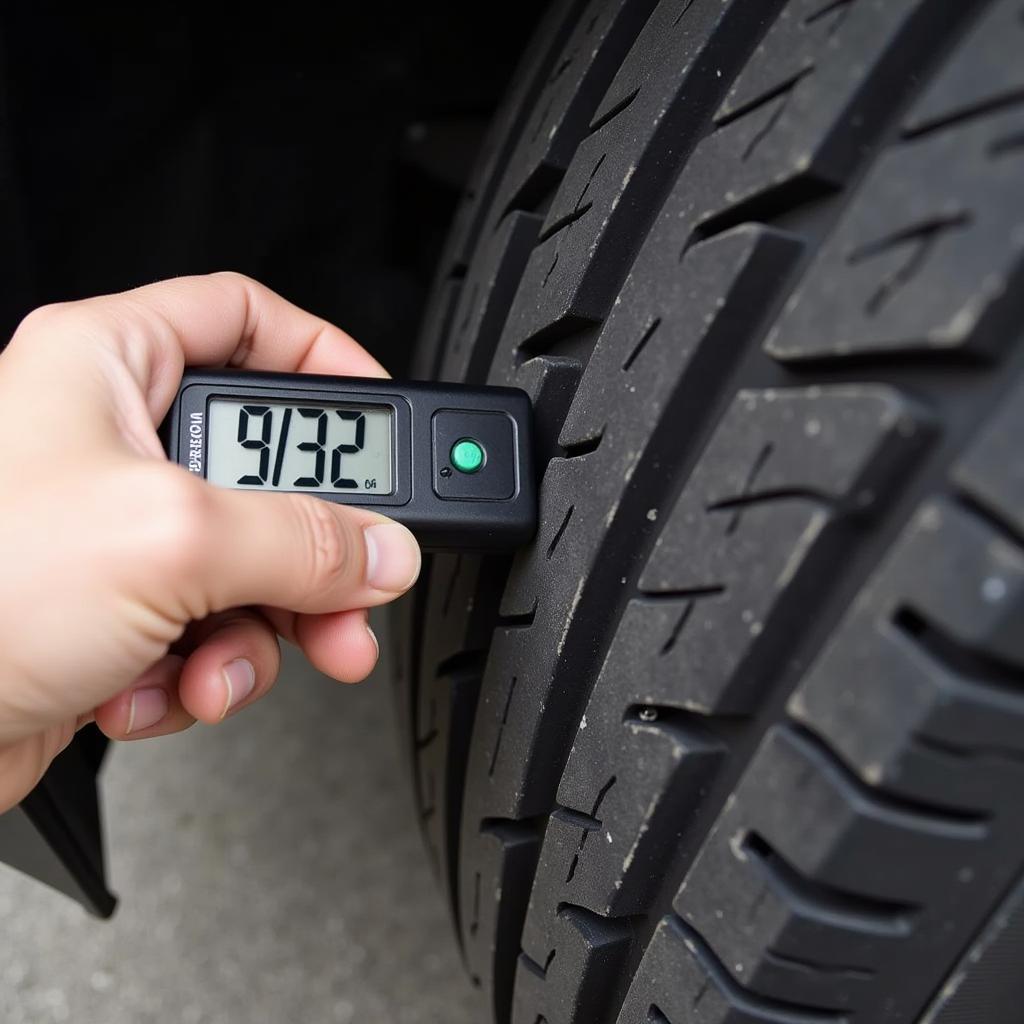 Using a tire pressure gauge
Important Considerations
- A roadside tire repair is only a temporary solution.
- After repairing a tire, drive slowly and visit a nearby tire shop for professional inspection and repair.
Frequently Asked Questions
1. How much does it cost to repair a flat tire?
The cost depends on the type of tire, the location of the puncture, and the repair method.
2. Should I repair or replace a flat tire?
If the puncture is repairable and the tire is in good condition, you can opt for a repair. However, if the tire is worn out or severely damaged, replacement is recommended for safety.
3. Where can I find a reputable tire repair shop?
Choose reputable auto repair shops with experienced technicians and high-quality tire repair materials.
Need Assistance?
Contact us at Phone: 0968239999, Email: [email protected] or visit us at: TT36 – CN9 Road, Tu Liem Industrial Zone, Phuong Canh Ward, Nam Tu Liem District, Hanoi. We have a 24/7 customer support team.
XE TẢI HÀ NỘI – Your trusted partner on every road!