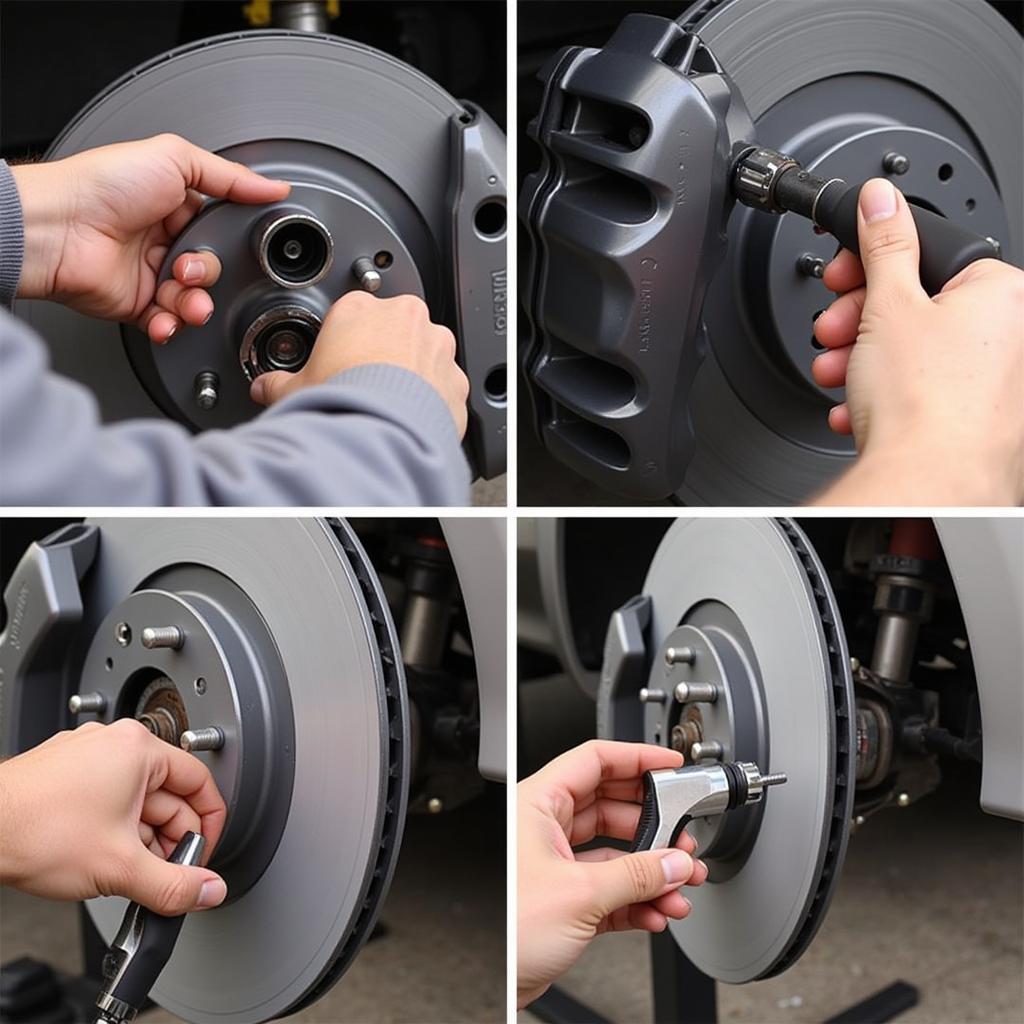
Brake fluid is a crucial component for ensuring a safe and effective braking system. Properly bleeding your car’s brakes removes air and contaminants, maintaining optimal braking performance.
Why Bleed Car Brakes?
Brake fluid is hygroscopic, meaning it absorbs moisture over time. This accumulated water vapor reduces braking effectiveness. Air can also enter the braking system, causing a “spongy brake pedal.” Bleeding the brakes eliminates air and moisture, allowing fresh brake fluid to perform efficiently. This ensures a stable and safe braking system.
When to Bleed Your Brakes?
Brake fluid should be replaced and bled according to the manufacturer’s recommendations, typically every two years or 40,000 kilometers. Additionally, bleeding is necessary in the following situations:
- Spongy or soft brake pedal.
- Discolored or contaminated brake fluid.
- Brake system repairs.
- Adding brake fluid after a leak.
Similar to learning to drive a manual car, bleeding brakes requires precision and care.
Bleeding car brakes properly
Steps to Bleed Car Brakes
Bleeding your brakes can be done by following these steps:
- Preparation: Gather necessary tools such as a wrench, clear tubing, a container for used brake fluid, new brake fluid of the correct specification, gloves, and clean rags.
- Locate the bleeder screw: The bleeder screw is usually located on the top of each wheel cylinder.
- Connect the tubing: Connect one end of the clear tubing to the bleeder screw and the other end to the container.
- Open the bleeder screw: Open the bleeder screw about 1/4 turn.
- Pump the brakes: Have someone sit in the car and pump the brakes several times until the pedal feels firm, then hold the pedal down.
- Bleed the fluid: Open the bleeder screw to allow old brake fluid to flow out, close the screw when the brake pedal is near the floor.
- Repeat steps 5 and 6: Repeat the pumping and bleeding process until fresh, bubble-free brake fluid flows out.
- Check the fluid level: Check the brake fluid level in the reservoir and top it off if necessary.
This process shares similarities with how to drive a car as both require an understanding of the vehicle’s systems.
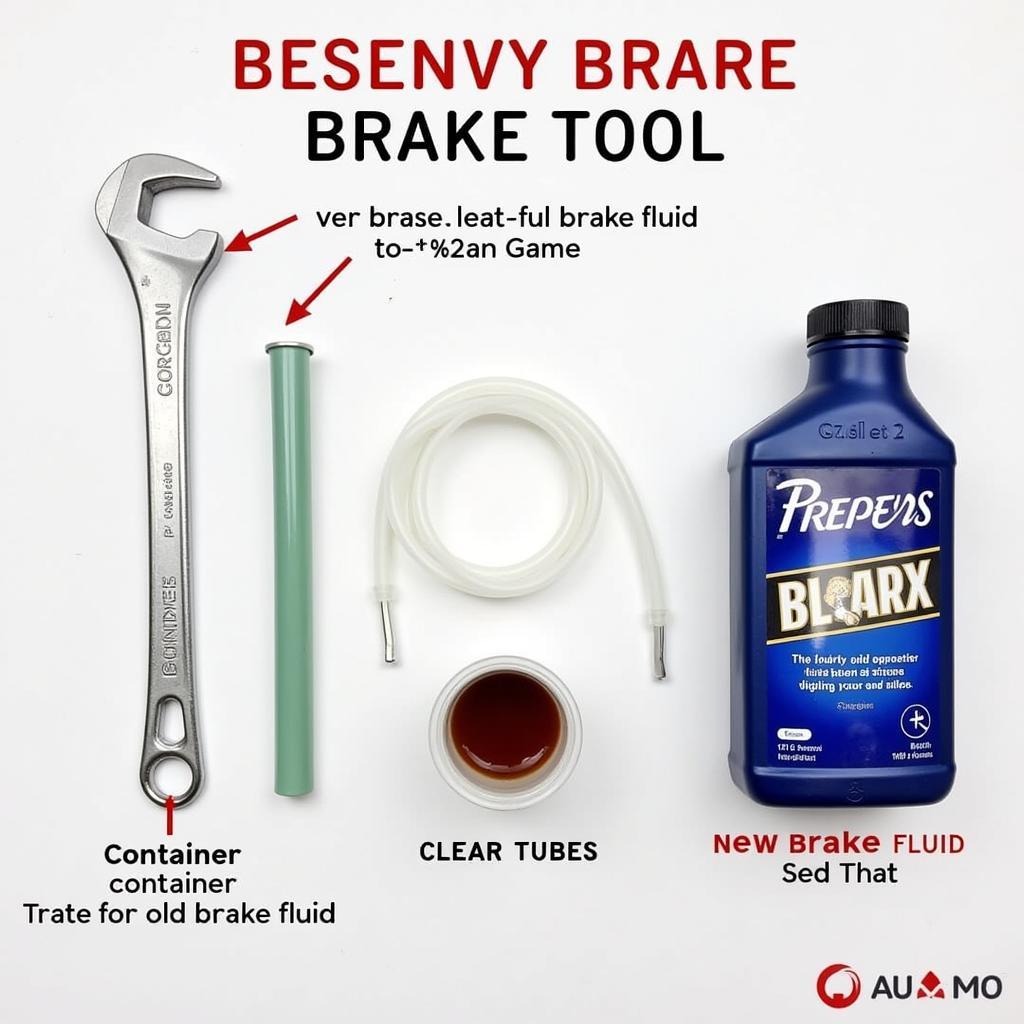 Car brake bleeding tools
Precautions When Bleeding Car Brakes
- Use the correct type of brake fluid as recommended by the manufacturer.
- Avoid contact between brake fluid and skin or car paint.
- Perform brake bleeding on a level surface.
- If unsure about the procedure, take your car to a reputable garage.
To learn more about Korean car parts in Hanoi, you can refer to additional resources.
Conclusion
Properly bleeding your car’s brakes helps maintain braking performance and ensures safety while driving. Perform this procedure regularly or when you notice any unusual signs.
FAQ
- Why is it necessary to bleed brakes?
- When should brakes be bled?
- What are the steps to bleed brakes?
- What precautions should be taken when bleeding brakes?
- What type of brake fluid is suitable for my car?
- How much does it cost to bleed brakes?
- Can I bleed my brakes at home?
A detailed example regarding the Mazda CX9 is…
For those interested in modern automotive and motorcycle technology, this content will be helpful…
For assistance, please contact us by phone: 0968239999, Email: [email protected] or visit our address: No. TT36 – CN9 Road, Tu Liem Industrial Park, Phuong Canh Ward, Nam Tu Liem District, Hanoi. We have a 24/7 customer support team.









