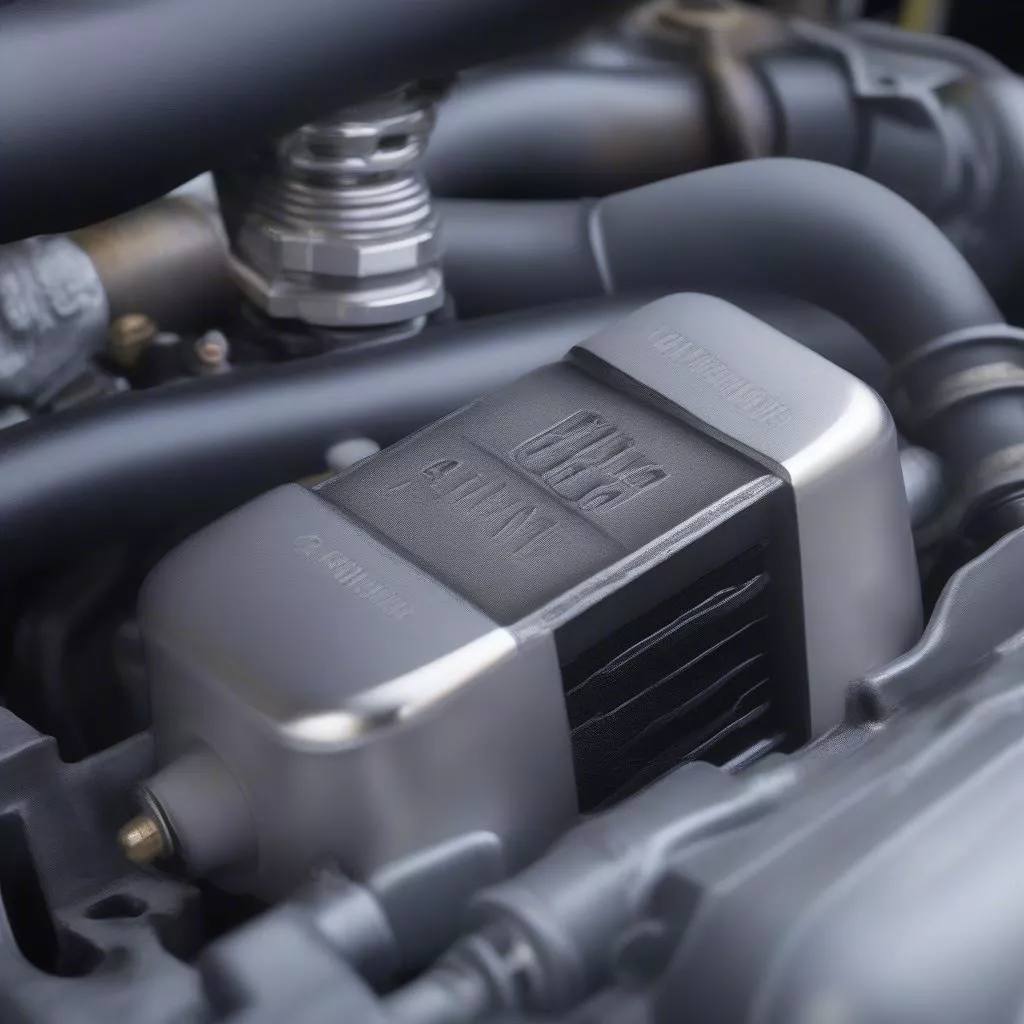
Have you ever wondered why your car emits strange exhaust fumes or the engine runs rough? The culprit might be the “oxygen sensor,” a silent component playing a crucial role in controlling emissions and optimizing engine performance.
The Importance of the Oxygen Sensor
The oxygen sensor, also known as a Lambda sensor, is a small but vital device in a car’s engine system. It acts as an “assistant” to the engine control unit (ECU), monitoring the oxygen level in the exhaust gas and adjusting the fuel supply to the engine for optimal performance.
How Does an Oxygen Sensor Work?
The oxygen sensor operates by measuring the oxygen concentration in the exhaust gas. It utilizes a ceramic coating containing zirconium oxide (ZrO2). As exhaust gases pass over this coating, voltage changes directly reflect the amount of oxygen in the exhaust. This information is transmitted to the ECU, enabling it to calculate the precise amount of fuel needed by the engine to maintain the optimal air-fuel ratio. This ensures smooth engine operation, minimizes harmful emissions, and optimizes fuel consumption.
The Role of the Oxygen Sensor
The oxygen sensor plays a vital role in:
Emission Control
By monitoring the oxygen level in the exhaust, the oxygen sensor enables the ECU to adjust the fuel supply, minimizing harmful emissions like carbon monoxide (CO), hydrocarbons (HC), and nitrogen oxides (NOx). This contributes to environmental protection and public health.
Engine Performance Optimization
The oxygen sensor helps the ECU adjust the fuel supply accurately, ensuring efficient engine operation, increasing power, and minimizing fuel consumption.
Oxygen sensor operation
Signs of a Failing Oxygen Sensor
When an oxygen sensor malfunctions, you might notice signs such as:
- Rough engine idling, misfires, and difficulty starting.
- Unusual exhaust fumes, potentially black or white smoke.
- Increased fuel consumption.
- Illuminated Check Engine Light.
How to Address a Failing Oxygen Sensor
If the oxygen sensor is faulty, it needs replacement. This procedure should be performed by qualified technicians.
Frequently Asked Questions about Oxygen Sensors
Does an oxygen sensor require regular maintenance?
Oxygen sensors typically don’t require regular maintenance. However, periodic checks alongside other car components are recommended to ensure proper vehicle operation.
Can an oxygen sensor be repaired?
Repairing an oxygen sensor is generally ineffective and potentially dangerous. If faulty, replacement with a new sensor is recommended.
Does an oxygen sensor affect Feng Shui?
The oxygen sensor is a technical component and has no relation to Feng Shui.
Recommendation
Regularly check the condition of your oxygen sensor to ensure stable vehicle performance, minimize harmful emissions, and save fuel.
Contact Us
For any inquiries about oxygen sensors, please visit our website https://xetaihanoi.edu.vn/cam-bien-oxy-xe-o-to/. We are available to assist you 24/7.
Disclaimer
This article is for informational purposes only and should not be considered professional advice. Consult a qualified auto mechanic for any vehicle issues.
 Replacing an oxygen sensor
Call to Action
Contact XE TẢI HÀ NỘI Dealership or call our Hotline: 0968 239 999 for consultation and support regarding oxygen sensors and other truck-related concerns.









