In a bustling alley off Nguyen Trai Street in Hanoi’s Thanh Xuan District, Tuan’s auto repair shop is always filled with customers. The clang of hammers blends with the roar of engines, creating a familiar street symphony. Today, he’s working on an old Hino truck for Mr. Bay, the owner of a corner store.
“Your truck’s carburetor seems worn out, Mr. Bay,” Tuan says, pointing to a small metal component hidden within the engine compartment. “It’s like the lungs of the vehicle, responsible for mixing fuel and air for smooth engine operation. If these ‘lungs’ have problems, the truck will be sluggish and consume a lot of fuel!”
Tuan’s explanation sparks curiosity about this vital component. So, what is the structure of a car carburetor? What is its function? Let’s delve into the details with Hanoi Trucks!
What is a Car Carburetor?
A carburetor is a crucial part of a gasoline engine system. Its job is to mix air and fuel in a specific ratio before sending the mixture to the combustion chamber for ignition. It operates based on the principle of pressure difference.
Detailed Structure of a Car Carburetor
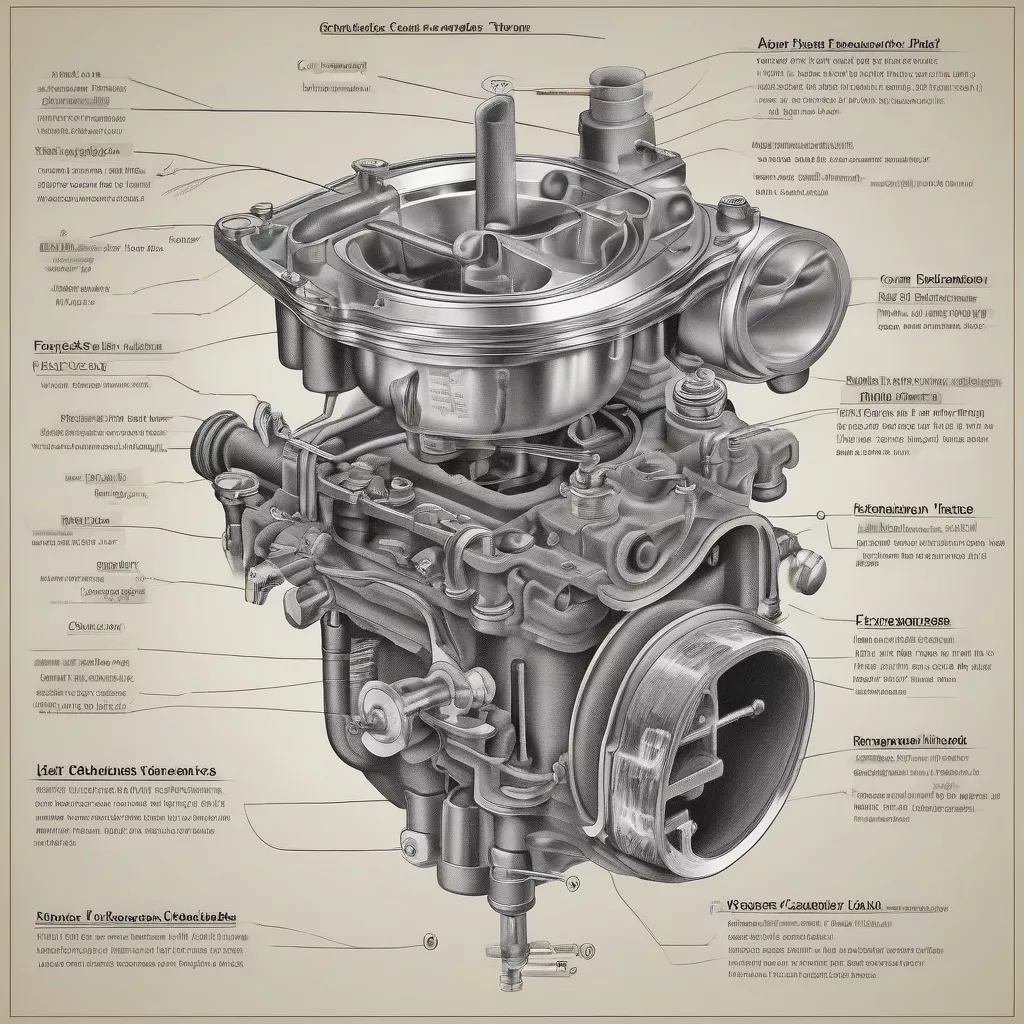
A car carburetor has a complex structure, consisting of many small interconnected parts. Here are some of the main components:
- Intake Manifold: The passageway for air from outside into the carburetor.
- Venturi: A narrow section that accelerates airflow and creates a low-pressure area to draw in fuel.
- Fuel Jet: Sprays fuel into the airstream at a specific rate.
- Float Chamber: Contains a float and needle valve, maintaining a constant fuel level within the chamber.
- Throttle Valve: Controls the amount of air and fuel mixture entering the engine based on the driver’s accelerator pedal input.
Carburetor Diagram
How a Carburetor Works
When the engine runs, the downward movement of the piston creates a vacuum in the cylinder. This vacuum draws air from outside into the carburetor’s intake manifold.
As air passes through the Venturi, its speed increases, and the pressure drops, creating a pressure difference with the float chamber. This difference draws fuel from the float chamber through the fuel jet, mixing it with the air to create a combustible mixture.
The ratio of air to fuel is adjusted by the size of the fuel jet and the position of the throttle valve.
Finally, the air-fuel mixture is delivered to the combustion chamber for ignition, generating power for the engine.
Advantages and Disadvantages of a Carburetor
Advantages:
- Simple structure, easy to repair and maintain.
- Less expensive than electronic fuel injection systems.
Disadvantages:
- Less precise air-fuel mixing, leading to inefficient engine operation, higher fuel consumption, and increased emissions.
- Difficulty starting the engine in cold weather.
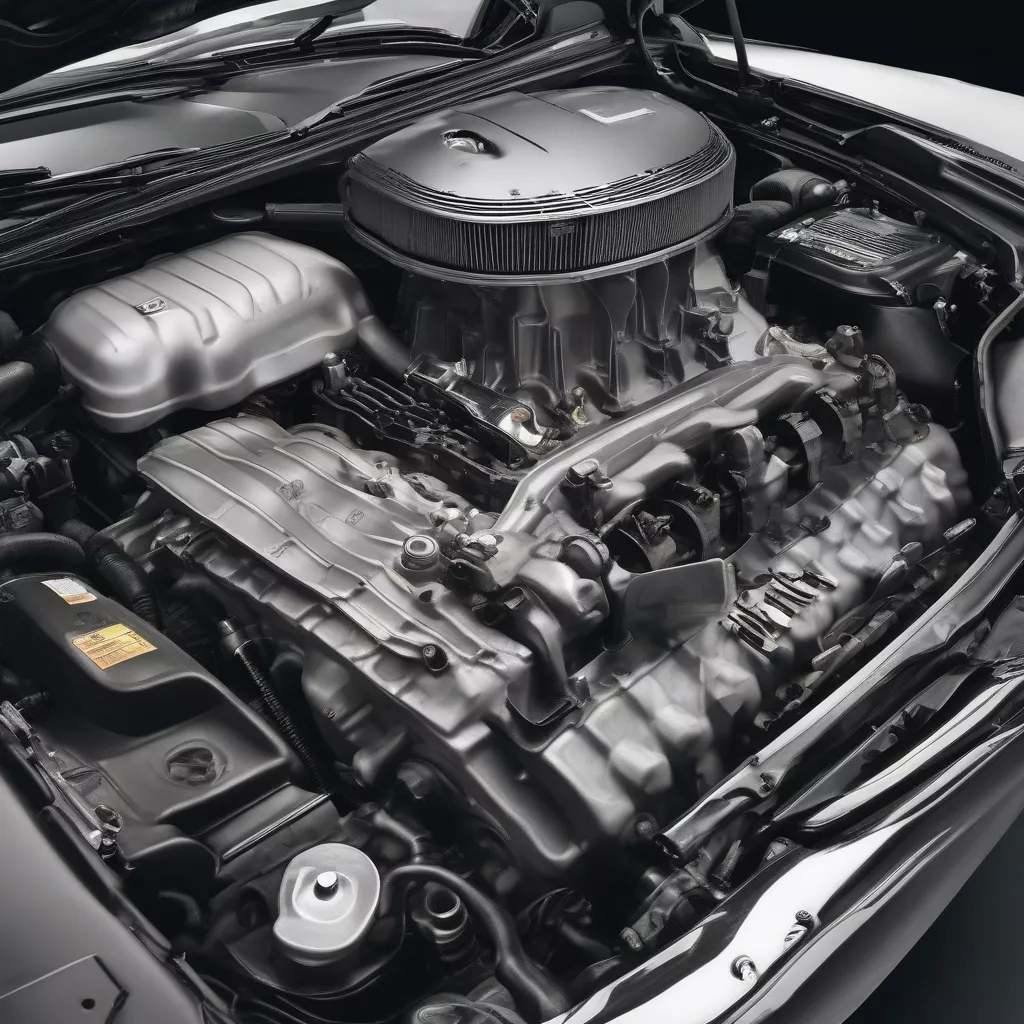 Car Engine
Frequently Asked Questions about Car Carburetors
Question: Does my truck use a carburetor or an electronic fuel injection system?
Answer: Most older trucks use carburetors. However, manufacturers now use electronic fuel injection systems in newer trucks for better engine performance and reduced emissions.
Question: How should I maintain a car carburetor?
Answer: You should clean the carburetor regularly (every 3,000 – 5,000 km) to remove dirt and ensure efficient operation.
Question: Can I replace a car carburetor myself at home?
Answer: Replacing a carburetor requires specialized knowledge and skills. It’s recommended to take your vehicle to a reputable garage for assistance.
For Quality Trucks, Visit Hanoi Trucks
If you’re looking to buy a truck, visit Hanoi Trucks – the leading provider of genuine, high-quality trucks at competitive prices.
We have showrooms and dealerships across Hanoi in districts like Cau Giay, Long Bien, Ha Dong… You can easily find the nearest location for consultation and product experience.
In addition, Hanoi Trucks provides professional and reliable truck maintenance and repair services. Our experienced and dedicated team of technicians will surely satisfy you.
Similar Products
Besides trucks, Hanoi Trucks also offers a variety of vehicles such as:
- Dump trucks
- Tractor trucks
- Specialized vehicles
Conclusion
Hopefully, this article has provided a clearer understanding of the structure of a car carburetor. Although carburetors are gradually being replaced by electronic fuel injection systems, understanding their structure and operating principles remains valuable knowledge for those passionate about engines.
If you have any questions, please leave a comment below or contact Hanoi Trucks directly for answers.
Don’t forget to visit our website xetaihanoi.edu.vn to explore more interesting articles about trucks!









