“A stitch in time saves nine,” as the old saying goes. With cars, besides regular maintenance, understanding the “heart that starts it all” – the starter motor, is also a way to extend the life of your beloved vehicle. So, how is a car starter motor constructed, and how does it work? Let’s delve into the details with XE TẢI HÀ NỘI in this article!
Car Starter Motor Structure – A Detailed “Anatomy”
The starter motor, also known as the starter, is an indispensable part of a car’s starting system. Its task is to convert electrical energy from the battery into mechanical energy, transmitting it to the flywheel to help the engine start.
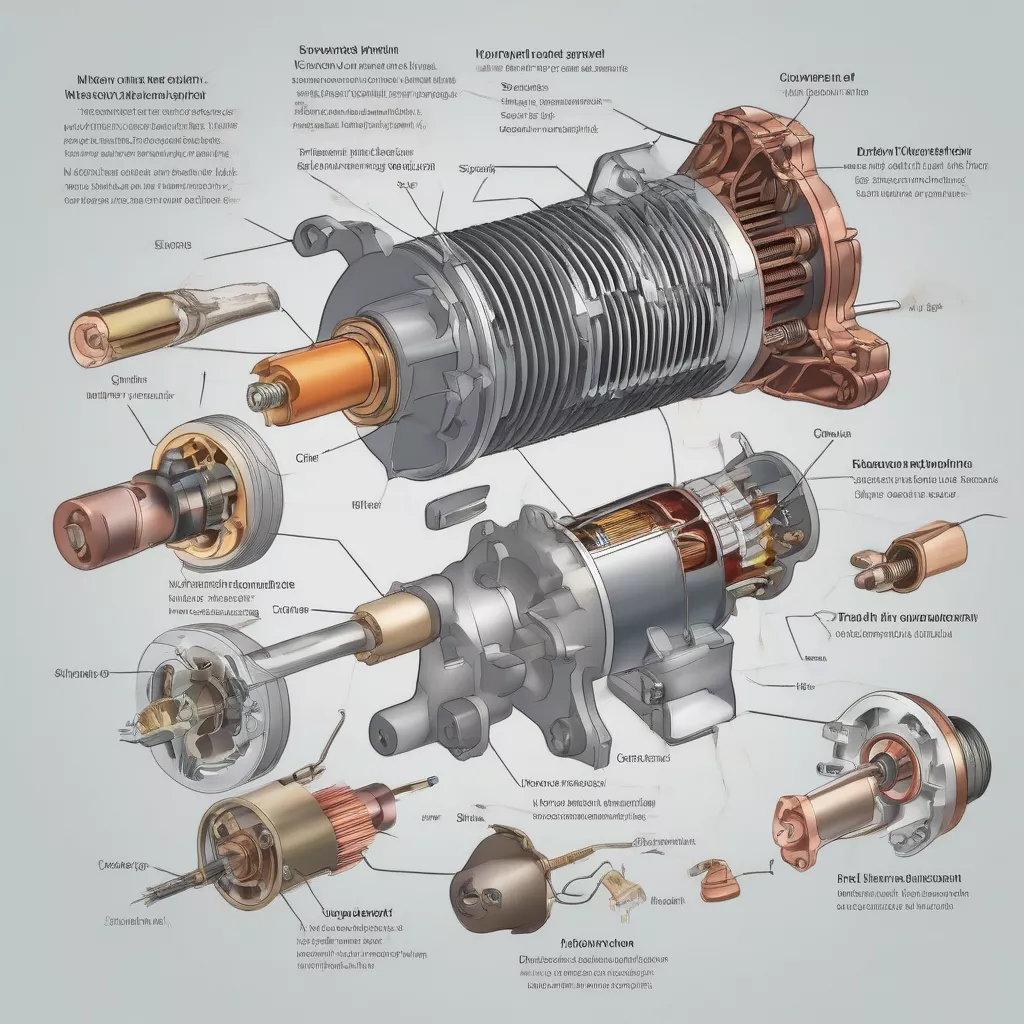
Main Components of a Car Starter Motor:
- Starter Housing: Typically made of steel or aluminum alloy, it protects the internal components.
- Armature: Consists of an iron core and copper windings, mounted on a rotating shaft. When an electric current flows through it, the armature generates a magnetic field, interacting with the permanent magnet’s field to create torque that rotates the engine.
- Permanent Magnet: Positioned around the armature, it creates a fixed magnetic field to interact with the armature.
- Carbon Brushes and Commutator: Carbon brushes, made of graphite, contact the commutator on the armature’s rotating shaft, conducting electricity from the outside to the armature windings.
- Drive Gear (Pinion): Mounted on the armature shaft, it engages with the teeth on the flywheel, transferring rotational force to start the engine.
- Control Unit: Can be a solenoid or a relay, responsible for switching the field current and armature current on and off.
How a Car Starter Motor Works
When you insert the key into the ignition and turn it to the “Start” position, electricity from the battery flows to the starter motor. This current activates the solenoid inside the starter, creating a magnetic force that pulls the drive gear into mesh with the flywheel’s teeth. Simultaneously, current flows to the armature, generating a magnetic field. This field interacts with the permanent magnet’s field, creating torque that spins the armature and the drive gear. The drive gear transmits this rotational force to the flywheel, causing the engine to crank and start.
Car starter motor components
Why Understanding Your Car Starter Motor Matters
Understanding the structure and operating principles of the starter motor helps you:
- Detect Early Signs of Damage: Unusual noises during startup, slow cranking, or failure to start are signs that the starter motor might be having problems.
- Handle Basic Troubleshooting: Checking and cleaning the starter, replacing carbon brushes, and checking the battery are tasks you can perform yourself when the starter malfunctions.
- Avoid Getting Overcharged for Repairs: Knowledge about the starter empowers you when taking your car to a mechanic, preventing unnecessary repairs or inflated prices.
Tips for Using Your Car Starter Motor:
- Avoid continuous cranking for extended periods; each attempt should not exceed 5 seconds.
- Regularly inspect and clean the starter, especially the carbon brushes and commutator.
- Use a genuine battery to ensure a stable power supply to the starter.
 Hanoi Truck Company
Frequently Asked Questions about Car Starter Motors
1. What is the lifespan of a car starter motor?
The lifespan of a starter motor depends on factors like quality, usage conditions, and maintenance. On average, a starter can last for about 5-7 years or 100,000 km.
2. When should I replace my car starter motor?
You should replace the starter when there are signs of severe damage such as: loud noises during starting, failure to crank, worn-out carbon brushes, or broken gears.
3. How much does a car starter motor cost?
The price depends on the car model and brand. You can check starter prices at reputable auto parts stores or contact XE TẢI HÀ NỘI for detailed advice.
4. Can I replace my car starter motor myself?
Replacing a starter requires specific knowledge and skills. If you are not familiar with car mechanics, it’s best to take your car to a reputable garage for replacement.
XE TẢI HÀ NỘI – Your Trusted Source for Car Starter Motors in Hanoi
Are you looking for genuine starter motors at reasonable prices? Come to XE TẢI HÀ NỘI – a specialist in providing genuine, reliable, and high-quality auto parts in Hanoi. We guarantee:
- Genuine products with clear origins.
- Competitive prices and attractive offers.
- Experienced technicians and dedicated customer service.
Contact XE TẢI HÀ NỘI for the best advice and support:
- Address: [XE TẢI HÀ NỘI Address]
- Hotline: [XE TẢI HÀ NỘI Phone Number]
- Website: xetaihanoi.edu.vn
Related Products
Besides car starter motors, XE TẢI HÀ NỘI also offers a wide range of other auto parts such as batteries, starter kits, alternators, spark plugs, air filters, oil filters, and more.
Conclusion
The starter motor is a crucial component that determines a car’s starting capability. Understanding its structure, working principles, and maintenance helps extend the life of your vehicle’s “heart.” If you need further advice on car starter motors or related issues, don’t hesitate to contact XE TẢI HÀ NỘI.
Share this article with your friends and don’t forget to visit xetaihanoi.edu.vn for more useful information about cars!









