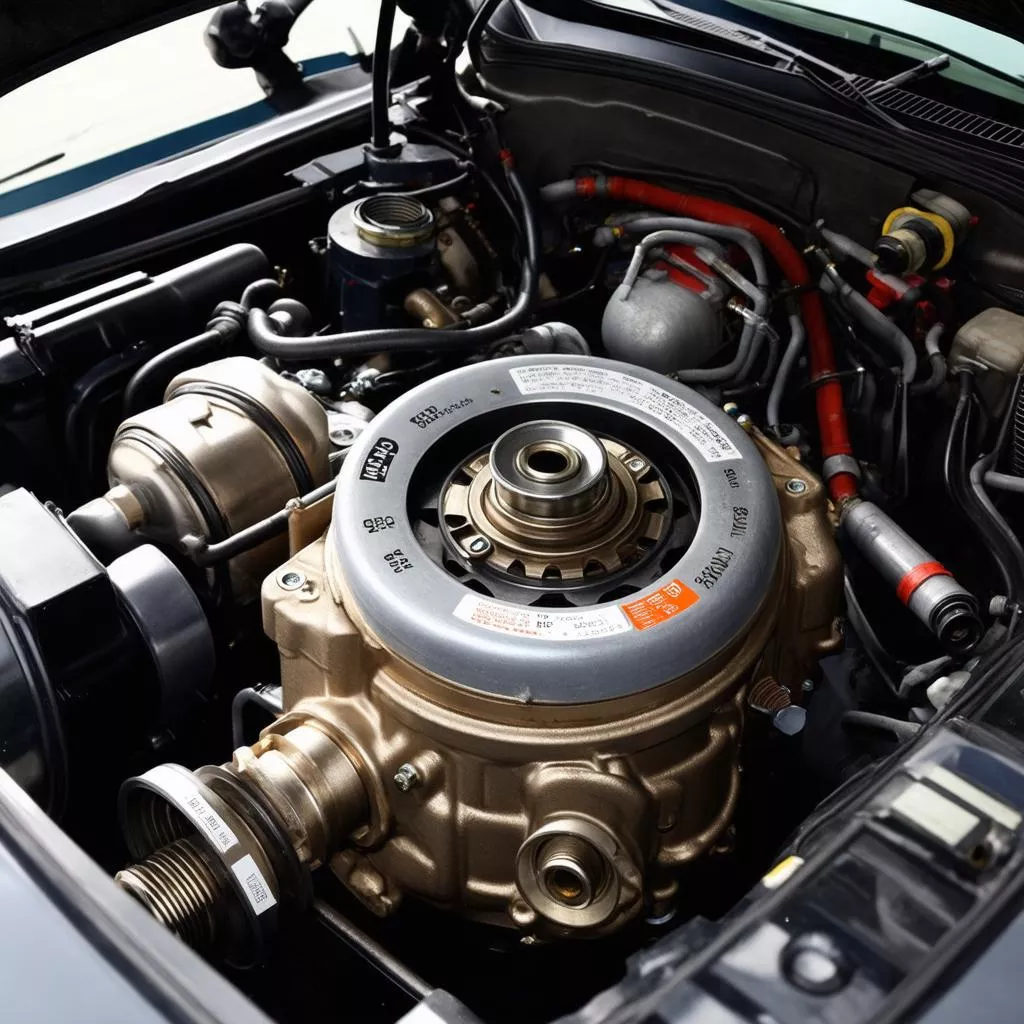
“Heatwave!” This word often becomes a nightmare when summer arrives. But do you know that hidden inside your cool car is a complex system with the “heart” being the AC compressor? Let’s explore the structure of a car AC compressor with xetaihanoi.edu.vn!
The Importance of Understanding Your Car AC Compressor
From a Regular User’s Perspective
Do you find it frustrating when your car AC isn’t working efficiently? Understanding the compressor’s structure allows you to:
- Proactively Maintain: Grasp the “health” of your compressor, enabling timely maintenance and extending its lifespan.
- Detect Problems Early: Recognize unusual signs, preventing severe damage and costly repairs.
From a Technical Perspective
The compressor is the most crucial component, determining the efficiency of the entire AC system. Understanding its structure helps you:
- Choose the Right Compressor: Select the appropriate type for your needs, ensuring optimal cooling performance.
- Repair and Replace Accurately: Avoid errors and ensure the system’s stable operation.
Car AC Compressor Components
Decoding the Structure of a Car AC Compressor
While seemingly complex, the structure of a car AC compressor is relatively easy to understand with its main components:
1. Pulley & Clutch: Starting the Cooling Process
The pulley is driven by the car engine via a belt. When you turn on the AC, the clutch connects the pulley to the compressor shaft, initiating the cooling process.
2. Piston & Cylinder: The Magical Compression “Engine”
Similar to a car engine, the piston and cylinder work in sync, drawing in low-pressure refrigerant from the evaporator and compressing it to high pressure.
3. Suction & Discharge Valves: Regulating the Refrigerant Flow
These two “gatekeepers” control the refrigerant flow: the suction valve allows low-pressure gas in, and the discharge valve pushes high-pressure gas out to the condenser.
4. Lubricating Oil: Protecting the Heart
Lubricating oil plays a crucial role in lubricating moving parts, reducing friction, and ensuring the compressor’s long-lasting operation.
A Real-Life Story: When the Compressor “Protests”
Mr. Minh, a seasoned truck driver, shared: “One day, during a long drive, the AC suddenly weakened, the airflow was weak, and there was a burning smell. Luckily, I checked it in time; it turned out to be due to a lack of lubricating oil. I almost burned out the compressor!”
 Car AC Compressor Lubricating Oil
Frequently Asked Questions About Car AC Compressors
1. What are the Signs of a Failing Compressor?
- Weak AC cooling and airflow.
- Unusual noises from the engine compartment.
- A burning smell.
2. When Should I Replace the Compressor?
- The compressor is severely damaged and beyond repair.
- Repair costs exceed replacement costs.
3. How Do I Choose the Right Compressor?
It depends on the car model, capacity, and operating conditions. Consulting an experienced technician is recommended.
Related Questions
- How does a car AC compressor work?
- What are the common types of car AC compressors?
- Tips for maintaining a car AC compressor?
Related Products
- Denso Car AC Compressor
- Sanden Car AC Compressor
- Valeo Car AC Compressor
Need More Advice on Trucks?
Contact XE TẢI HÀ NỘI for free consultation and to find your perfect truck!
Hotline: 0968 239 999
Website: https://xetaihanoi.edu.vn
Conclusion
Understanding the structure of a car AC compressor is key to “mastering” your AC system and enjoying cool and safe journeys. Like and share this article to help everyone learn this valuable information!









