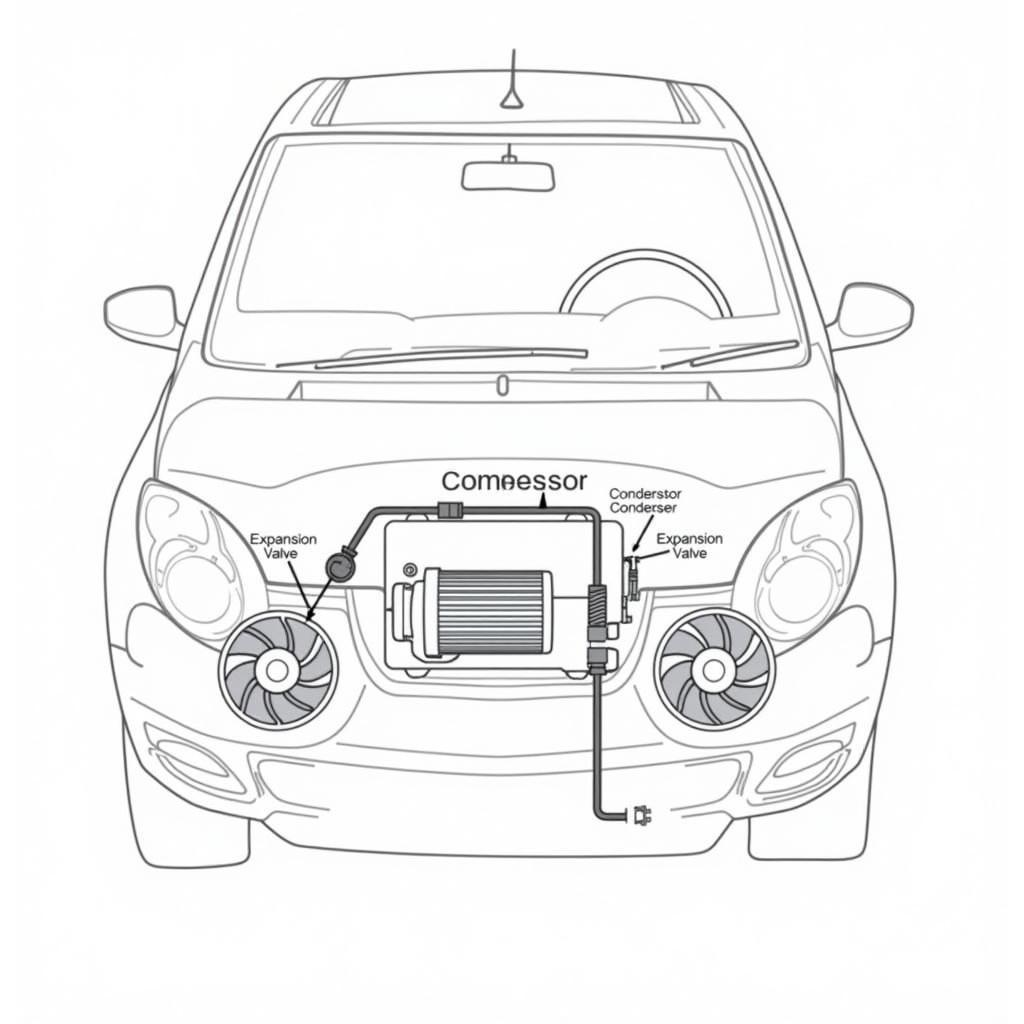
The car AC system, also known as the air conditioning system, plays a crucial role in creating a comfortable environment for the driver and passengers, especially in hot and humid climates. Understanding the structure of the car’s AC system will help you maintain and use it more effectively.
Main Components of a Car AC System
A car’s AC system is a complex system consisting of many components working together. Here are the main components:
- Compressor: Compresses refrigerant gas from low pressure to high pressure. This is considered the “heart” of the entire system.
- Condenser: Cools high-pressure refrigerant gas, converting it from gas to liquid.
- Evaporator: Absorbs heat from the air inside the car, cooling the air and creating cold air.
- Expansion Valve: Regulates the amount of refrigerant entering the evaporator, maintaining proper pressure and temperature.
- Condenser Fan: Helps cool the condenser quickly, increasing cooling efficiency.
- Evaporator Fan: Blows air through the evaporator and delivers cool air into the car cabin.
Right after this introduction, we would like to recommend our article on how to eliminate car odors, a common problem when using air conditioning.
Detailed diagram of a car AC system
How a Car AC System Works
The system operates in a closed cycle. The compressor compresses the refrigerant, pushing hot, high-pressure gas to the condenser. There, the gas is cooled and condensed into a liquid. This liquid refrigerant passes through the expansion valve, reducing pressure and becoming a cold vapor. The cold vapor enters the evaporator, absorbing heat from the air inside the car and cooling the air. The evaporator fan blows the cool air into the car. Finally, the refrigerant returns to the compressor to start a new cycle.
Car AC Maintenance
Regular maintenance helps maintain cooling performance and extends the life of the system.
- Refrigerant Recharge: Refrigerant should be replaced periodically as recommended by the manufacturer.
- Condenser and Evaporator Cleaning: Removing dirt and debris from the condenser and evaporator helps increase cooling efficiency.
- Leak Check: Detect and promptly address any refrigerant leaks.
- Compressor, Expansion Valve, and Other Component Checks: Ensure all components are functioning properly.
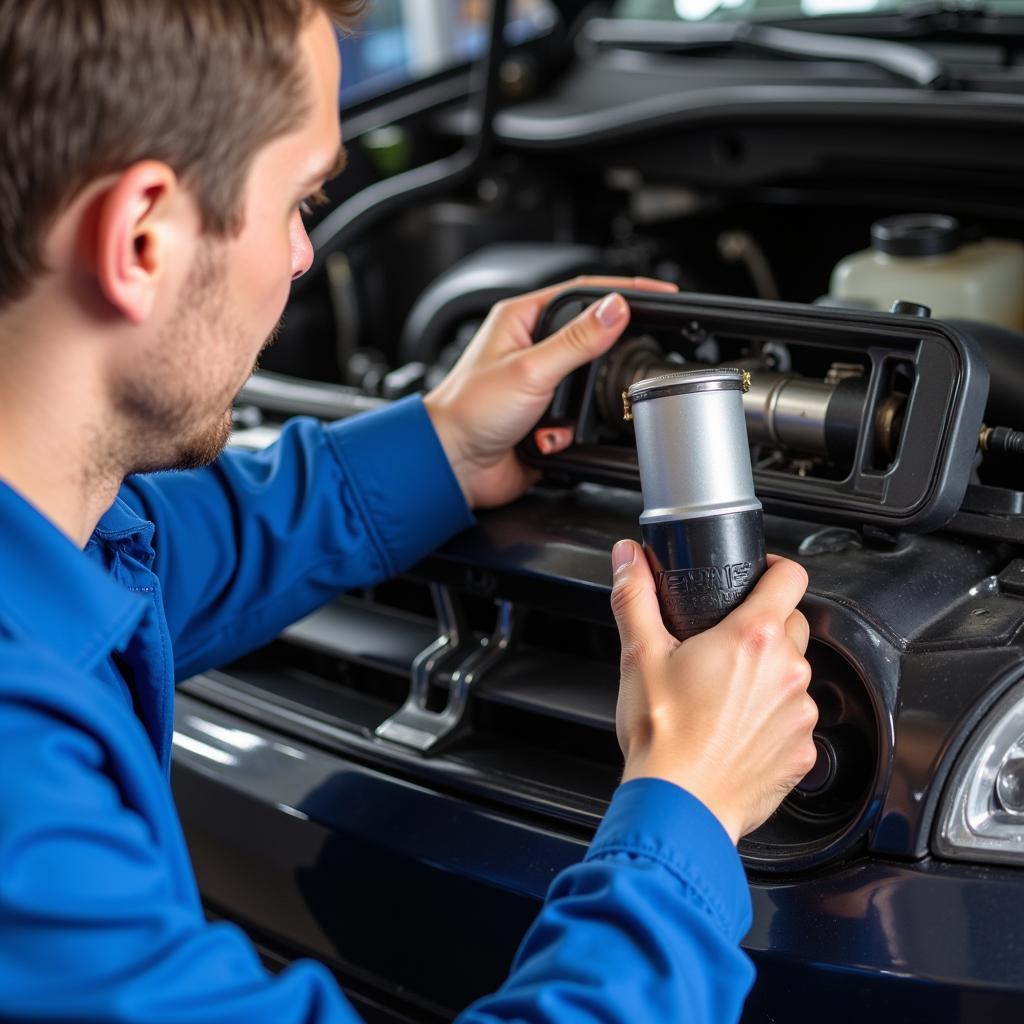 Regular car AC maintenance
Common Car AC Problems
Some common problems include:
- System not cooling or cooling poorly.
- Foul odors in the car when the AC is turned on.
- Strange noises coming from the system.
- Refrigerant leaks.
If you encounter any problems, you should take your car to a reputable garage for inspection and repair.
Conclusion
Understanding the structure of a car’s AC system helps you use and maintain the system effectively, ensuring comfort while driving. Regular maintenance helps extend its lifespan and avoid unexpected breakdowns.
FAQ
- When should car AC refrigerant be replaced?
- How to clean the car AC condenser and evaporator?
- What are the signs of a car AC refrigerant leak?
- Why does the car AC smell bad?
- Where should car AC maintenance be performed?
- What is the cost of car AC maintenance?
- How to extend the life of a car AC system?
Frequently Asked Questions:
- My car is not cooling, what should I do?
- The AC is making loud noises, is the compressor broken?
- There’s a bad smell in the car when the AC is on, what’s the cause?
Suggested Questions and Other Articles on Our Website:
- You can learn more about car leather seat repair on our website.









