A car’s structure is a complex system of interconnected parts. Understanding these components will help you operate and maintain your vehicle more effectively. This article breaks down the main parts of a car.
Chassis: The Foundation of a Car
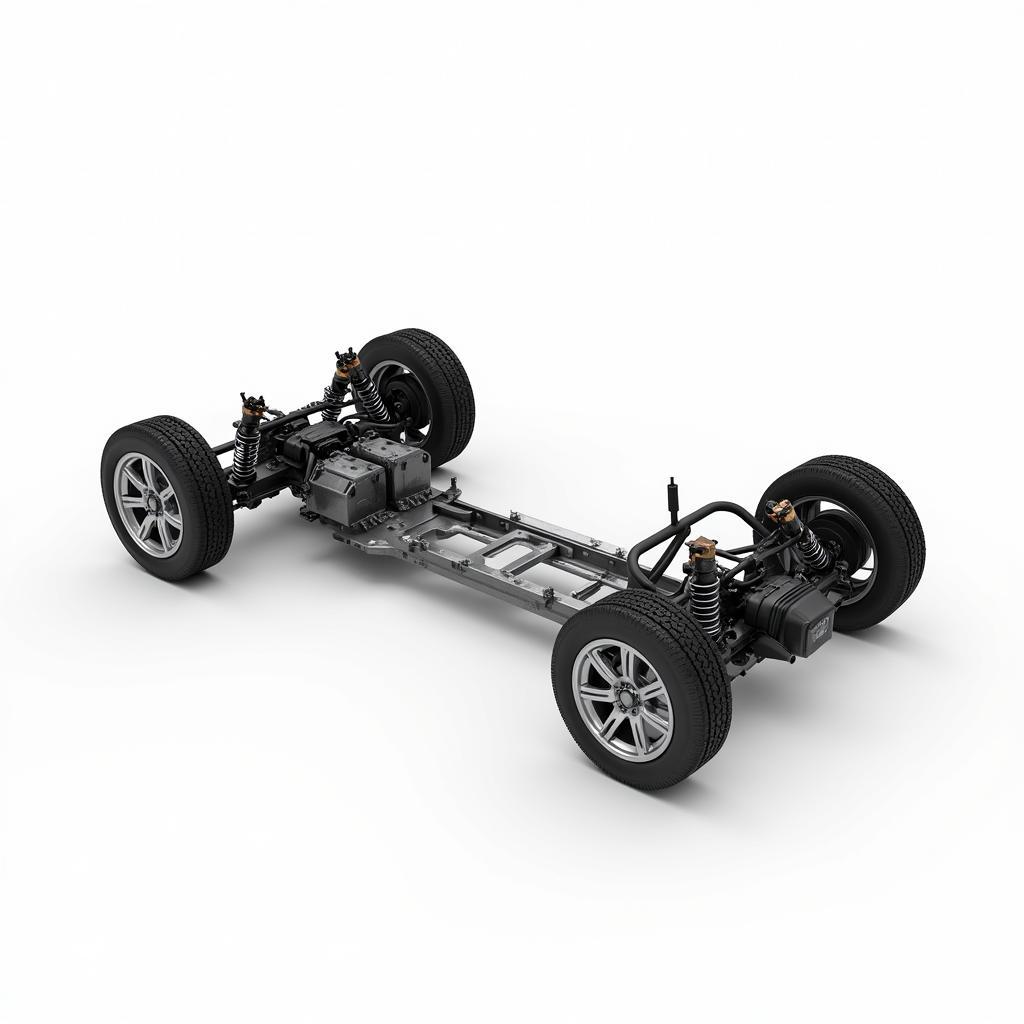
The chassis is the most crucial part of a car, forming its backbone. It supports the entire weight of the vehicle, including the engine, transmission, body, and passengers. A sturdy chassis ensures stability and safety during operation. You can learn more about car dimensions Kia Morning car dimensions.
Main Components of the Chassis
A car chassis typically includes the suspension system, steering system, braking system, and wheels. The suspension system absorbs shocks and ensures a smooth ride on uneven roads. The steering system allows the driver to control the direction of the car. The braking system slows down and stops the car safely. The wheels are in direct contact with the road, transmitting traction and enabling movement.
Car chassis diagram
Engine: The Heart of a Car
The engine generates the power that makes a car move. There are various types of engines, including gasoline, diesel, electric, and hybrid engines. Each type has its advantages and disadvantages, making it suitable for different vehicles and usage needs.
How an Engine Works
An engine works by converting energy from fuel (gasoline, diesel) or electricity into kinetic energy. This process occurs within the engine’s cylinders through the combustion of fuel or the interaction between magnets and coils. Understanding how an engine works helps you maintain and use your car more efficiently. You might be interested in car repair internship report.
Transmission: Connecting the Engine and Wheels
The transmission system transfers power from the engine to the wheels, enabling the car to move. This system includes the gearbox, driveshaft, differential, and related components. The gearbox changes gear ratios, adjusting the car’s speed and torque.
Common Transmission Types
Several types of transmissions are available, such as manual, automatic, continuously variable transmission (CVT), and semi-automatic transmissions. Each type has unique characteristics, making it suitable for different vehicles and driving styles. The automotive industry is constantly evolving; you can learn more about the Korean automotive industry.
Car Body: The Protective Shell
The car body is the outer shell that protects passengers and internal components from environmental factors. It is typically made of steel, aluminum, or composite materials. The body’s design impacts the car’s aerodynamics and aesthetics.
Electrical System: The Car’s Nervous System
The electrical system powers the electronic devices in the car, including lights, horns, the entertainment system, air conditioning, and safety systems. It plays a crucial role in ensuring comfort and safety during operation. You might also be interested in car parking ramps. Or learn about signs of a weak car alternator.
Conclusion
In summary, a car’s structure consists of the chassis, engine, transmission, body, and electrical system. Each part plays a vital role, contributing to a complete vehicle. Understanding car structure helps you choose, operate, and maintain your car more effectively.
FAQ
- What are the basic components of a car?
- What is the role of the chassis in a car?
- How does a car engine work?
- What is the function of the transmission system?
- What materials are used to make a car body?
- How important is the electrical system in a car?
- What should I do to maintain my car properly?
For assistance, please contact us by phone: 0968239999, Email: [email protected] Or visit us at: TT36 – CN9 Road, Tu Liem Industrial Park, Phuong Canh Ward, Nam Tu Liem District, Hanoi. We have a 24/7 customer service team.









