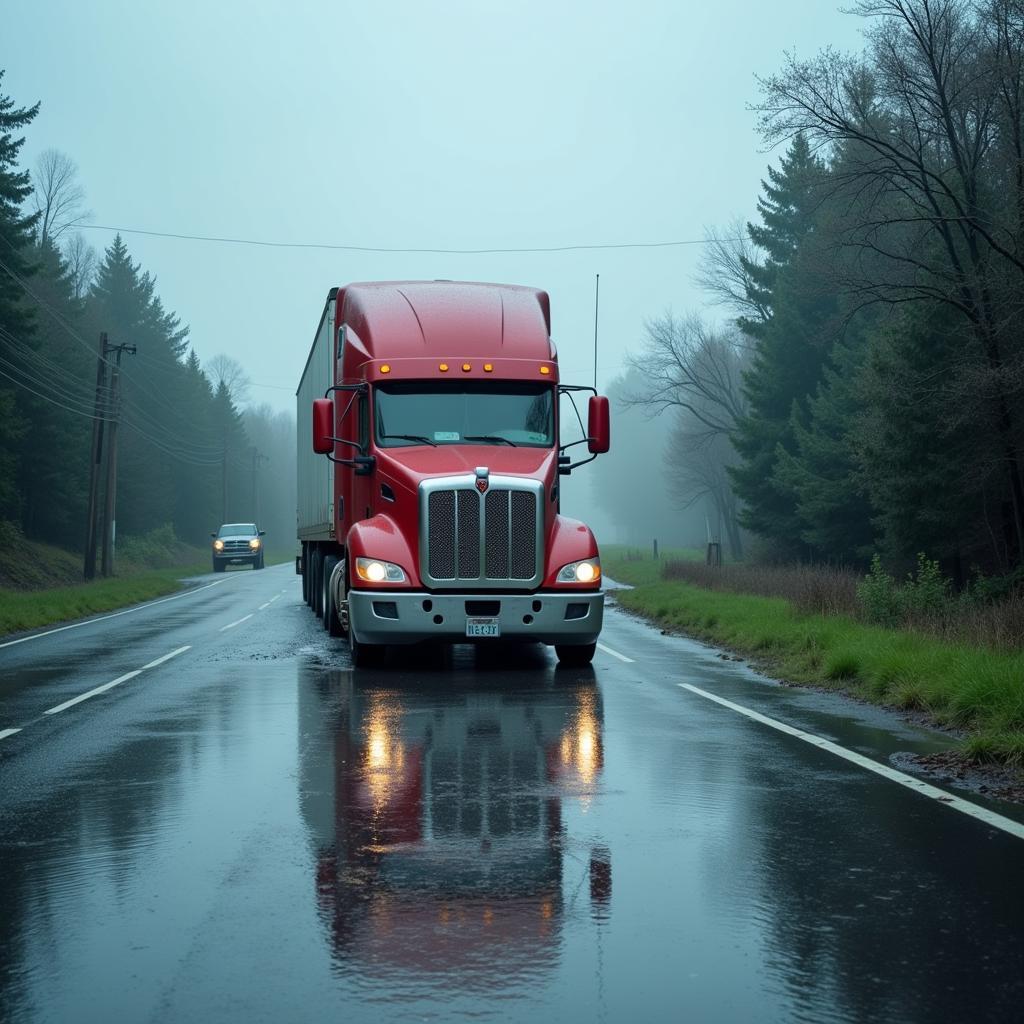
Climate change is one of the biggest challenges facing the world today, significantly impacting all aspects of socio-economic life. The trucking industry, a critical component of the global supply chain, is not immune to these effects. This article delves into climate change policies and their impact on the trucking industry.
How Climate Change Impacts the Trucking Industry
Climate change affecting transportation
Climate change leads to extreme weather events like floods, droughts, and extended heat waves. These phenomena directly affect transportation operations:
- Supply Chain Disruptions: Natural disasters damage roads and bridges, causing traffic congestion, delaying freight transportation, and disrupting supply chains.
- Increased Operating Costs: Extreme heat increases fuel consumption and vehicle maintenance costs. Damage caused by natural disasters also leads to higher repair and replacement part expenses.
- Impact on Driver Health: High temperatures can cause respiratory and cardiovascular problems for drivers, impacting their work efficiency and road safety.
Climate Change Policies and the Trucking Industry
To combat climate change, many countries and international organizations have enacted policies and regulations to control and reduce carbon emissions in the transportation sector, particularly within the trucking industry.
Emission Standards
Many countries are implementing increasingly stringent emission standards for new trucks. These standards set limits for CO2, NOx, and other pollutants, forcing manufacturers to research and implement new technologies to produce more environmentally friendly trucks.
Promoting Clean Energy Use
Governments worldwide are offering incentives and financial support to encourage businesses and individuals to adopt trucks powered by clean energy sources like electricity and hydrogen.
Adapting to Climate Change Policies – Opportunities and Challenges
Climate change policies present both opportunities and challenges for the trucking industry.
Challenges:
- Initial Investment Costs: Trucks utilizing new technologies and clean energy often have higher upfront costs compared to traditional trucks.
- Infrastructure Limitations: The network of charging stations and hydrogen fueling stations for clean energy trucks is still underdeveloped.
Opportunities:
- Fuel Savings and Reduced Operating Costs: “Green” trucks offer better fuel efficiency and lower maintenance and repair costs.
- Enhanced Brand Image and Reputation: Utilizing environmentally friendly trucks enhances a company’s image and reputation with customers and partners.
Solutions for the Vietnamese Trucking Industry
To adapt to climate change policies, the Vietnamese trucking industry needs to:
- Raise Awareness: Increase education and outreach efforts on climate change and its impact on the trucking industry.
- Embrace Technological Innovation: Encourage businesses to invest in new technologies and adopt fuel-efficient, environmentally friendly trucks.
- Improve Infrastructure: Accelerate the development of charging and clean fuel infrastructure.
- Support Businesses: Implement policies to support businesses in transitioning to new vehicles and accessing new technologies.
Conclusion
Climate change policies present both challenges and opportunities for the trucking industry. By proactively adapting, innovating, and collaborating, the Vietnamese trucking industry can transform these challenges into opportunities for sustainable growth.
Need advice on the right truck for your needs?
Contact XE TẢI HÀ NỘI today for expert advice from our experienced team.
Phone Number: 0968239999
Email: [email protected]
Address: No. TT36 – CN9 Road, Tu Liem Industrial Zone, Phuong Canh Ward, Nam Tu Liem District, Hanoi.









