“Where there’s a will, there’s a way,” an old Vietnamese proverb, proved true after the economic crisis of 1980. The country faced immense challenges. However, with a spirit of resilience, the government implemented transformative policies that revitalized the economy and paved the way for robust growth.
1. Vietnam’s Economy Post-1980: A Precarious Situation
Vietnamese economy after 1980
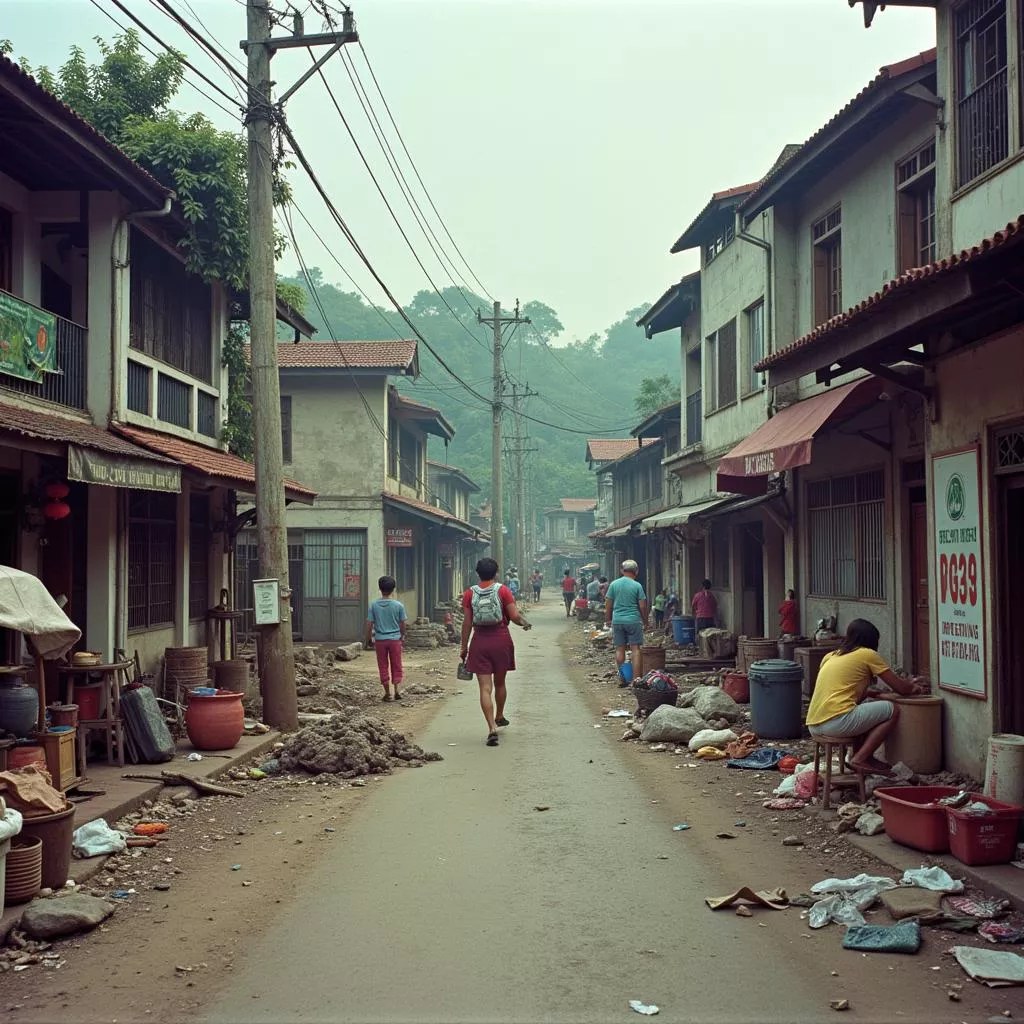
Following the reunification war, Vietnam’s already depleted economy faced further hardship due to the inefficient subsidy system and outdated production methods. Inflation soared, living standards plummeted, and shortages of food and essential goods became widespread. Professor Nguyen Van A, in his book “Vietnam’s Economy: From Subsidy to Integration” (2010), described this period as extremely precarious, demanding drastic measures for economic recovery.
2. Renovation Policy: A Remedy for the Economy
Recognizing the dire situation, the 6th Party Congress in 1986 introduced the “Doi Moi” policy, a comprehensive renovation that marked the beginning of a significant economic transformation.
2.1. Economic Thinking: From Subsidy to Market
The government boldly abolished the centralized, bureaucratic subsidy system and transitioned to a socialist-oriented market economy. This opened doors for the private sector, fostering competition and creating a synergistic force for economic growth.
 Economic reform in Vietnam
2.2. Promoting Agricultural Production
Recognizing the crucial role of agriculture, the government implemented the “Khoan 10” policy, allocating land to farmers and incentivizing agricultural production. This resulted in a dramatic increase in food production, transforming Vietnam from a poverty-stricken nation to a leading rice exporter.
2.3. Attracting Foreign Investment: Cooperation for Development
Vietnam actively integrated into the global economy, enacting the Foreign Investment Law to attract foreign capital. Industrial parks and export processing zones sprung up in major cities like Hanoi and Ho Chi Minh City, attracting billions of dollars in investment and fueling economic growth.
3. Results: Reaping the Rewards of Reform
Like rain on parched land, the renovation policies brought about a bountiful harvest for the Vietnamese economy. Economic growth accelerated significantly, inflation was controlled, and living standards improved dramatically.
 Results of economic reforms
4. Lessons Learned: The Value of Hard Work and Adaptability
The post-1980 renovation policies offer invaluable lessons for Vietnam’s continued development. They highlight the importance of innovation, flexibility, adapting to changing circumstances, and the enduring spirit of self-reliance and hard work of the Vietnamese people.
Want to learn more about economic development policies or find the right trucks for your business? Contact XE TẢI HÀ NỘI!
Phone: 0968239999
Email: [email protected]
Address: No. TT36 – CN9 Road, Tu Liem Industrial Zone, Phuong Canh Ward, Nam Tu Liem District, Hanoi.
We have a 24/7 customer service team.









