
The policy of sending public servants for training is crucial for enhancing the capacity of the civil service workforce. This training helps meet the increasing demands of the job, especially in the context of international integration.
Importance of Public Servant Training Policy
Training public servants is not only an investment in individuals but also an investment in the sustainable development of the country. The policy of sending public servants for training plays a key role in ensuring the quality of human resources and improving the operational efficiency of state agencies. A well-trained civil service contributes to building a professional, transparent, and effective administrative system. This policy also motivates public servants to strive for professional development, thereby serving the people better. Training helps civil servants update their knowledge, grasp global development trends, and propose and implement policies appropriate to the practical situation.
Professional training enhances public servant capacity
Principles of the Public Servant Training Policy
The policy of sending public servants for training is built on the following basic principles: fairness, transparency, effectiveness, and practicality. Fairness is demonstrated by creating equal opportunities for all public servants to participate in training. Transparency is reflected in the clear and open selection process. Effectiveness is evaluated based on training outcomes and practical application. Practicality is demonstrated in selecting training programs that align with job requirements and agency development orientations. This policy also needs to ensure flexibility and suitability for each specific target group and condition. For example, young public servants should focus on fundamental knowledge and soft skills training. For leadership positions, the focus should be on advanced management and leadership training programs. Similar to the 13 policies for ethnic minorities, training needs to be tailored to the specific characteristics of each group.
Key Contents of the Public Servant Training Policy
This policy includes key contents such as: eligible trainees, training methods, training duration, training costs, and the rights and obligations of selected public servants. Eligible trainees include public servants working in state agencies. Training methods can be domestic or international, centralized or on-site. Training duration depends on the specific program. Training costs are allocated from the state budget or other legitimate funding sources. Public servants sent for training are entitled to benefits and policies as prescribed. At the same time, they are obligated to complete the training program and apply the acquired knowledge to their practical work. For those interested in the public policy lecture, this content will be useful.
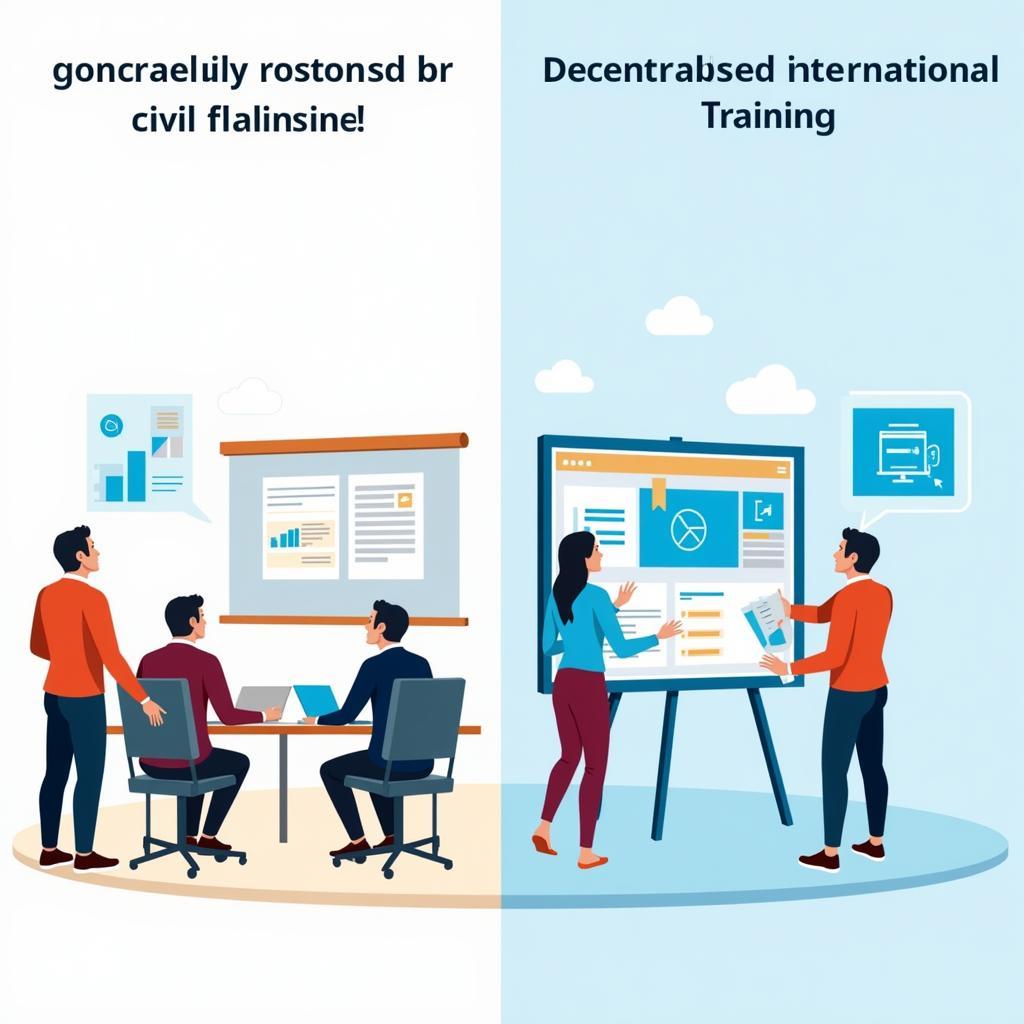 Public servant training methods: Domestic, international, centralized, on-site
Considerations for Policy Implementation
For the policy of sending public servants for training to be effective, attention must be paid to selecting the right candidates, the right training programs, and the right timing. It is necessary to strengthen the management and supervision of the training process and evaluate training outcomes. Furthermore, there should be mechanisms to encourage and motivate public servants to apply their acquired knowledge in practice. A detailed example regarding salary, social security policy & benefits is considering salary increases and promotions for public servants with good performance after completing training courses. This shares similarities with the significance of criminal policy as both aim to improve and enhance work quality.
 Evaluating public servant training effectiveness through practical application
Conclusion
The policy of sending public servants for training is crucial for enhancing the capacity of the civil service, meeting the increasing demands of the job. Effective implementation of this policy contributes to building a professional and modern administrative system that serves the socio-economic development of the country.
FAQ
- Who is eligible for the public servant training policy?
- What are the different types of public servant training?
- Where does the funding for public servant training come from?
- What are the rights of public servants sent for training?
- What are the obligations of public servants sent for training?
- How is the effectiveness of public servant training evaluated?
- Does this policy apply to all state agencies?
For assistance, please contact Phone Number: 0968239999, Email: [email protected] Or visit us at: No. TT36 – CN9 Road, Tu Liem Industrial Zone, Phuong Canh Ward, Nam Tu Liem District, Hanoi. We have a 24/7 customer support team.









