Vietnam’s commitment to poverty reduction is a cornerstone of its pursuit of a just and prosperous society. This article delves into this policy, examining its fundamental principles, specific action programs, effectiveness, and remaining challenges.
The Importance of Poverty Reduction Policy
Poverty reduction is not merely an economic objective but a profound social and humanitarian one. Ensuring a stable livelihood for all citizens and access to essential services like healthcare and education contributes to a strong and sustainable society. Immediately following this introduction, let’s consider Vietnam’s poverty reduction policies.
Fundamental Principles of the Policy
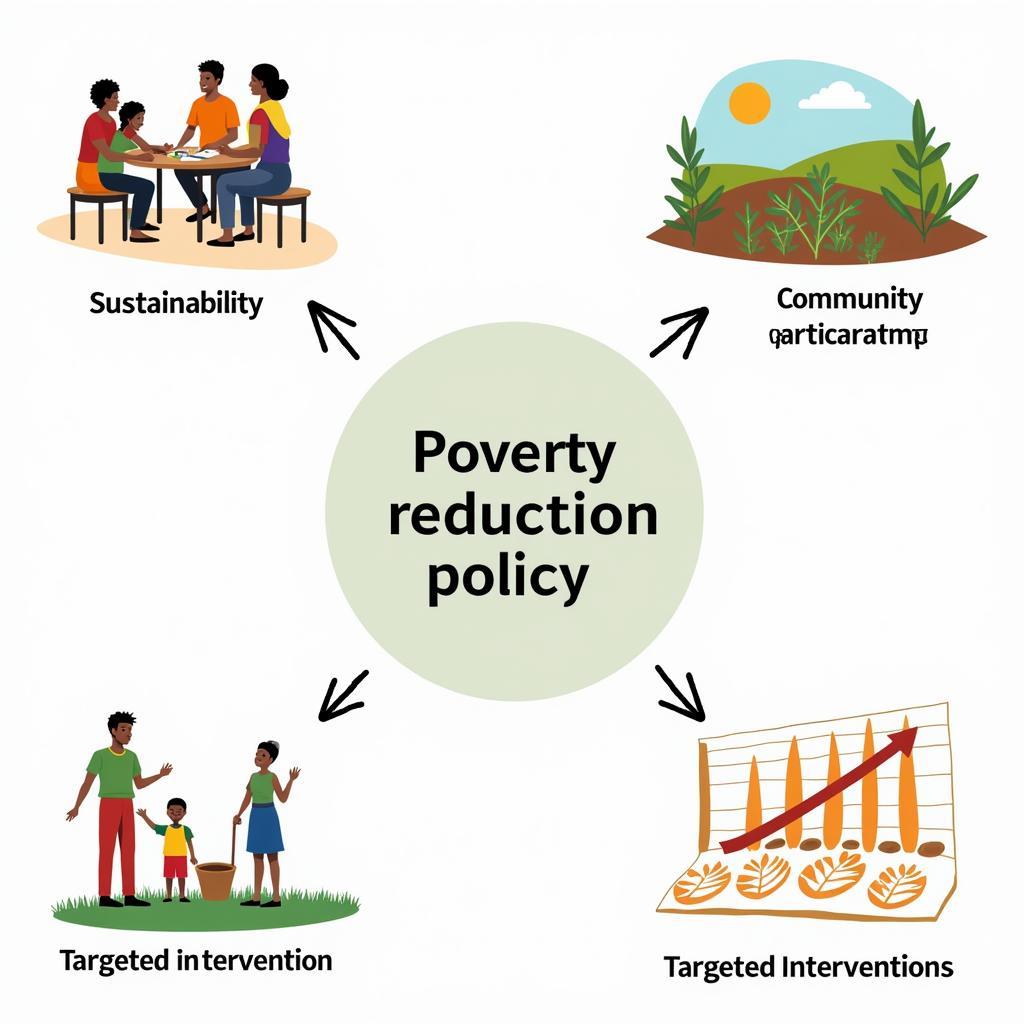
The Party’s poverty reduction policy is founded on several core principles: sustainability, community participation, and targeted interventions. Sustainability ensures that poverty reduction programs are not temporary but create lasting change. Community participation encourages people to engage in the planning and implementation of programs, thereby enhancing effectiveness and sustainability. Targeted interventions ensure that programs focus on the most vulnerable populations and address their specific needs.
Fundamental principles of Vietnam's poverty reduction policy
Specific Action Programs
The poverty reduction policy is implemented through a series of specific action programs, including agricultural production support, job creation, infrastructure development, and social service provision. For example, programs supporting credit access, vocational training, and rural road construction help people increase their income and improve their living conditions. Investment in education and healthcare also plays a crucial role in improving quality of life and achieving sustainable poverty reduction.
Evaluating Effectiveness and Challenges
The Party’s poverty reduction policy has achieved significant successes. The poverty rate has decreased considerably in recent years. However, many challenges remain. Income inequality persists, particularly between regions. Access to social services remains difficult for many, especially in remote and disadvantaged areas. Furthermore, climate change and other external factors pose new challenges to poverty reduction efforts. The results of ethnic minority policies also impact poverty reduction efforts.
How Does the Border Area Policy Support Residents?
The border area policy supports residents by providing necessary resources and services to improve livelihoods and economic development.
Solutions for the Future
Achieving sustainable poverty reduction requires close coordination between ministries, sectors, localities, and active community participation. It’s necessary to continue improving the legal framework, increase investment in poverty reduction programs, and innovate implementation methods. The current state of public policy implementation in Vietnam also influences poverty reduction strategies. Understanding the function of the policy bank is also crucial.
Conclusion
The Party’s poverty reduction policy is a vital strategy for building an equitable and prosperous society. While significant achievements have been made, challenges remain. Through continuous efforts and collective action, Vietnam will continue its progress towards poverty eradication and a brighter future.
FAQ
- What is the Party’s poverty reduction policy?
- What are the main goals of this policy?
- Who benefits from this policy?
- What are the specific action programs of this policy?
- What are the main challenges in implementing this policy?
- What is the role of the community in implementing this policy?
- How can I participate in poverty reduction programs?
Common Questions and Scenarios
People often have questions about the eligibility criteria for poverty reduction programs, the application process for support programs, and how to report difficulties encountered during implementation.
Suggested Further Reading and Related Articles
You can learn more about border area policies, poverty reduction policies, results of ethnic minority policies, the current state of public policy implementation in Vietnam, and the function of policy banks on our website.









