“Where the land is fertile, the birds will flock,” an age-old Vietnamese proverb, holds true across time. Land is an invaluable asset, the lifeblood of generations of Vietnamese farmers. Does the policy of allocating land to corporations truly benefit these farmers? Let’s explore this issue with Xe Tải Hà Nội.
Land Allocation to Corporations: Opportunity or Challenge?
Allocating land to corporations is a policy adopted by many countries worldwide, including Vietnam. This policy aims to attract investment, apply advanced science and technology to agricultural production, thereby increasing productivity, product quality, and market competitiveness.
However, alongside potential benefits, this policy also poses significant challenges, especially for farmers—those directly tied to the land. What is the reality of this situation?
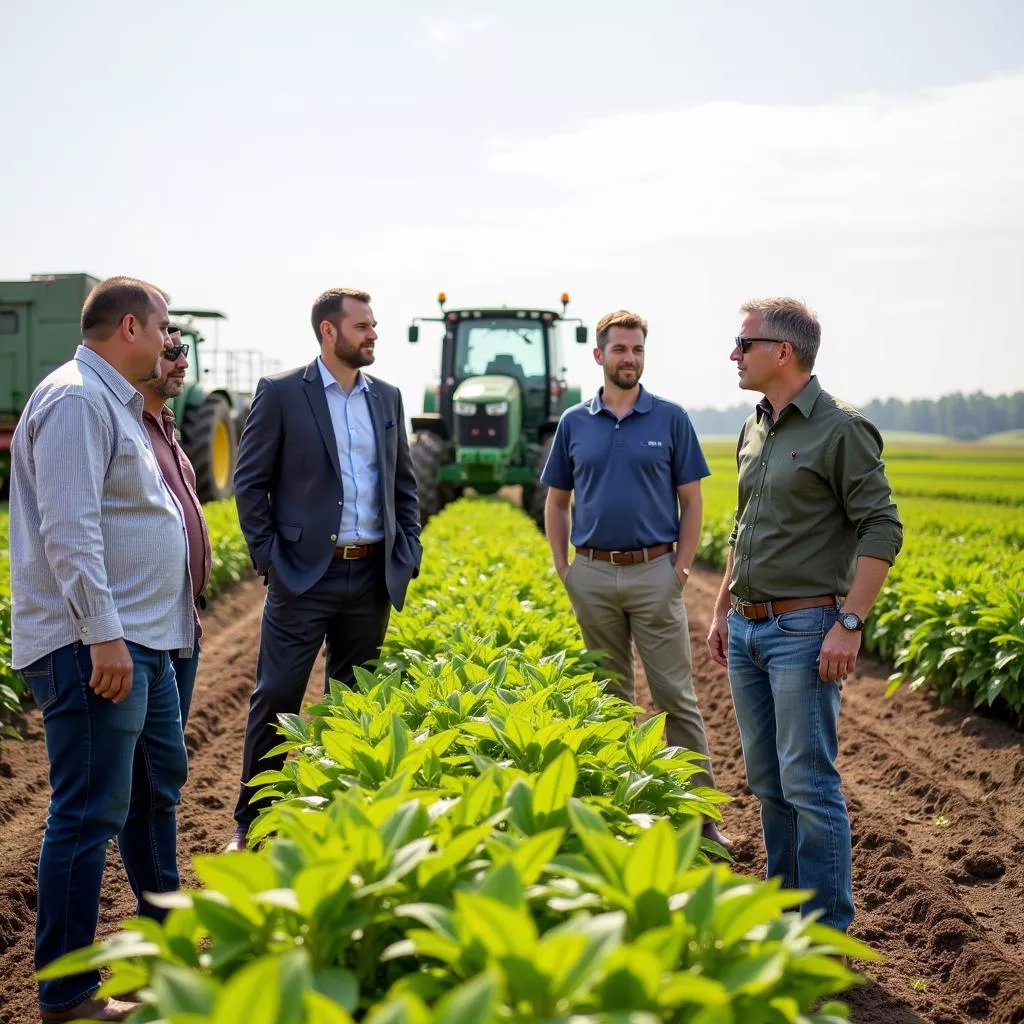
Farmers working on land allocated to a corporation
Balancing Profit and Livelihood
According to Mr. Nguyen Van Minh, a seasoned agricultural expert, “The policy of land allocation to corporations is a double-edged sword. On one hand, it can bring higher income to farmers through employment and technology transfer. On the other hand, without strict control, this policy can lead to farmers losing their land and facing hardship.”
It’s not uncommon to see farmers in Hanoi’s suburbs, once owners of vast farmland, now working as laborers on their own land. Their income might increase, but it becomes more precarious due to dependence on the corporation.
Ensuring Food Security for Farmers
For the land allocation policy to truly benefit farmers, concerted efforts from all stakeholders are necessary.
The Role of the Government:
- Improve land law, ensuring the legitimate rights of farmers.
- Strengthen management and supervision of corporate activities, preventing policy exploitation for profit.
- Invest in rural infrastructure development and vocational training for farmers, helping them adapt to new production models.
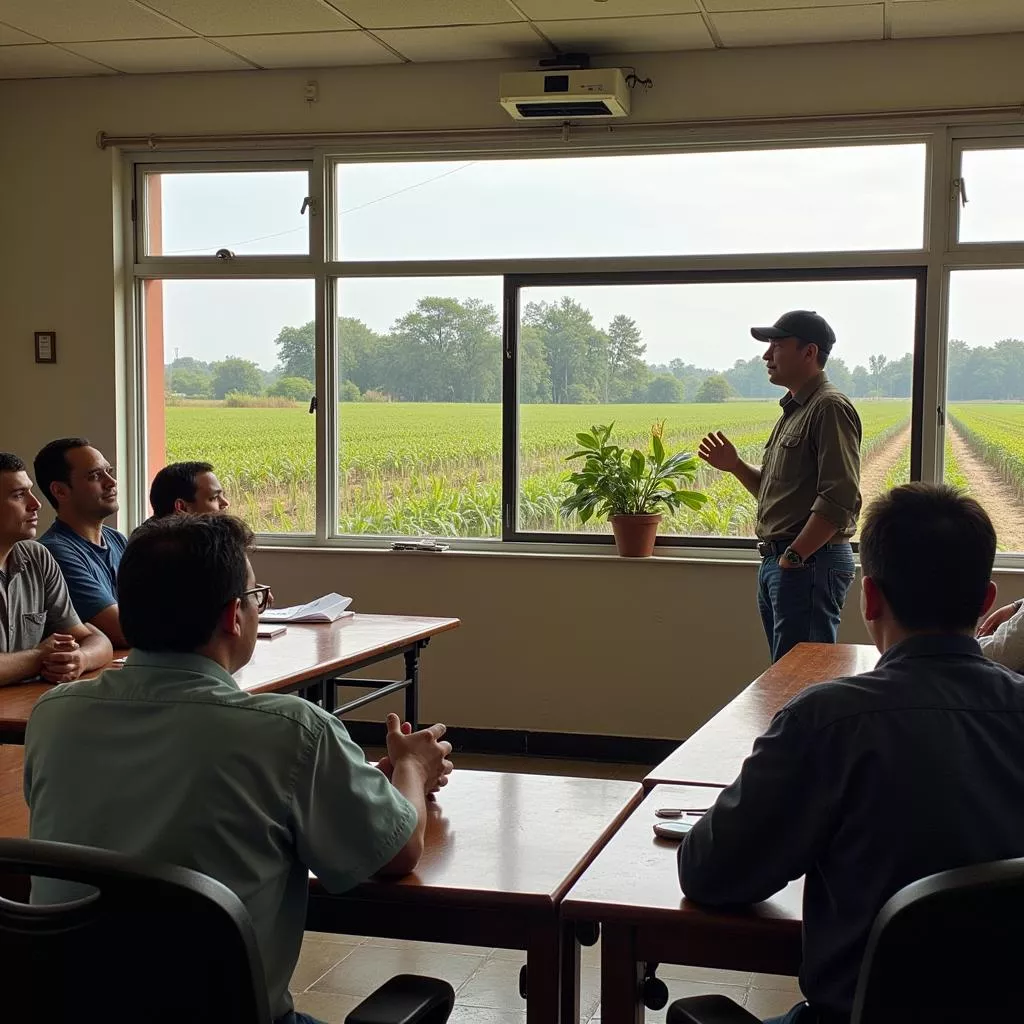 Vietnamese farmers receiving agricultural training
Want to learn more about rural agricultural development policies? Explore further here!
Corporate Responsibility:
- Transparency in information and adherence to commitments made to farmers during land lease.
- Application of advanced and environmentally friendly production technologies.
- Concern for the material and spiritual well-being of workers.
Farmer Proactiveness:
- Improve professional skills and knowledge.
- Participate in production and consumption linkage models.
- Protect their legitimate rights through organizations and associations.
The policy of land allocation to corporations can be a driving force for agricultural development and increased farmer income. However, it requires collective efforts, with the government playing a facilitating role, corporations acting as partners, and farmers demonstrating proactiveness and innovation to ensure their livelihoods are secure and their lives prosperous.
You can also learn more about aquaculture support policies for a comprehensive understanding of farmer support policies.
 Portrait of a Vietnamese farmer
Need advice on trucks suitable for agricultural transportation?
Contact Xe Tải Hà Nội – Hotline: 0968239999 or Email: [email protected].
We are always ready to assist you 24/7!









