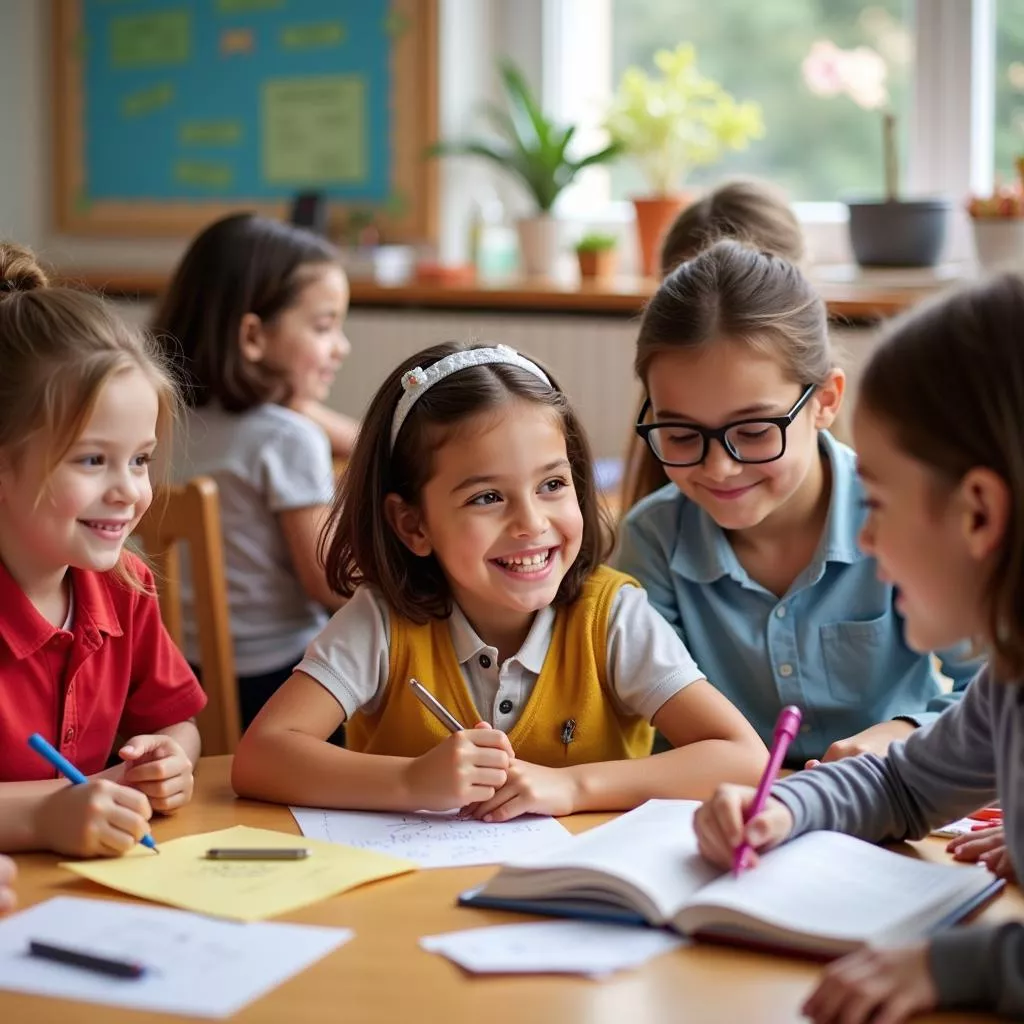
“Every leaf is a leaf, yet no two leaves are alike.” This old adage cleverly illustrates the diversity of individuals within a community. Just as a thriving garden needs a variety of plants, a society’s sustainable development relies on every individual having the opportunity to contribute and shine in their unique way. Inclusive education embodies the effort to build a humane and progressive society where all children, regardless of their circumstances or special needs, have equal access to education and the chance to reach their full potential.
Children with disabilities participating in inclusive education
Consider the story of Minh, a third-grade student with a physical disability. He always dreamed of attending school like his peers. However, steep stairs and the judgmental, unsympathetic glances of others created invisible barriers. But then, the implementation of inclusive education in his community ignited a spark of hope for Minh and his family. His new school, equipped with accessible facilities and staffed with teachers trained in inclusive teaching methods, welcomed him with open arms. Now, Minh confidently attends school, plays with his friends, and develops his abilities.
Implementing inclusive education is not solely the responsibility of the education sector but a collective effort. From raising public awareness about equal learning rights for all children to mobilizing resources for infrastructure, teacher training, and support for disadvantaged students, every action contributes to a truly inclusive learning environment where all children can thrive.
Benefits of Inclusive Education
Inclusive education offers significant benefits, contributing to a more equitable and civilized society:
- For Children: Promotes holistic development – physical, intellectual, emotional, and social – especially for children from disadvantaged backgrounds.
- For Families: Reduces financial burdens, allowing parents to focus on work and contributing to poverty reduction.
- For Society: Improves the quality of human resources, fostering sustainable socio-economic development.
 Students learning together in an inclusive classroom
The Current State of Inclusive Education in Vietnam
Despite significant progress, challenges remain in implementing inclusive education in Vietnam. According to Professor Nguyen Van Xuyen (hypothetical), a leading expert in inclusive education, “The lack of specialized facilities and equipment, trained teachers, and persistent social stigmas pose significant challenges to the progress of inclusive education in Vietnam.”
Solutions for Inclusive Education Challenges
For inclusive education to truly thrive, collaborative efforts are essential:
- Raise Awareness: Promote a deeper understanding of the significance of inclusive education across all societal levels.
- Improve Policies: Enact comprehensive legislation and policies for inclusive education, ensuring consistency, feasibility, and relevance to the current context.
- Invest in Resources: Increase funding for inclusive education, particularly in remote, disadvantaged, and ethnic minority areas; support teacher training and professional development in inclusive practices.
Want to learn more about Germany’s policies for ethnic minorities? Explore further to expand your knowledge of social policies.
- Socialize Education: Encourage participation from domestic and international organizations and individuals to invest in and support the development of inclusive education.
Education is a top national priority and a shared responsibility. Let’s work together to build an inclusive, high-quality, and effective education system for a just, democratic, and civilized society!
 Teacher and students in an inclusive classroom setting
For further consultation on social policies, such as China’s ethnic policies or the “Using Vietnamese to rule Vietnamese” policy, please contact us at Phone: 0968239999, Email: [email protected] or visit us at: TT36 – CN9 Road, Tu Liem Industrial Park, Phuong Canh Ward, Nam Tu Liem District, Hanoi. We offer 24/7 customer support.









