What is exchange rate policy? It’s a set of measures and regulations implemented by a government or central bank to manage and control a country’s exchange rate. It directly impacts import and export activities, foreign investment, and inflation, playing a crucial role in economic stability and development.
Exchange Rate Policy Explained
Exchange rate policy involves determining the exchange rate regime (fixed, floating, or managed), intervening in the foreign exchange market (buying and selling foreign currencies), and adjusting factors that influence the exchange rate, such as interest rates, foreign exchange reserves, and capital controls. The goal of this policy is to maintain a stable exchange rate, support exports, attract investment, and control inflation. The selection and implementation of exchange rate policy depend on various factors, including the economic, political, and social conditions of each country. Following this introduction, we will delve into research papers on exchange rate policy. Exchange rate policy research papers provide valuable insights for readers.
What is Exchange Rate Policy? Concept Explained
Common Types of Exchange Rate Policies
Fixed Exchange Rate Policy
The government or central bank commits to maintaining the exchange rate at a fixed level against another currency or a basket of currencies. The advantage of this policy is that it creates stability for trade and investment. However, it requires large foreign exchange reserves and can lead to economic imbalances if the fixed rate does not reflect the true value of the domestic currency.
Floating Exchange Rate Policy
The exchange rate is determined by supply and demand in the foreign exchange market. The government intervenes minimally in the market. The advantage is flexibility and self-adjustment. However, the exchange rate can fluctuate significantly, creating difficulties for business and investment activities.
Managed Exchange Rate Policy
This is a combination of the two types above. The government allows the exchange rate to fluctuate within a certain range and intervenes when necessary to stabilize the market. This policy balances stability and flexibility, making it suitable for many economies.
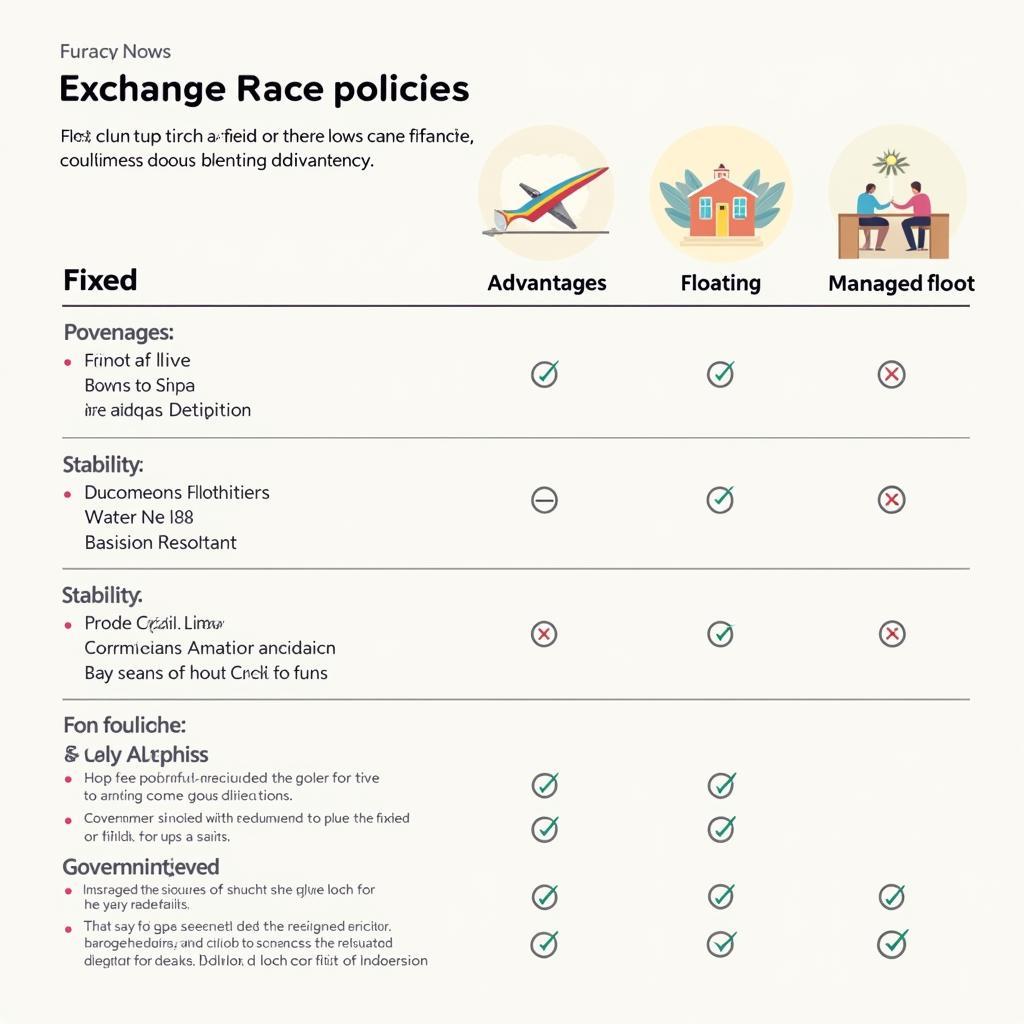 Types of Exchange Rate Policies: Comparing Advantages and Disadvantages
“China’s exchange rate policy is a prime example of managed float management, aimed at supporting exports and maintaining economic stability,” according to Nguyen Van A, an economist at the National Economics University. You can learn more about China’s exchange rate policy.
Impact of Exchange Rate Policy on the Economy
Exchange rate policy affects many aspects of the economy, including imports and exports, foreign investment, inflation, and economic growth. A suitable exchange rate policy will help promote exports, attract investment, and control inflation, contributing to the sustainable development of the economy. Conversely, an ineffective policy can have negative consequences. For example, maintaining an excessively high exchange rate will reduce the competitiveness of exports and encourage imports, leading to a trade deficit.
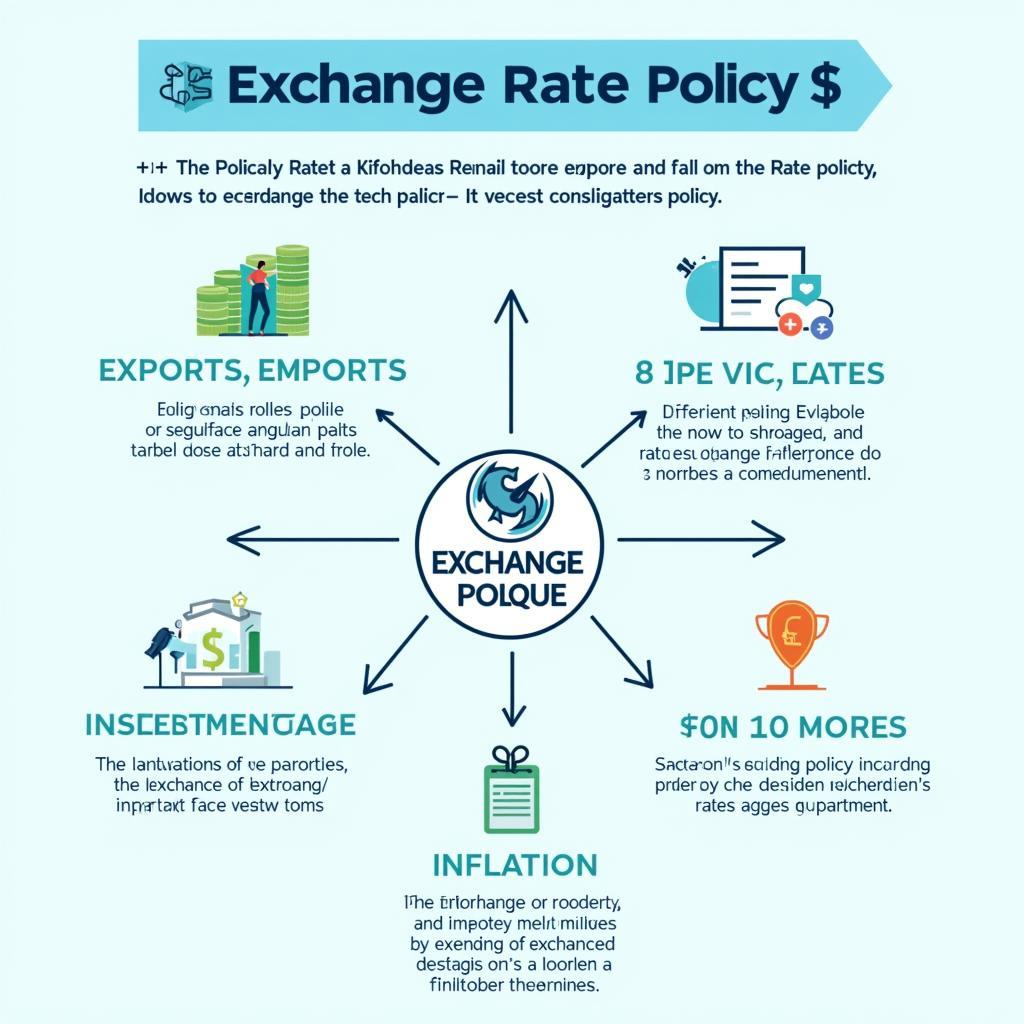 Impact of Exchange Rate Policy on the Economy
Conclusion
Exchange rate policy is a crucial tool for managing the economy. Choosing and implementing an exchange rate policy requires careful consideration based on each country’s specific circumstances. An effective exchange rate policy will contribute to macroeconomic stability, promote growth, and improve people’s lives. Understanding what exchange rate policy is will help businesses and individuals make more effective business decisions. This article also touched upon exchange rate stabilization policy; you can learn more at exchange rate stabilization policy. Furthermore, understanding exchange rates in monetary policy is also crucial. You can find more information at exchange rates in monetary policy. Finally, don’t forget to learn more about the impact of CPI on monetary policy for a more comprehensive overview.
For assistance, please contact us by phone: 0968239999, Email: [email protected] Or visit our address: No. TT36 – CN9 Road, Tu Liem Industrial Park, Phuong Canh Ward, Nam Tu Liem District, Hanoi. We have a 24/7 customer support team.









