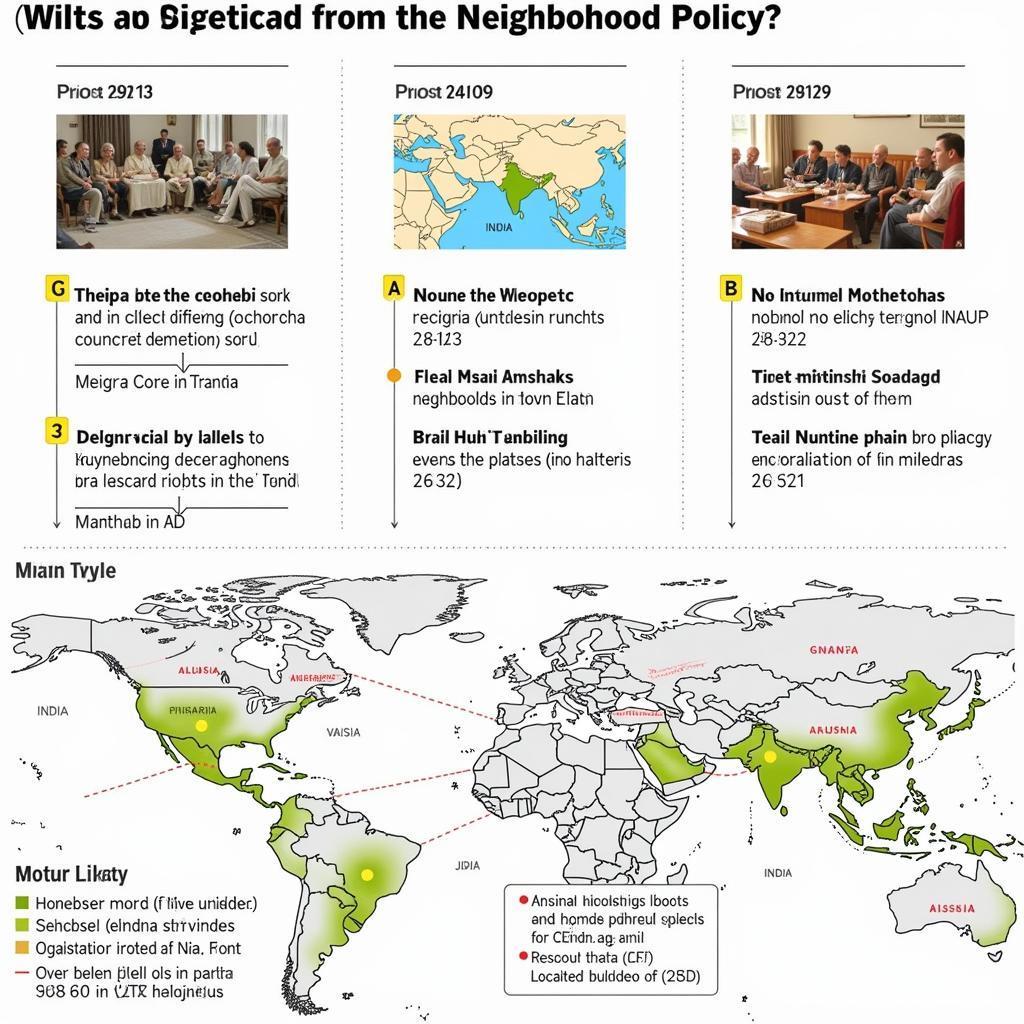
India’s neighborhood policy plays a crucial role in the country’s foreign strategy. This article delves into this policy, providing insights into its objectives, challenges, and impact on the region and the world.
History and Evolution of India’s Neighborhood Policy
Since gaining independence in 1947, India has faced numerous security and development challenges. Initially, India’s foreign policy focused on maintaining independence, sovereignty, and territorial integrity. The “Panchsheel” (Five Principles of Peaceful Coexistence) served as the foundation for India’s foreign policy.
India’s neighborhood policy has undergone several phases of development, from Prime Minister Narasimha Rao’s “Neighborhood First” policy to Prime Minister Narendra Modi’s “Act East” policy.
Evolution of India's Neighborhood Policy
Objectives and Principles of India’s Neighborhood Policy
India’s neighborhood policy is based on the following fundamental principles:
- Respect for the independence, sovereignty, and territorial integrity of all nations.
- Non-interference in each other’s internal affairs.
- Peaceful settlement of disputes.
- Mutually beneficial cooperation.
The main objectives of India’s neighborhood policy are:
- Building a peaceful, stable, and prosperous South Asia.
- Promoting economic cooperation and regional connectivity.
- Addressing common challenges such as terrorism, climate change, and pandemics.
- Enhancing India’s stature and influence in the region and the world.
Challenges to India’s Neighborhood Policy
India’s neighborhood policy faces several challenges, including:
- Complex relationship with Pakistan.
- The rise of China and competition for influence in South Asia.
- Cross-border terrorism.
- Disparities in economic development and inequality in the region.
- Influence of external powers on the region.
Impact of India’s Neighborhood Policy
India’s neighborhood policy has a significant impact on the South Asian region and the world:
- Contributes to maintaining peace and stability in South Asia.
- Promotes economic growth and regional development.
- Strengthens regional cooperation in areas such as trade, investment, energy, and connectivity.
- Elevates India’s position as a responsible global power.
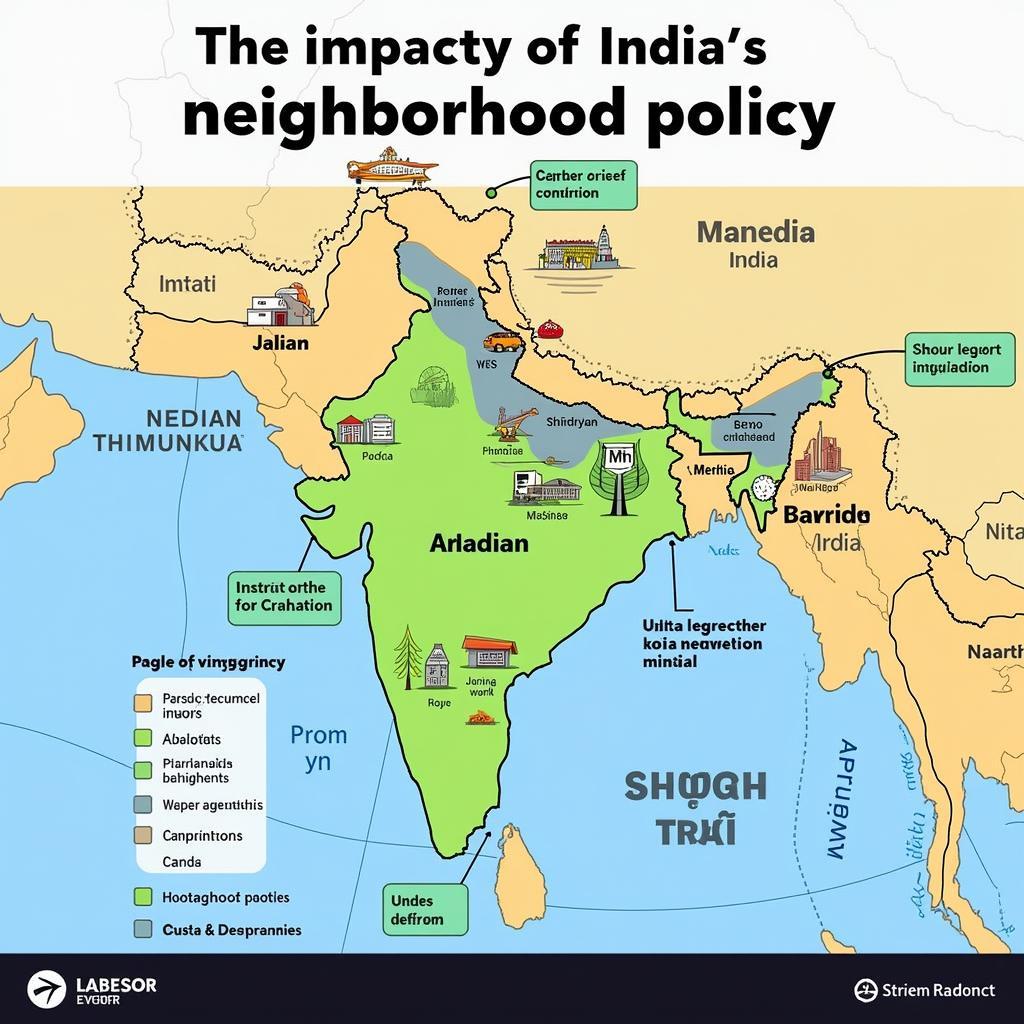 Impact of India's Neighborhood Policy
Conclusion
India’s neighborhood policy is a crucial component of its foreign strategy. By pursuing this policy, India strives to build a peaceful, stable, and prosperous South Asia while enhancing its standing on the global stage. However, India needs to overcome existing challenges to achieve its goals.
Frequently Asked Questions about India’s Neighborhood Policy
- What are the fundamental principles of India’s neighborhood policy?
- What are the main objectives of India’s neighborhood policy?
- What challenges does India’s neighborhood policy face?
- What is the impact of India’s neighborhood policy on the South Asian region?
- What is India’s role in promoting regional cooperation in South Asia?
You might be interested in:
- Vietnam’s Foreign Policy with Cambodia
- Vietnam’s Foreign Policy.pdf
- Government Price Intervention Policy
For more detailed information, please contact XE TẢI HÀ NỘI:
- Phone Number: 0968239999
- Email: [email protected]
- Address: No. TT36 – CN9 Road, Tu Liem Industrial Zone, Phuong Canh Ward, Nam Tu Liem District, Hanoi.
We are always available to assist you 24/7!









