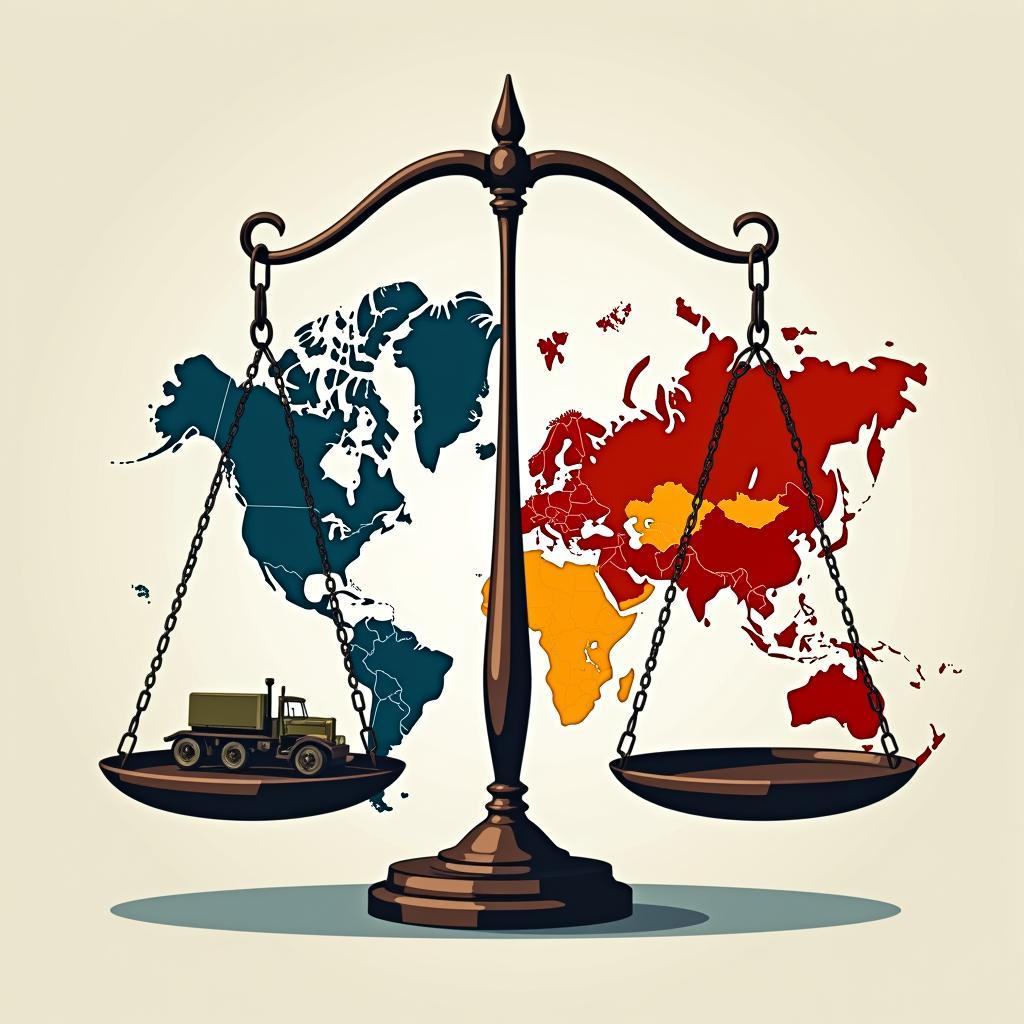
The “New Look” policy, initiated by U.S. President Dwight D. Eisenhower in 1953, was a strategy combining military strength (“the arrow”) and peaceful diplomacy (“the olive branch”) to contain the expansion of the Soviet Union and its allies during the Cold War.
Origins and Historical Context
The “New Look” policy emerged amidst the escalating tensions of the Cold War, with the Korean War (1950-1953) serving as a stark reminder. President Eisenhower, a World War II general, understood the military might of the United States but also the devastating consequences of war.
Two Sides of the Strategy: “The Arrow” and “The Olive Branch”
“The Arrow”: Strengthening Military Power
To counter the Soviet threat, Eisenhower focused on:
- Increased defense spending: Heavy investment in developing nuclear weapons and modernizing the military.
- Establishing military alliances: Expanding NATO in Europe and forging other collective security agreements globally.
- Implementing “Massive Retaliation”: Threatening to use nuclear weapons if the Soviet Union attacked the U.S. or its allies.
“The Olive Branch”: Peaceful Diplomacy
Alongside military buildup, Eisenhower also pursued diplomatic measures aimed at:
- Building bridges for dialogue: Seeking opportunities for negotiation and cooperation with the Soviet Union.
- Providing economic aid: Offering assistance to developing nations to prevent the spread of communism.
- Promoting cultural exchange: Encouraging cultural and academic exchanges between the West and the Eastern Bloc.
Impact and Legacy
The “New Look” policy shaped U.S. foreign policy throughout the Cold War.
- Containing Soviet expansion: The strategy helped prevent a direct war between the two superpowers.
- Creating a balance of power: The combination of military and diplomatic strength created a fragile balance of power, contributing to global peace.
- Laying the foundation for future foreign policy: The “New Look” laid the groundwork for subsequent U.S. foreign policies, combining hard and soft power approaches.
The US and USSR in a Cold War balance of power.
Conclusion
Eisenhower’s “New Look” policy was a complex, multifaceted strategy reflecting the challenges and tensions of the Cold War. While not always successful, it played a crucial role in maintaining peace and stability during a volatile period in history.
Frequently Asked Questions
1. When was the “New Look” policy implemented?
This policy was implemented by President Eisenhower from 1953 to 1961.
2. What was the main goal of this policy?
The main goal was to contain the expansion of the Soviet Union and its allies during the Cold War.
3. Why was this policy called the “New Look”?
This name represented a departure from previous containment strategies and emphasized reliance on nuclear deterrence.
4. How successful was this policy?
This policy helped prevent a direct war between the U.S. and the Soviet Union and created a fragile balance of power during the Cold War.
5. What lesson does this policy offer for foreign policy today?
This policy demonstrates the need for a flexible combination of hard and soft power in international relations.
Would you like to learn more about synonyms of policy? Or would you like to explore more details about the New Look policy?
We have many other engaging articles on history, politics, and international affairs waiting for you to discover.
Contact us by phone: 0968239999, email: [email protected] or visit us at: TT36 – CN9 Road, Tu Liem Industrial Park, Phuong Canh Ward, Nam Tu Liem District, Hanoi for advice and support.









