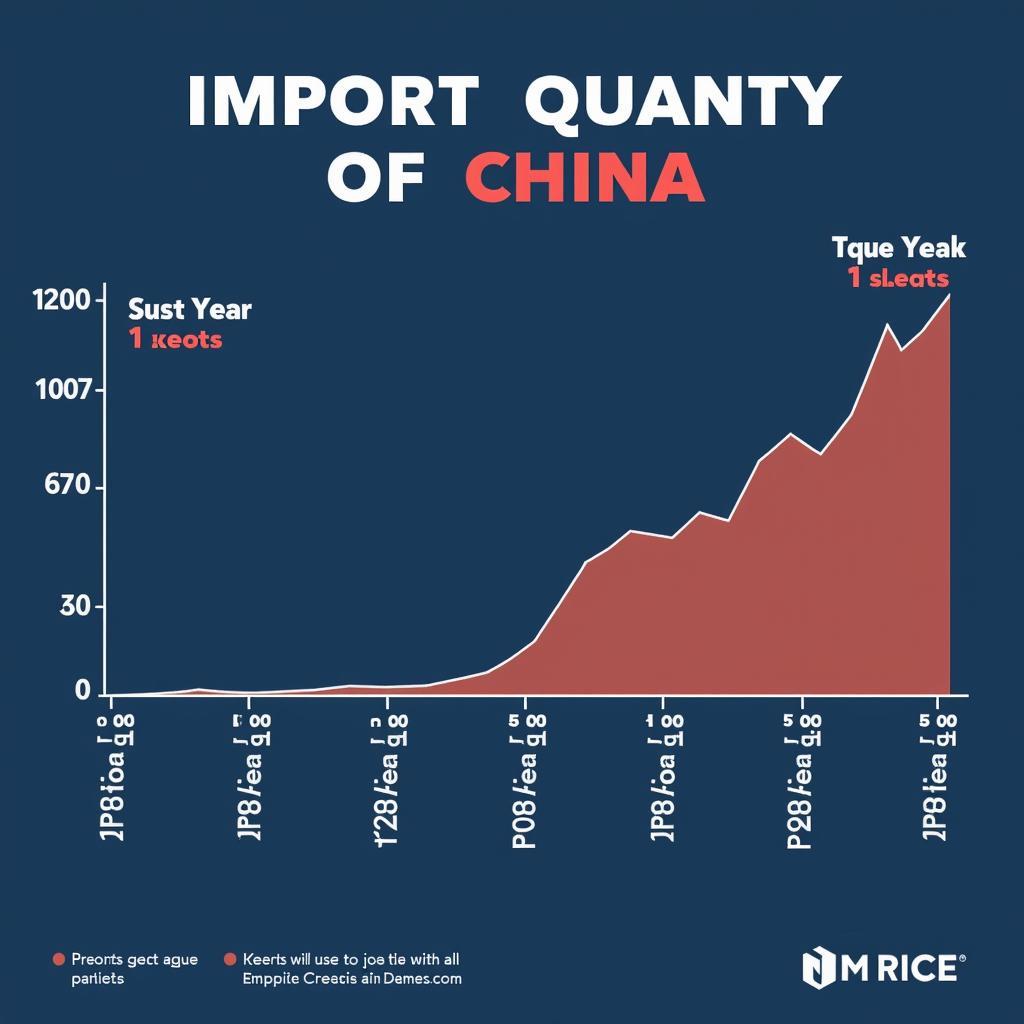
China, the world’s most populous nation, relies on significant rice imports to meet its domestic food demand. Its rice import policy plays a crucial role in the global rice market, influencing prices and production worldwide. This article analyzes China’s rice import policy, including regulations, quotas, and its impact on the international rice market.
Overview of China’s Rice Import Policy
China’s rice import policy is tightly controlled by the government to protect domestic production and stabilize rice prices. The country employs a quota system, import licensing, and stringent quarantine procedures for imported rice. The primary goals of this policy are to ensure national food security and support domestic rice farmers. Similar to policies supporting rice farmers, the rice import policy aims to stabilize the market.
Chart illustrating China's rice import policy
Rice Import Quotas
China implements annual rice import quotas, dictating the quantity of rice allowed into the country. These quotas are allocated to state-owned and private enterprises licensed for rice importation. Quota control allows the Chinese government to regulate the volume of imported rice, influencing domestic prices and supply.
Rice Import Procedures in China
Importing rice into China is a complex process involving multiple steps and procedures. Importers must obtain import licenses and comply with strict quality and quarantine standards. This ensures that imported rice is safe and meets Chinese standards.
Impact on the International Rice Market
China’s rice import policy significantly impacts the international rice market. Its import demand influences global rice prices. Increased Chinese imports can drive up prices, while reduced imports can lead to price declines, affecting both rice exporting and importing countries worldwide. Vietnam’s exchange rate policy can also be influenced by this policy.
Factors Influencing China’s Rice Import Policy
Several factors influence China’s rice import policy, including domestic production, fluctuations in global rice prices, and international trade agreements. The Chinese government regularly adjusts its import policy to adapt to these changes. This is similar to the renovation policy after the 1980 economic crisis when the government had to flexibly adjust policies.
Conclusion
China’s rice import policy is a complex issue with global implications for the rice market. Understanding this policy allows rice-exporting countries to adjust their business strategies and adapt to market changes. To understand more about foreign trade strategy, you can refer to Vietnam’s current foreign trade policy.
FAQ
- Which countries does China import rice from?
- What is China’s rice import quota?
- How does China’s rice import policy affect Vietnam?
- How can one export rice to China?
- What are the quality standards for rice imported into China?
- Does China’s rice import policy change over time?
- What is the future of China’s rice import policy?
For assistance, please contact us at Phone: 0968239999, Email: [email protected] or visit us at: TT36 – CN9 Road, Tu Liem Industrial Park, Phuong Canh Ward, Nam Tu Liem District, Hanoi. We have a 24/7 customer support team.









