An English fluency policy is becoming increasingly important for businesses, especially in the trucking industry. Adopting such a policy offers numerous benefits, from attracting international talent to enhancing competitiveness in the global market. This article will delve into the benefits and implementation of an English fluency policy in the trucking industry, particularly for box trucks, light trucks, vans, and trucks with capacities of 1 ton, 2 tons, 3.5 tons, and 8 tons.
Benefits of an English Fluency Policy in the Trucking Industry
Implementing an English fluency policy allows trucking companies to access a wider pool of qualified personnel from around the world. This is particularly crucial for management positions, technicians, and logistics specialists, which require specialized knowledge and international communication skills. This policy also enables current employees to improve their English proficiency, opening up opportunities for career advancement and professional development.
Using English as the primary language of communication within the company also streamlines workflows, reduces language barriers, and enhances collaboration between departments. This is especially important in the trucking industry, where seamless coordination between different stages is crucial for ensuring smooth transportation operations. Moreover, an English fluency policy helps trucking companies project a professional and modern image, attracting international clients and partners.
Implementing an English Fluency Policy for Different Truck Types
An English fluency policy can be flexibly applied to various truck types, from box trucks and light trucks to vans and trucks with capacities of 1 ton, 2 tons, 3.5 tons, and 8 tons. For instance, for truck drivers transporting goods internationally, English proficiency is essential for communicating with clients, partners, and authorities in foreign countries. For dispatchers, English helps them manage and track transportation routes more effectively, especially when using international transportation management software and technologies.
Similar to [Malaysia’s investment policy], implementing an English fluency policy also helps trucking companies access foreign investment and expand their market reach. This is particularly important in the context of increasing international economic integration.
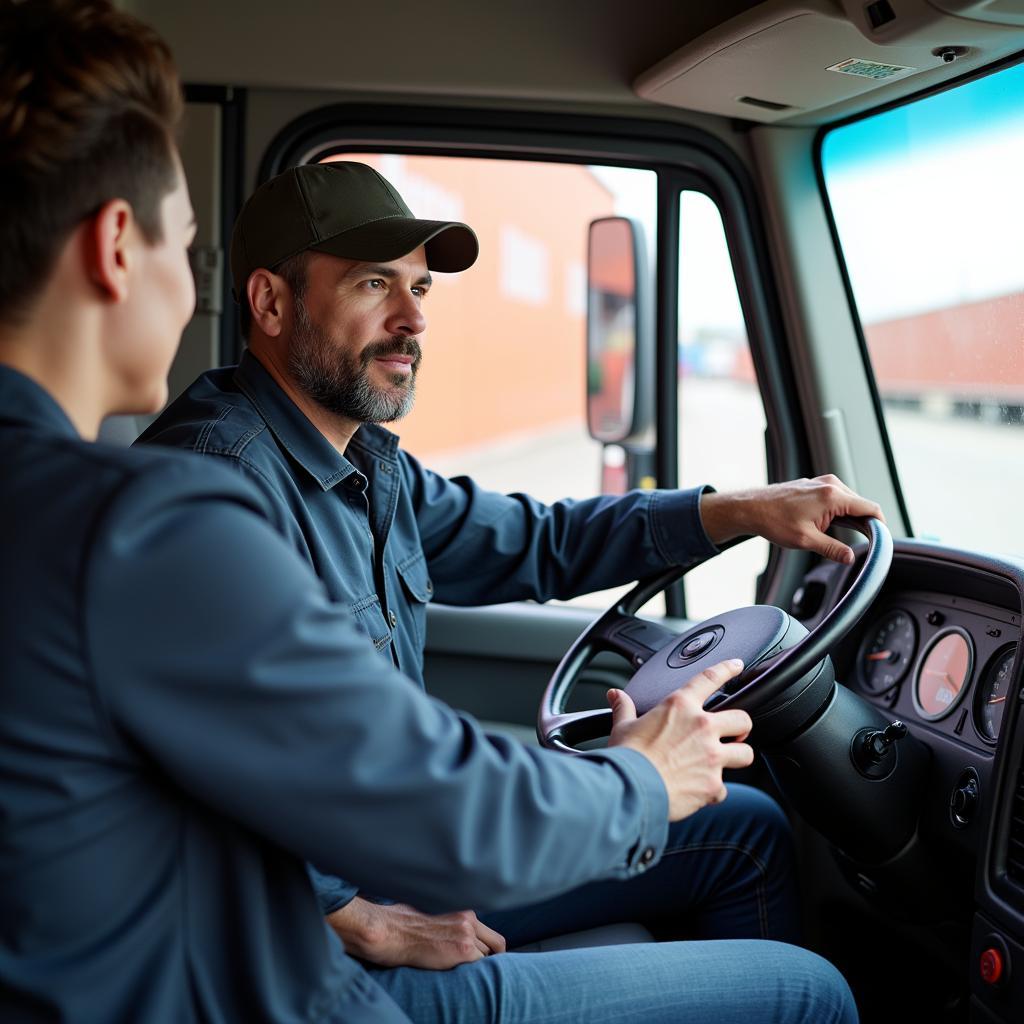
Truck driver communicating in English with a foreign client
Challenges and Solutions in Implementing an English Fluency Policy
Despite its numerous benefits, implementing an English fluency policy also presents some challenges. One of the biggest challenges is the varying levels of English proficiency among employees. To overcome this, companies can organize specialized English language training courses for the trucking industry, create a work environment that encourages the use of English, and utilize communication support tools such as specialized dictionaries and translation software.
Like [overseas work policies], establishing a clear and transparent policy is crucial. Companies need to clearly define the objectives, scope of application, and specific regulations related to the use of English in the workplace.
Conclusion
An English fluency policy is a crucial strategy for trucking companies to enhance their competitiveness and achieve sustainable development in the era of globalization. Implementing this policy requires serious investment and effort from both the company and its employees. However, the benefits it brings are well worth the investment.
FAQ
- What is an English fluency policy?
- What are the benefits of implementing this policy in the trucking industry?
- How can an English fluency policy be implemented effectively?
- What are the challenges in implementing this policy?
- What are the solutions to these challenges?
- What is the role of English in the trucking industry today?
- Does this policy apply to all positions in a trucking company?
For assistance, please contact us by phone at 0968239999, email at [email protected], or visit our address at TT36 – CN9 Road, Tu Liem Industrial Zone, Phuong Canh Ward, Nam Tu Liem District, Hanoi. We have a 24/7 customer service team.









