The 2019 tax policy in Vietnam saw significant changes that directly impacted the transportation industry. Understanding these changes is crucial for businesses to optimize costs and operate efficiently.
Key Changes in the 2019 Tax Policy
2019 witnessed several important adjustments in tax policy affecting various sectors, including transportation. Notable changes included adjustments to Value Added Tax (VAT), Special Consumption Tax (SCT), and Corporate Income Tax (CIT). These changes aimed to stimulate business production and enhance state budget revenue. Staying updated on these new regulations helps transportation companies avoid legal risks and leverage tax incentives. Similar to the new 2019 tax policy, timely information is key.
Value Added Tax (VAT)
The 2019 tax policy included adjustments to VAT, impacting input costs for transportation businesses such as fuel, spare parts, and repair services. VAT rates were adjusted for several items, creating varying effects on business operations. Companies need to understand these changes to recalculate costs and adjust transportation fees accordingly.
Special Consumption Tax (SCT)
For heavy trucks, the Special Consumption Tax also saw adjustments in 2019. This affected the purchase price of new vehicles and capital investment costs for transportation companies. Understanding these changes helps businesses make more effective investment decisions.
Corporate Income Tax (CIT)
The 2019 tax policy also included changes to Corporate Income Tax, affecting the profitability of transportation businesses. These adjustments may have included changes to tax rates, deductible expenses, and tax incentives. Understanding the new regulations helps companies optimize their tax obligations and improve business efficiency. For more information on related policies, you can refer to the 2019 tax policy for electronics.
Impact of the 2019 Tax Policy on Different Truck Types
The 2019 tax policy impacted different types of trucks differently, from light trucks (1 ton, 2 tons, 3.5 tons) to heavy trucks (8 tons). For example, the Special Consumption Tax is applied differently to trucks with varying load capacities. This requires businesses to carefully consider their truck investments. Understanding the regulations regarding the 2019 automobile tax policy is essential.
Box Trucks, Light Trucks, and Vans
For box trucks, light trucks, and vans, the 2019 tax policy mainly affected input costs such as fuel and spare parts. Businesses need to closely monitor changes in VAT to adjust transportation fees accordingly. This has similarities to public procurement policy when considering cost factors.
1 Ton, 2 Ton, 3.5 Ton, and 8 Ton Trucks
For 1 ton, 2 ton, 3.5 ton, and 8 ton trucks, in addition to VAT, the Special Consumption Tax also had significant impacts. Businesses need to carefully consider investing in new vehicles, choosing the right type of truck to suit their transportation needs and the current tax policy. Referring to the tourist vehicle rental policy may also be an alternative to purchasing a vehicle.
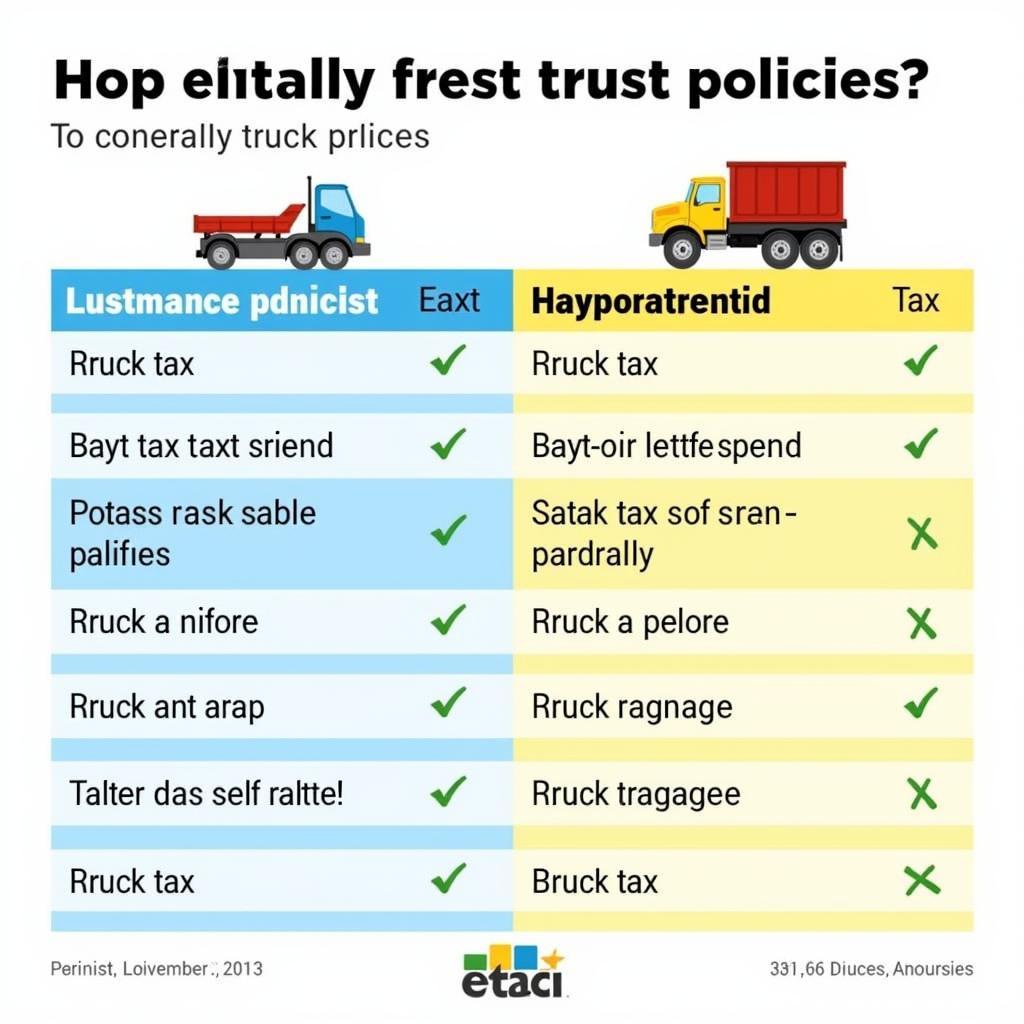
Truck Tax Policy Comparison Chart
Conclusion
The 2019 tax policy had a significant impact on the transportation industry. Understanding these changes helps transportation businesses optimize costs, make effective business decisions, and ensure legal compliance.
FAQ
- What were the changes to VAT in the 2019 tax policy?
- How was the Special Consumption Tax applied to trucks in 2019?
- How can Corporate Income Tax be optimized in the transportation industry?
- How did the 2019 tax policy affect truck prices?
- What should I do to stay updated on the latest tax policies?
- Were there any tax incentives for transportation businesses in 2019?
- How does tax policy influence the selection of the appropriate truck type?
For assistance, please contact us at Phone: 0968239999, Email: [email protected] or visit us at: TT36 – CN9 Road, Tu Liem Industrial Park, Phuong Canh Ward, Nam Tu Liem District, Hanoi. We have a 24/7 customer service team.









