
Farmer Ba, owner of a pig farm on the outskirts of Hanoi, recently had a bumper harvest. His pigs are healthy, and pork prices are on the rise. Pushing a cart full of feed, Ba laughs heartily: “This year is a big win! This new tax policy is a godsend for farmers!” But in a nearby local market, Hoa, a homemaker, sighs as she watches pork prices skyrocket: “With pork prices this high, family meals will be even tighter!” So, what’s the truth about this recent pork tax policy that’s causing such mixed reactions?
Pork Tax Policy: Separating Fact from Fiction
In reality, there hasn’t been any recent tax policy specifically aimed at increasing pork prices. Pork price fluctuations depend primarily on market supply and demand and are influenced by various factors such as feed prices, disease outbreaks, and consumer demand.
However, the contrasting experiences of Ba and Hoa highlight a significant issue: a lack of understanding about tax policies can lead to misconceptions, affecting people’s perceptions and behaviors.
Illustration of pork tax policy misconception
Unveiling the True Culprits Behind Soaring Pork Prices
So, what are the real reasons behind the fluctuating pork prices?
- Rising Feed Costs: A sharp increase in the cost of raw materials like corn and soybeans has driven up pork production costs.
- Disease Outbreaks: The African Swine Fever has severely impacted the pig farming industry in recent years, reducing pork supply.
- Increased Consumer Demand: After the COVID-19 pandemic, domestic pork consumption has tended to rebound.
- Production Cycles: The livestock industry often experiences cyclical production patterns, leading to periods of surplus or shortage.
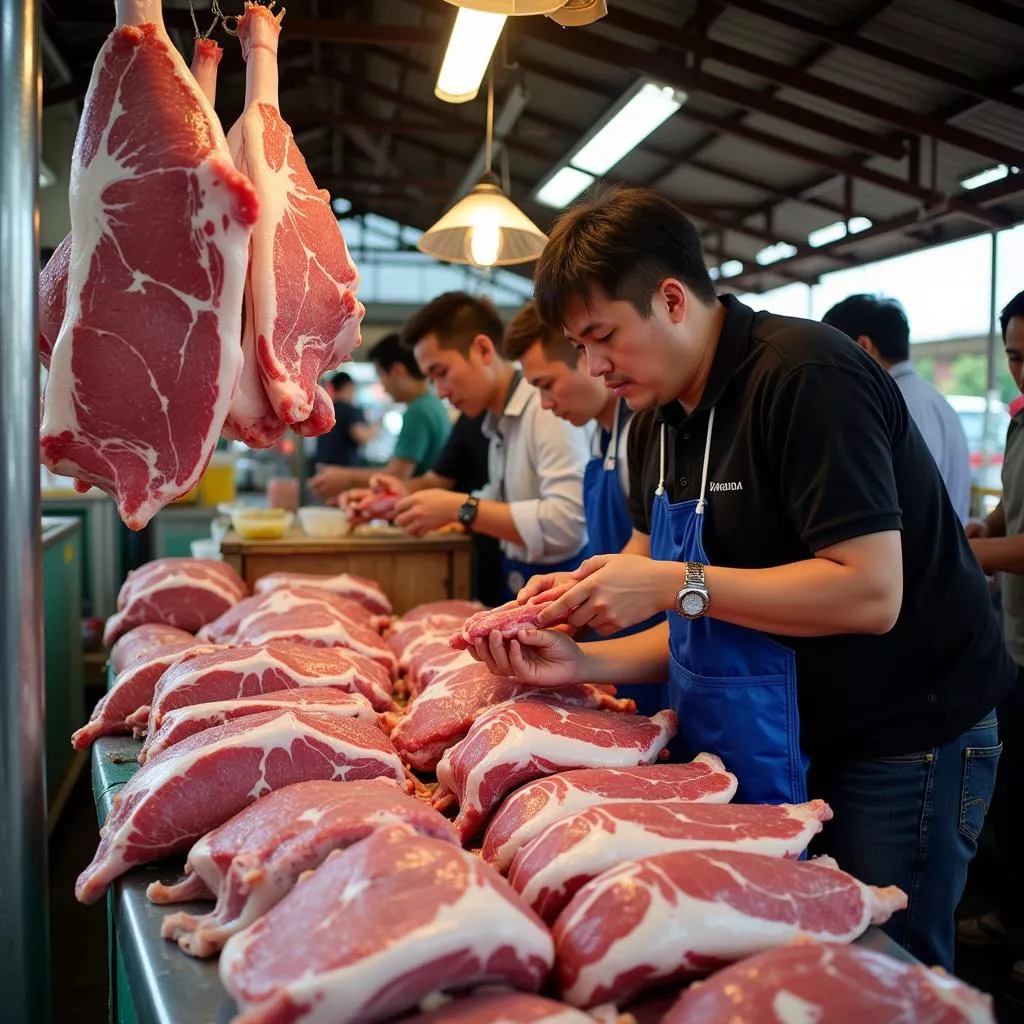 Consumers choosing pork
Navigating the Pork Price Storm: Tips for Consumers
- Diversify Protein Sources: Incorporate alternative protein sources like chicken, fish, and eggs to ensure balanced family meals.
- Shop Smart: Monitor price trends closely and prioritize products with clear origins and quality assurance.
- Stay Informed: Seek information from reliable sources and avoid being swayed by rumors.
XE TẢI HÀ NỘI – Your Partner on Every Transportation Route
While tax policy isn’t directly responsible for the rise in pork prices, this situation underscores the importance of staying informed with accurate and timely information.
Islands, like the Spratly Islands mentioned in this article, also require appropriate support policies for economic development and improved living standards.
“XE TẢI HÀ NỘI” is always with you, providing useful information about the trucking and transportation market. For assistance, please contact us by phone: 0968239999, Email: [email protected] or visit us at: TT36 – CN9 Road, Tu Liem Industrial Park, Phuong Canh Ward, Nam Tu Liem District, Hanoi. We have a 24/7 customer service team.









