“With policy, anything is possible,” an old saying wisely states. Policy mechanisms act as guiding principles, ensuring smooth and efficient operations. Yet, the question “What is a policy mechanism?” still puzzles many. This article will clarify all your doubts!
What is a Policy Mechanism?
Defining “Mechanism” and “Policy”
To understand policy mechanisms better, let’s break down each component:
- Policy: A set of solutions and guidelines issued by the government or organizations to address a specific issue within a defined timeframe. Examples include policies supporting small and medium-sized enterprises or rural development policies.
- Mechanism: The operational method for implementing a specific policy. It encompasses regulations regarding processes, procedures, responsibilities, and authorities of involved parties.
What is a Policy Mechanism?
Simply put, a policy mechanism is the operational method for implementing a specific policy, ensuring its effective real-world application. It’s like the “operating system” that allows the policy to “run” smoothly and achieve its objectives.
Policy Mechanism Model
The Role of Policy Mechanisms
Policy mechanisms play a crucial role in realizing policy objectives:
- Establishing a Legal Framework: Ensuring transparency, openness, and clarity in policy implementation.
- Enhancing Effectiveness: Helping policies translate into practical action, avoiding discrepancies between theory and practice.
- Mobilizing Resources: Creating favorable conditions for effective mobilization and utilization of societal resources.
- Promoting Development: Contributing to socio-economic development in line with overall directions.
For example, a policy supporting loans for ethnic minorities is only effective with a clear mechanism outlining interest rates, loan terms, eligible recipients, and responsibilities of involved parties.
Common Types of Policy Mechanisms
Depending on the specific field and objectives, policy mechanisms can be categorized into various types, most commonly:
- Financial Mechanisms: Regulations on funding sources, financial support methods, and taxes.
- Administrative Mechanisms: Regulations on administrative procedures, licensing, inspection, and supervision.
- Market Mechanisms: Utilizing market tools like pricing and competition to regulate activities.
- Social Mechanisms: Leveraging the role of social organizations and communities in policy implementation.
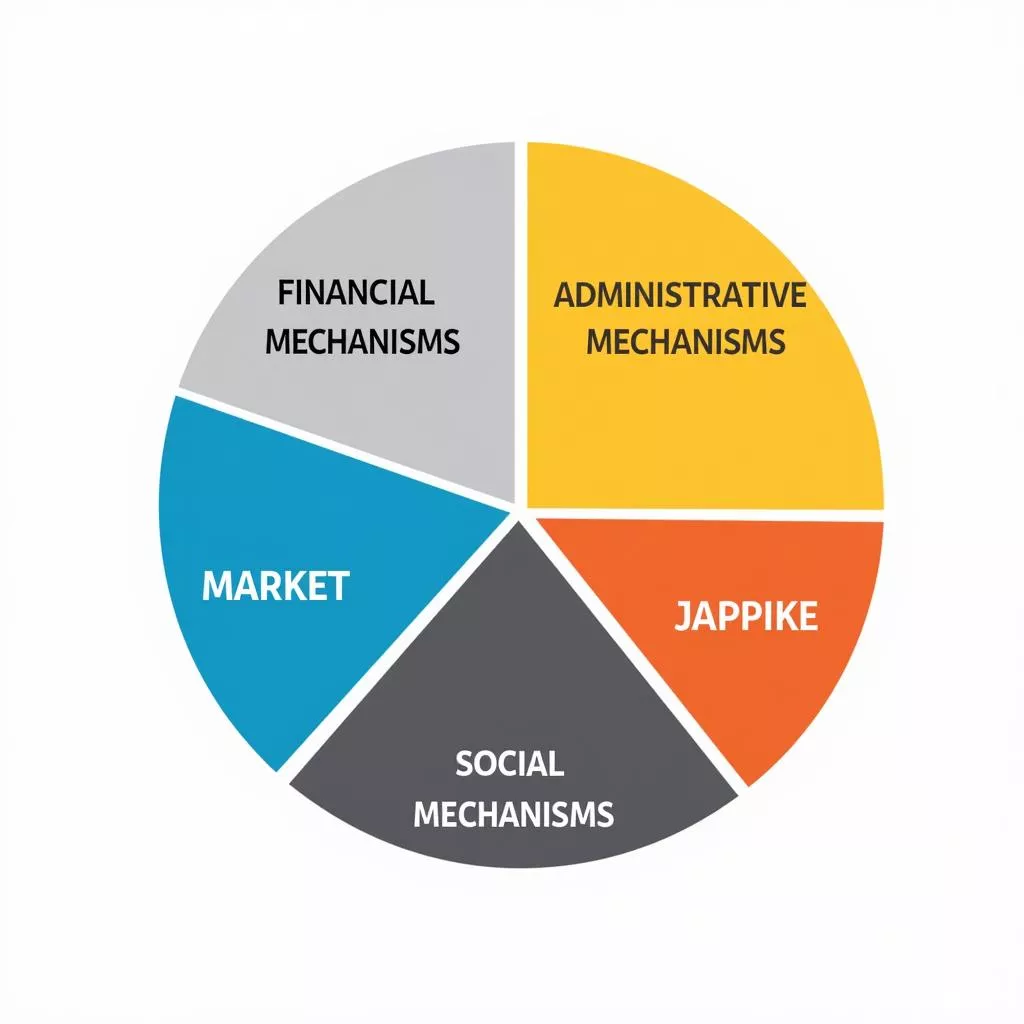 Illustration of Policy Mechanism Types
Common Challenges in Developing and Operating Policy Mechanisms
- Lack of Synchronization and Coordination: Agencies and departments lacking coordination, leading to overlap and waste.
- Cumbersome Procedures: Complex regulations causing difficulties for citizens and businesses.
- Lack of Transparency: Insufficient public access to information regarding policy mechanisms.
The Story of Mr. Ba & the Truck Purchase Support Policy
Mr. Ba, a resident of Hoai Duc district, Hanoi, heard about the government’s policy supporting loans for truck purchases to boost economic development. Excited, he visited the commune People’s Committee to inquire about the procedures.
However, after numerous back-and-forth trips, he still couldn’t grasp the specific regulations on interest rates, loan terms, and collateral requirements. Discouraged, Mr. Ba lamented, “The policy is great, but the procedures are too complicated. I don’t know when I’ll be able to get a loan!”
Mr. Ba’s story illustrates that even the best policies struggle without a clear, transparent, and accessible mechanism.
Conclusion
Policy mechanisms are crucial for the success of any policy. Developing and operating effective mechanisms is a vital task for government agencies, contributing to enhanced governance and sustainable socio-economic development.
Need assistance with truck purchase policies and procedures? Contact XE TẢI HÀ NỘI at 0968239999 or [email protected]. Our team of experts specializing in box trucks, light trucks, vans, and trucks ranging from 1 ton to 8 tons is available for free consultation 24/7. Visit us at: No. TT36 – CN9 Road, Tu Liem Industrial Zone, Phuong Canh Ward, Nam Tu Liem District, Hanoi.
Also, explore other helpful articles on the XE TẢI HÀ NỘI website for the latest updates on the truck market and attractive support policies!