
Anh Ba, a seasoned truck driver in Ha Dong, vividly remembers his first time “upgrading” from a rickety motorbike to an old Dongfeng truck. The joy was mixed with a bit of apprehension as he familiarized himself with the gear stick, steering wheel, and especially the seemingly simple yet intricate “clutch.” Back then, it took him a while to get the truck running smoothly; occasional jerks and stalls provided much amusement for his fellow drivers.
Anh Ba’s story likely resonates with many new drivers. So, what is a car clutch? Why is it so important? Let’s delve into the details with Hanoi Trucks!
Car clutch components diagram
What is a Car Clutch?
A car clutch, also known as a clutch, is a vital component in the transmission system of cars and trucks. Its primary function is to temporarily disconnect the engine from the transmission, allowing the driver to shift gears smoothly.
Structure and Working Principle of a Car Clutch
A car clutch typically consists of the following main components: flywheel, friction disc, pressure plate, clutch cover, and control mechanism.
- The flywheel is attached to the engine and stores rotational energy.
- The friction disc sits between the flywheel and pressure plate, transferring power through friction.
- The pressure plate applies force to the friction disc, ensuring firm contact with the flywheel for power transmission.
- The clutch cover houses the internal components and is bolted to the flywheel.
- The control mechanism (usually the clutch pedal) allows the driver to control the pressure plate’s force, thus engaging or disengaging the clutch.
The working principle of the clutch is quite simple:
- When you press the clutch pedal, the pressure plate releases, separating the friction disc from the flywheel and disconnecting the engine from the transmission.
- When you release the clutch pedal, the pressure plate pushes the friction disc against the flywheel. Engine power is transferred through the friction disc to the transmission and then to the wheels, propelling the vehicle.
The Importance of the Car Clutch
The clutch plays a crucial role, directly impacting the vehicle’s drivability:
- Smooth starting: The clutch allows you to engage first gear from a standstill without jerking or stalling.
- Seamless gear shifting: The clutch enables smooth transitions between gears, ensuring a comfortable ride and extending the transmission’s lifespan.
- Safe stopping: Disengaging the clutch while the vehicle is in motion allows you to brake safely without stalling the engine.
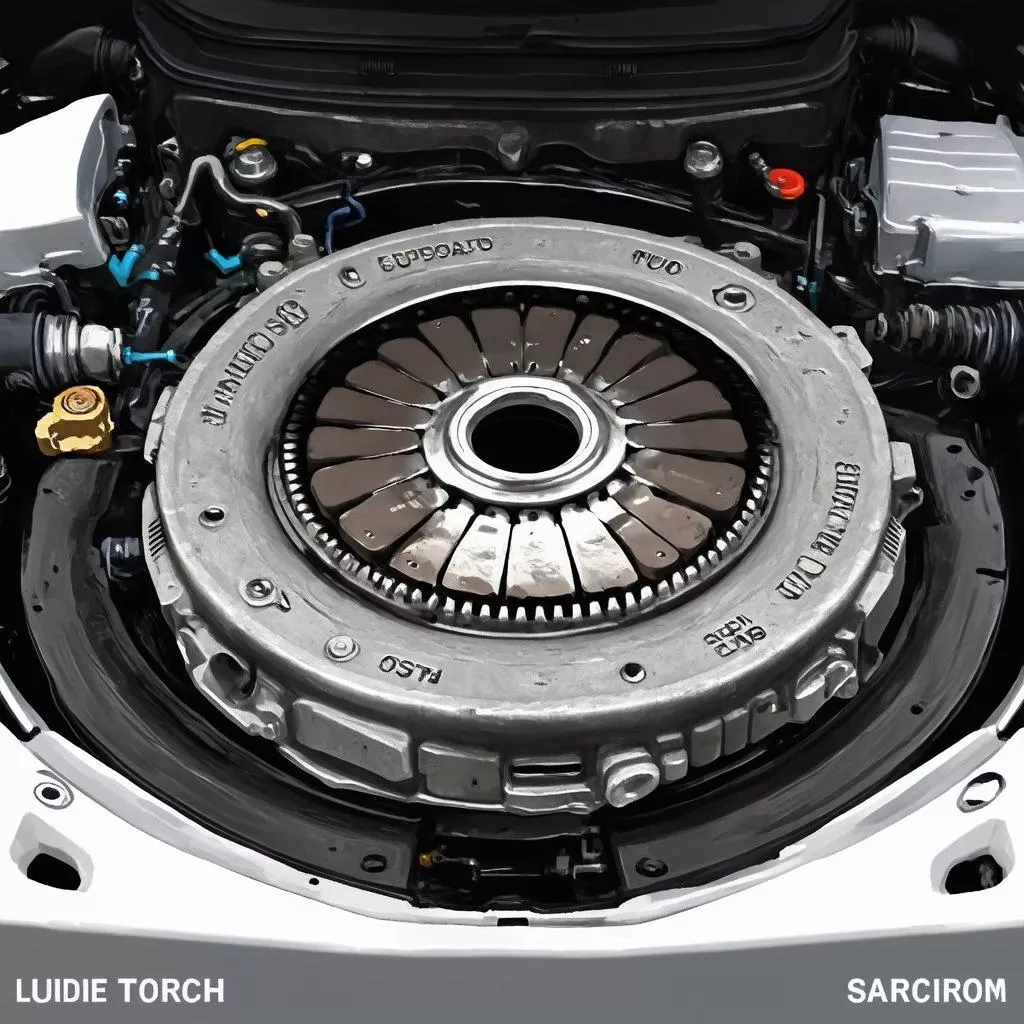 Illustration of the car clutch's role
Common Types of Car Clutches
Currently, there are two common types of car clutches: mechanical clutches and hydraulic clutches.
Mechanical clutches have a simpler design, lower cost, and are easier to repair, but they require more physical effort from the driver.
Hydraulic clutches are more complex and expensive but offer a lighter and smoother operation.
Frequently Asked Questions About Car Clutches
How Long Does a Car Clutch Last?
A clutch’s lifespan depends on various factors, including its quality, driving habits, and operating conditions. Typically, a clutch can last for approximately 80,000 – 120,000 km.
What are the Signs of a Failing Car Clutch?
Some signs indicate your car clutch might be failing:
- Difficulty shifting gears, especially into first or reverse.
- Jerking, shuddering, or unusual noises when releasing the clutch.
- Clutch slippage, resulting in weak acceleration despite pressing the gas pedal.
- A heavy, sticky, or loose clutch pedal.
- A burning smell from the clutch area during operation.
How to Use a Car Clutch Effectively and Extend its Lifespan?
To prolong your clutch’s life, consider these tips:
- Avoid prolonged clutch engagement while stopped at traffic lights or in traffic jams.
- Avoid partially engaging the clutch (“riding the clutch”) while shifting gears.
- Avoid using the clutch to hold the vehicle on inclines.









