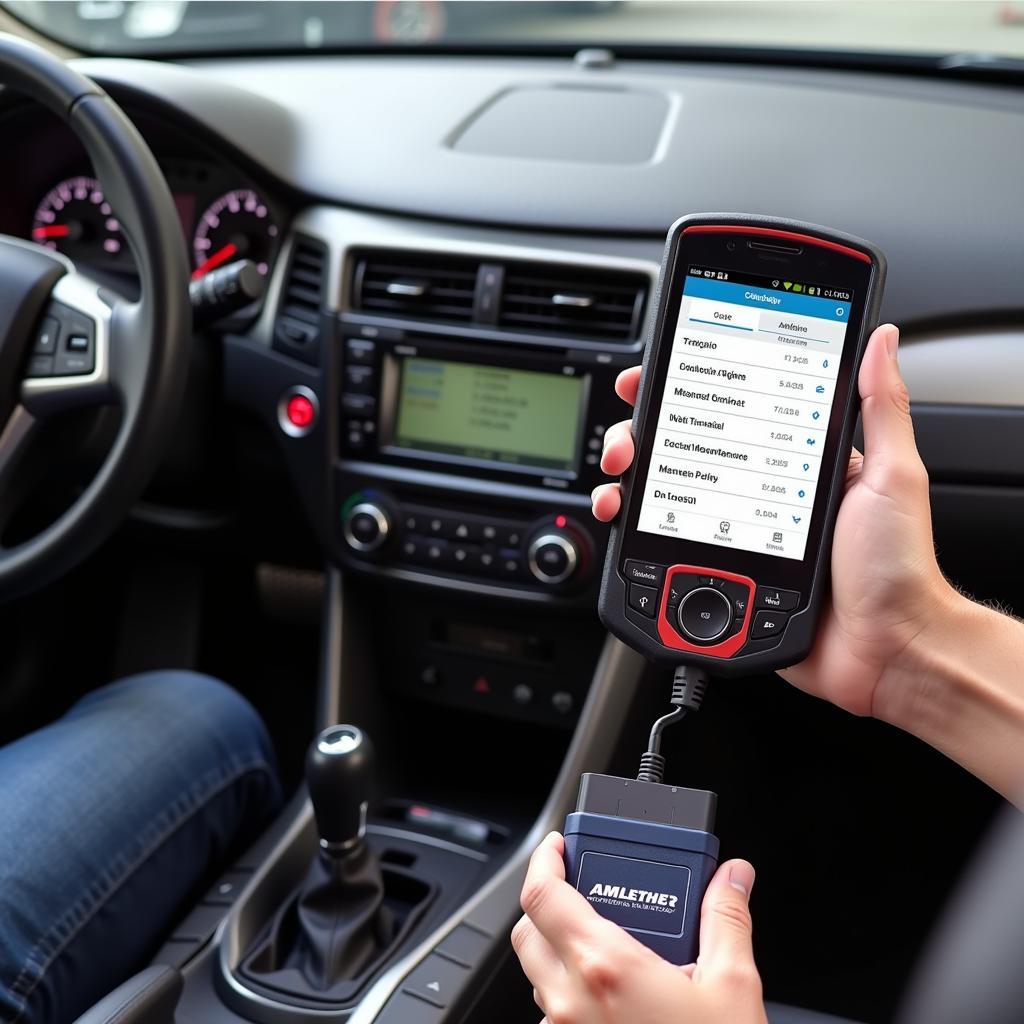
The OBD port in your car, short for On-Board Diagnostics, plays a crucial role in diagnosing and repairing issues related to the vehicle’s electronic systems. It acts like a “window” allowing technicians to “see” inside the car’s operations, quickly and effectively detecting and fixing faults. Understanding the OBD port is beneficial not only for technicians but also for car owners, empowering them to be more proactive in maintaining and caring for their beloved vehicles. Following this introduction, we will delve deeper into this useful technology. automotive repair equipment
What is an OBD Port?
The OBD port is a standardized interface that allows access to data from the car’s computer system. Through this port, diagnostic devices can read error codes and monitor operating parameters of the engine and other vehicle systems. This makes identifying the cause of problems easier than ever, saving time and repair costs.
Common Types of OBD Ports
Currently, there are two common types of OBD ports: OBD-I and OBD-II. OBD-I is an older version, typically used in vehicles manufactured before 1996. OBD-II is the newer version, equipped in most vehicles manufactured from 1996 onwards. OBD-II offers more advanced diagnostic capabilities and provides more detailed data compared to OBD-I.
OBD-II: Advanced Diagnostic Technology
OBD-II is considered a significant advancement in automotive diagnostic technology. With deeper data access, OBD-II allows technicians to pinpoint the exact location and cause of a problem. This makes the repair process faster and more efficient, minimizing the time a vehicle spends in the workshop.
How to Use an OBD Port
To use an OBD port, you need a specialized diagnostic tool. This tool connects to the OBD port in your car and reads the error codes stored in the computer system. From there, technicians can analyze and determine the cause of the problem. what is dtc in cars
Reading DTC Error Codes
DTC (Diagnostic Trouble Code) is a string of characters stored in the car’s computer system when a fault is detected. Each DTC code corresponds to a specific problem. By reading DTC codes, technicians can quickly identify the cause of the issue.
Reading DTC error codes via OBD port
Benefits of Using an OBD Port
Using an OBD port offers numerous benefits for both car owners and technicians. For car owners, it allows them to be more proactive in vehicle maintenance and care. For technicians, it enables faster and more efficient diagnosis and repair of faults. automotive repair tools
Saving Time and Costs
Using an OBD port significantly saves time and repair costs. Thanks to accurate diagnostics, technicians can quickly identify the root cause of the problem, avoiding unnecessary replacement of parts.
Mr. Nguyen Van A, an automotive repair expert in Hanoi, stated: “The OBD port is an incredibly useful tool for car diagnosis and repair. It saves us a lot of time and effort.”
Conclusion
The OBD port in cars is a vital technology that makes diagnosing and repairing faults easier and more efficient. Understanding the OBD port and how to use it will help you be more proactive in maintaining and caring for your vehicle. Learn more about wireless car GPS tracker to better protect your car.
FAQ
- Where is the OBD port located in a car?
- How to connect a diagnostic tool to the OBD port?
- Can I read DTC error codes myself?
- How much does an OBD error code reader cost?
- What should I do when I detect a DTC error code in my car?
- What types of OBD diagnostic tools are available on the market?
- How do OBD-I and OBD-II differ?
Ms. Tran Thi B, an automotive technician in Ho Chi Minh City, shared: “Using the OBD port helps us improve the quality of repair services, bringing satisfaction to customers.”
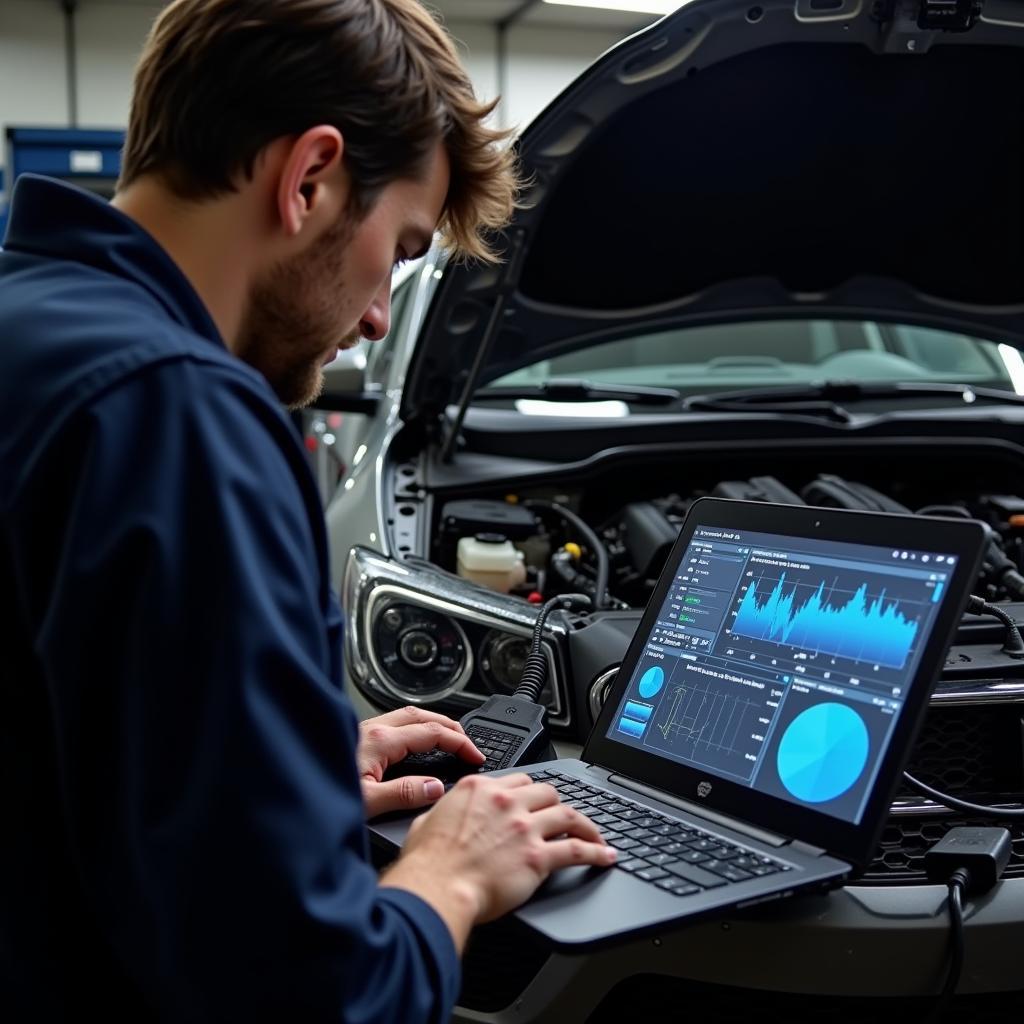 OBD port application in diagnostics
Want to learn more about automotive OBD terminology in English? Please refer to our article.
For support, please contact Phone: 0968239999, Email: [email protected] Or visit the address: No. TT36 – CN9 Street, Tu Liem Industrial Zone, Phuong Canh Ward, Nam Tu Liem District, Hanoi. We have a 24/7 customer care team.









