
Effective personal finance management is the cornerstone of a stable and prosperous life. However, not everyone is equipped with the knowledge and skills needed to confidently navigate their financial journey, especially beginners. That’s why a “first finance handbook” becomes an indispensable companion, providing you with the most fundamental and practical knowledge to build a solid financial foundation.
Understanding Your “First Finance Handbook”
A “first finance handbook” isn’t a specific book, but rather a metaphorical term for the foundational financial knowledge everyone needs. It encompasses concepts, principles, and effective money management strategies, helping you:
- Understand your current financial situation.
- Define short-term and long-term financial goals.
- Create a reasonable spending plan and save effectively.
- Explore investment channels that align with your risk tolerance.
- Protect your assets and build a contingency plan for the future.
Financial Management
Benefits of Mastering Basic Financial Knowledge
Mastering basic financial knowledge offers significant benefits, enabling you to:
- Make confident financial decisions: You’ll have the knowledge to evaluate different financial options and make informed decisions aligned with your circumstances and goals.
- Avoid debt: Understanding how to manage spending and use credit responsibly helps you avoid falling into a debt spiral.
- Increase assets: Applying effective saving and investment strategies helps you grow your assets and achieve your financial goals faster.
- Secure your future: Building a long-term financial plan, including retirement planning, provides peace of mind about your and your family’s future.
Starting Your Journey to Financial Mastery
Here are some basic steps to begin your journey towards financial mastery:
- Track income and expenses: Record all your income and expenses for a specific period (e.g., one month) to understand your cash flow.
- Create a budget: Based on your tracked income and expenses, develop a reasonable spending plan for each category, ensuring expenses don’t exceed income.
- Build an emergency fund: Set aside a certain amount (equivalent to 3-6 months of expenses) to mitigate unexpected risks like job loss or illness.
- Pay off bad debt: Prioritize paying off high-interest debts first, such as credit card debt, to reduce your financial burden.
- Start investing: Research and choose investment channels that suit your risk tolerance and financial goals.
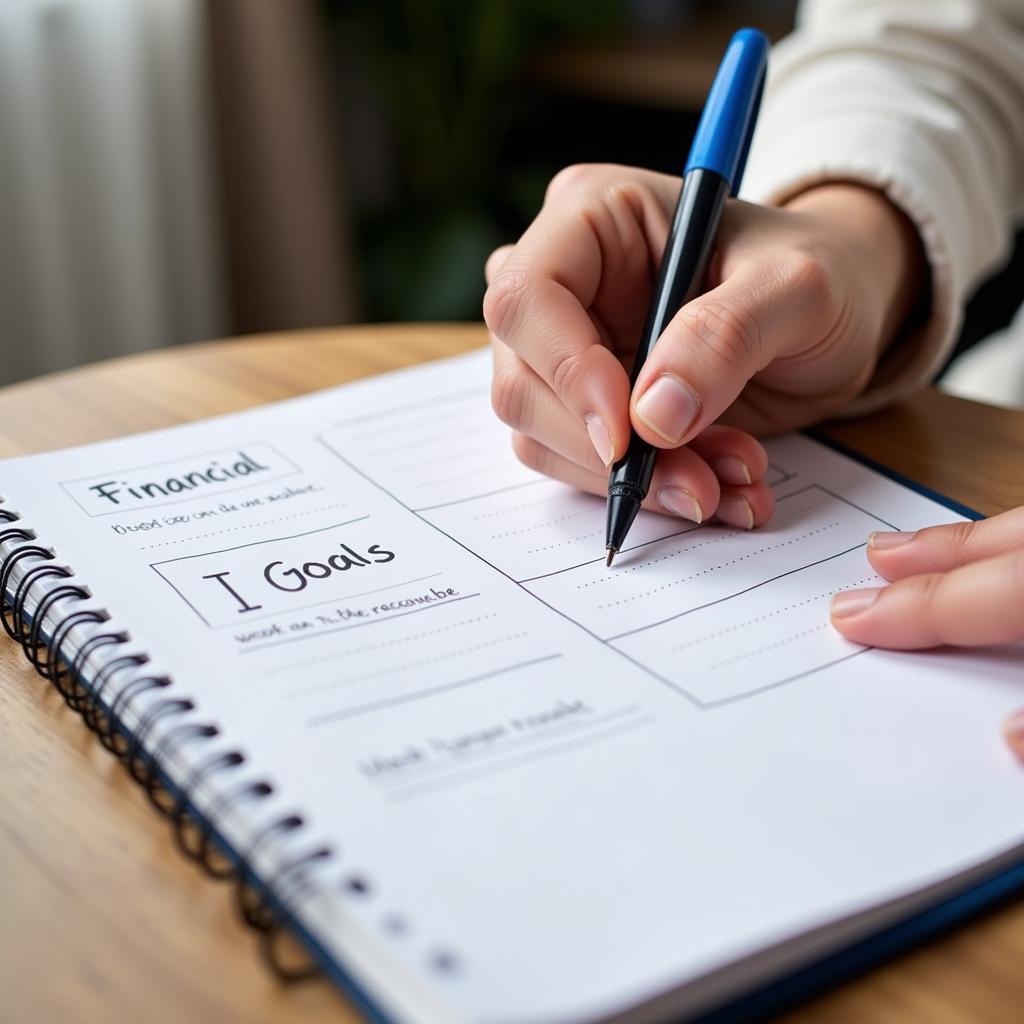 Financial Planning
Finding Reliable Financial Knowledge Sources
Numerous personal finance information sources exist today, from books and websites to online courses. However, choosing reputable sources appropriate for your level of understanding is crucial.
Highly regarded personal finance books include:
- “Rich Dad Poor Dad” (Robert Kiyosaki)
- “The Total Money Makeover” (Dave Ramsey)
- “Your Money or Your Life” (Vicki Robin & Joe Dominguez)
You can also consult reputable financial websites like:
- Investopedia
- The Balance
- NerdWallet
Conclusion
Your “first finance handbook” is essential for achieving financial freedom. By equipping yourself with the necessary knowledge and skills, you can confidently manage your personal finances, achieve your financial goals, and strive for a brighter future.
Frequently Asked Questions:
-
When should I start learning about personal finance?
Learning and applying personal finance management knowledge is essential as soon as you start earning an income.
-
What methods can I use to track personal expenses effectively?
You can use a notebook, mobile app, or personal finance software to conveniently and effectively track expenses.
-
How do I determine my risk tolerance when investing?
You can research different investment types, their risk levels, and potential returns. Then, assess your own risk tolerance to choose suitable investment channels.
-
Do I need to hire a personal financial advisor?
Hiring a personal financial advisor can be beneficial in certain cases, such as when you have significant assets or complex financial issues. However, with basic personal finance knowledge and a willingness to learn, you can manage your finances independently.
-
Are there any free resources for learning more about personal finance?
Numerous free resources are available online, including blogs, videos, and podcasts that share personal finance knowledge. You can also find personal finance books at libraries or online.
Learn More About:
Contact Us:
For assistance, please contact us by phone: 0968239999, Email: [email protected] Or visit our address: No. TT36 – CN9 Road, Tu Liem Industrial Zone, Phuong Canh Ward, Nam Tu Liem District, Hanoi. We have a 24/7 customer service team.