Policy evaluation is a crucial step in the management and operational process. It allows us to understand the effectiveness of enacted policies, enabling adjustments and improvements to achieve desired goals. This is particularly important in the transportation sector, directly impacting the business performance of companies utilizing trucks.
The Importance of Policy Evaluation
Policy evaluation goes beyond simply checking if a policy has been implemented correctly. It involves analyzing its impact on affected stakeholders, identifying strengths and weaknesses, and proposing solutions for improvement. For example, a policy supporting registration fee reductions for box trucks might ease financial burdens for businesses, but evaluation is needed to determine if it truly encourages investment in new box trucks.
Methods of Policy Evaluation
Various methods exist for evaluating policy effectiveness, ranging from qualitative approaches like interviews and surveys to quantitative methods like statistical data analysis. The appropriate method depends on the evaluation goals, available resources, and the specific policy being assessed. For instance, evaluating a policy limiting truckloads might involve analyzing traffic accident data before and after implementation. The Party’s policy on poverty reduction is another example of a policy requiring thorough evaluation.
Quantitative Evaluation
Quantitative methods focus on collecting and analyzing numerical data to measure policy effectiveness. Examples include the number of newly registered trucks, transportation revenue, and the number of traffic accidents. This approach provides objective and comparable evidence.
Qualitative Evaluation
Qualitative methods delve into the policy’s impact through interviews, surveys, and focus groups. This approach provides a deeper understanding of changes in perceptions and behaviors among those affected by the policy.
Evaluating Trucking Policies
For policies related to trucks, evaluation should focus on aspects like road safety, environmental protection, and economic efficiency. For example, a policy supporting the transition to electric vans needs to be assessed for its impact on air quality, operating costs, and business accessibility. The exam set for the Bank for Social Policies can offer further insights into policy evaluation.
1-Ton, 2-Ton, 3.5-Ton, and 8-Ton Trucks
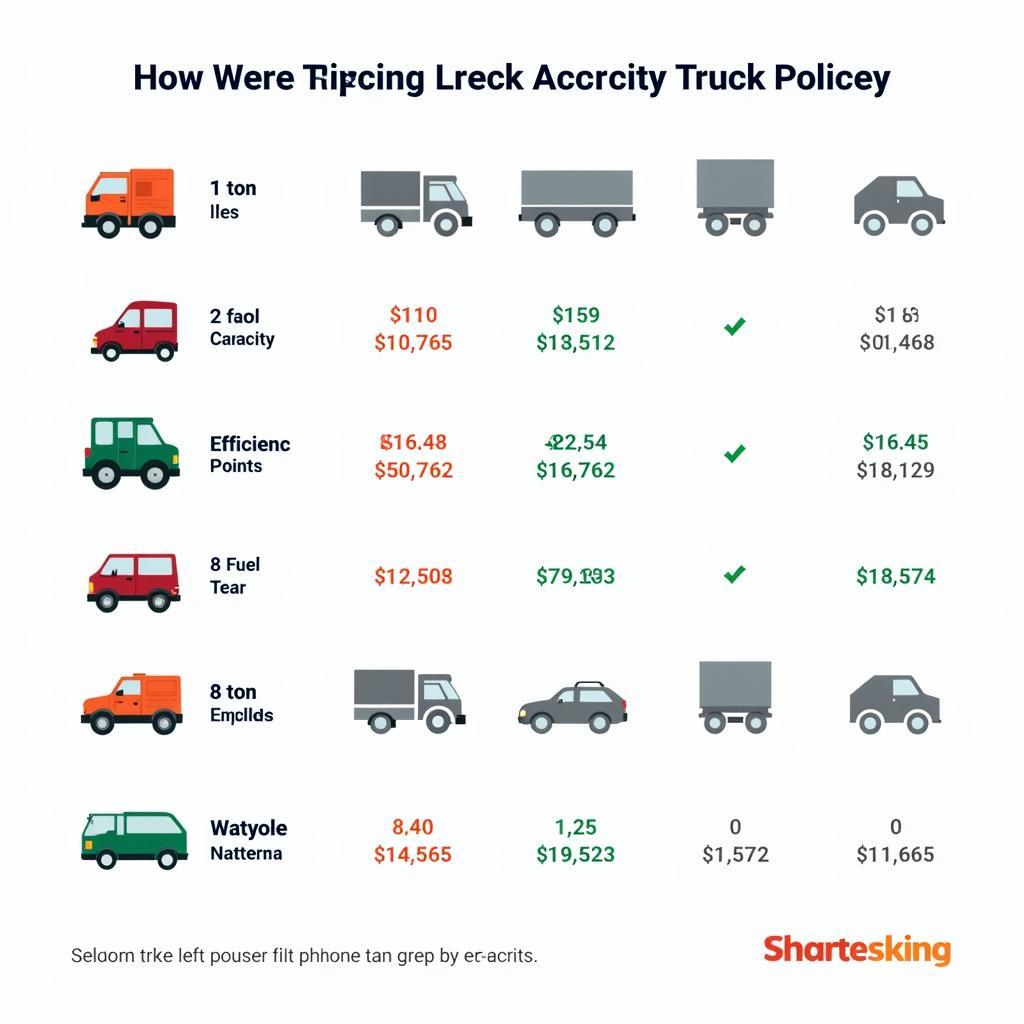
Policy evaluation must also consider different truck segments, from light 1-ton and 2-ton trucks to heavier 3.5-ton and 8-ton trucks. Each segment has unique characteristics regarding load capacity, size, and cargo type, necessitating tailored policies. The analysis of family planning policy provides a detailed example of policy analysis.
Truck policy evaluation by segment
Conclusion
Policy evaluation is a continuous and necessary process to ensure policies achieve their intended goals. In the trucking sector, this requires a scientific, objective, and comprehensive approach, considering the impact on different truck segments and stakeholders. Effective policy evaluation optimizes the transportation industry’s performance, contributing to socio-economic development. Public policy at Ly Quang Dieu University and the foreign policy of the Soviet Union are further examples of policies and their evaluation.
For assistance, please contact us at Phone: 0968239999, Email: [email protected] or visit us at: TT36 – CN9 Road, Tu Liem Industrial Zone, Phuong Canh Ward, Nam Tu Liem District, Hanoi. We have a 24/7 customer service team.









