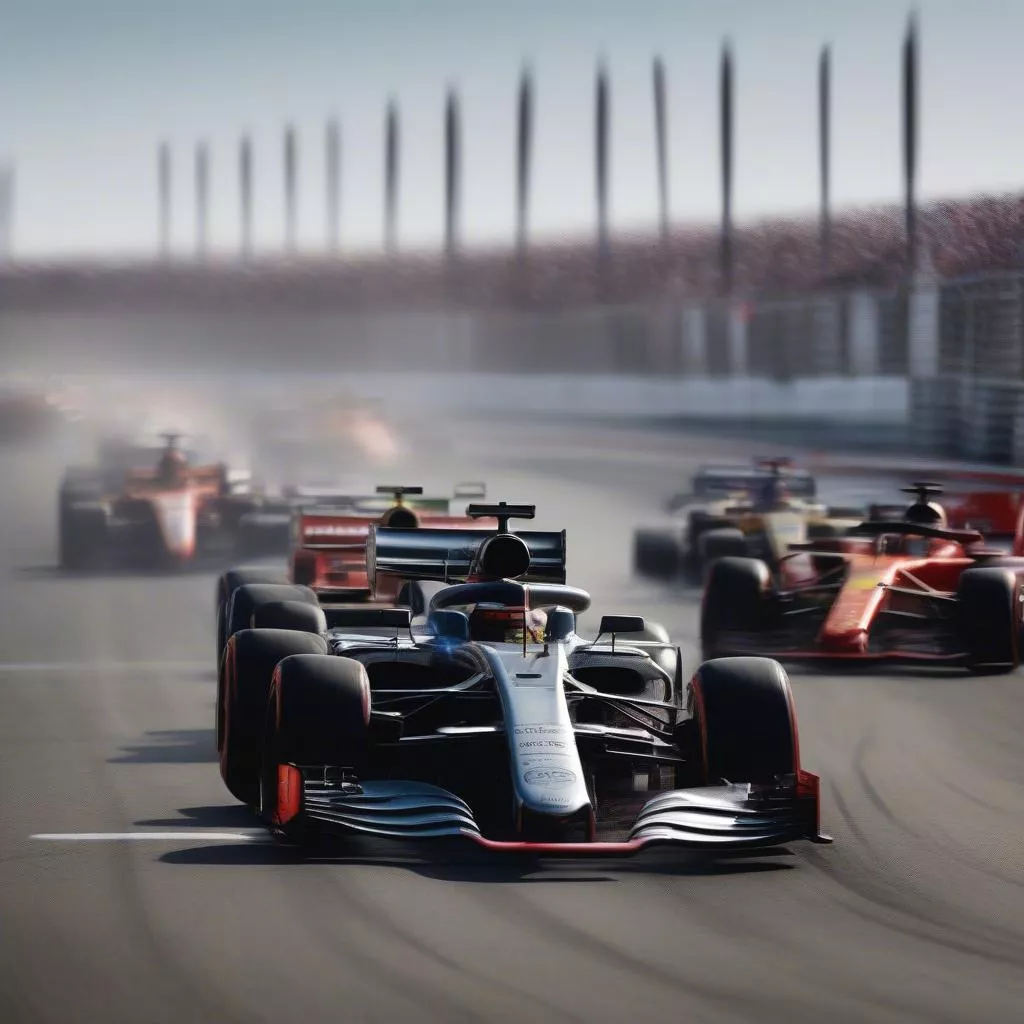
“Speed, passion, and luxury” – these words often come to mind when we think of Formula 1 racing cars. But behind the glamour, the price of an F1 car is something that often shocks people. Have you ever wondered how much it costs to own one of these “speed machines”? Let’s explore the fascinating world of F1 cars with xetaihanoi.edu.vn and decode the mystery of their value!
More Than Just Money: The Significance of the Question
Understanding the price of an F1 car is more than just satisfying curiosity. It represents:
- Admiration for Cutting-Edge Technology: Each F1 car is a culmination of science and the most advanced engineering, a source of pride for the world’s leading car manufacturers.
- The Dream of Conquering Speed: The image of F1 cars speeding around the track ignites the desire to conquer speed in everyone.
- Passion for Motorsport: For F1 enthusiasts, understanding the value of these racing cars is a way to get closer to this dramatic sport.
The Answer: An Exorbitant Figure
So, how much does an F1 car cost? There’s no single definitive answer. Each F1 car is custom-built to the specifications of each racing team, utilizing proprietary technologies and ultra-expensive materials.
However, experts estimate that the cost of building an F1 car can reach millions of US dollars. For instance, Robert Schmidt from the Fédération Internationale de l’Automobile (FIA) shared in his book “The Anatomy of a Formula 1 Car” that the average cost of an F1 car is around 10-15 million USD.
Factors Influencing the Price of an F1 Car
Many factors contribute to the price of an F1 car, including:
- Engine: The “heart” of an F1 car can cost millions of USD, as it’s crafted from ultra-durable, lightweight materials like titanium and carbon fiber.
- Aerodynamics: Wings and spoilers are meticulously designed to optimize downforce, allowing the car to maintain grip at high speeds.
- Braking System: High-performance carbon ceramic brakes can withstand extreme temperatures generated during high-speed braking.
- Technology: Support technologies like Kinetic Energy Recovery Systems (KERS) and Drag Reduction Systems (DRS) are all expensive additions.