A highway design curriculum provides essential knowledge, equipping future engineers with the ability to create modern and safe transportation systems. What does this curriculum entail, and what are its practical applications? Let’s delve in.
Understanding the Highway Design Curriculum
A highway design curriculum encompasses specialized knowledge in the planning, design, and construction of road systems. It covers key areas such as:
- Fundamental Principles: Introduces concepts, technical standards, and legal regulations related to highway design.
- Influencing Factors: Analyzes topographical, geological, hydrometeorological, and traffic density factors that impact the design process.
- Design Methods: Provides knowledge of calculation methods, material selection, and construction techniques for highway components like subgrade, pavement, bridges, and culverts.
- Construction Technology: Introduces modern technologies used in highway construction and maintenance.
Core Curriculum Content
Components of a Highway
The curriculum details the structure and function of each component that constitutes a complete highway:
- Subgrade: Ensures stability and durability for the entire road structure, bearing loads from vehicles and transferring them to the ground.
- Pavement: The surface layer in direct contact with vehicle tires, ensuring smooth travel, skid resistance, and wear resistance.
- Drainage System: Ensures surface and groundwater drainage, keeping the subgrade dry and stable.
- Highway Structures: Includes bridges, culverts, underpasses, and overpasses designed to overcome natural or man-made obstacles.
Highway Design Process
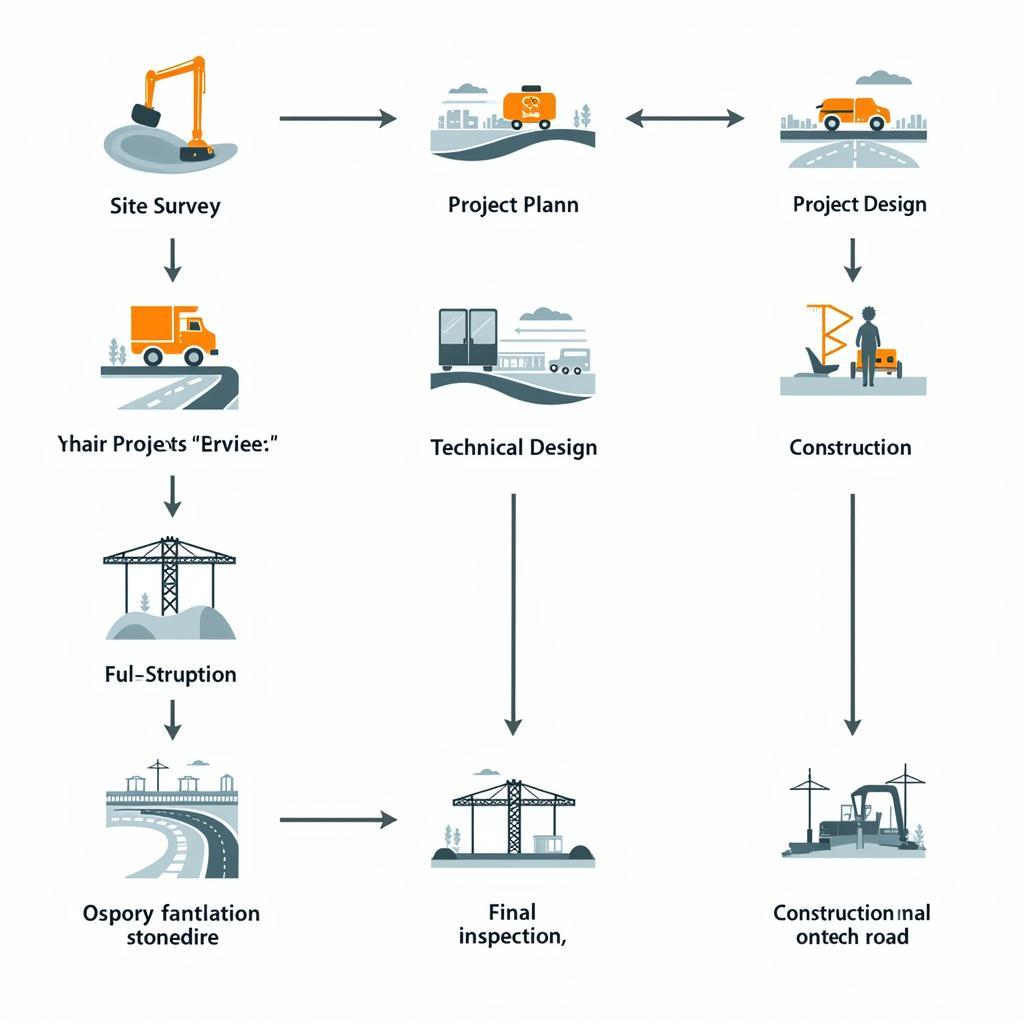
The curriculum provides a systematic design process, from surveying and project planning to construction and acceptance:
- Surveying: Gathering data on topography, geology, hydrology, traffic, etc.
- Project Planning: Defining the scope, technical standards, and budget estimation.
- Engineering Design: Creating detailed drawings of highway components, selecting materials, and determining construction methods.
- Construction: Implementing construction according to the design drawings.
- Acceptance: Inspecting and evaluating the quality of the completed project.
Highway Design Process
Practical Applications
Knowledge from the highway design curriculum is widely applied in practice:
- Highway Construction: Meeting the increasing demand for transportation, connecting different regions.
- Urban Road Upgrading and Expansion: Reducing traffic congestion, creating space for socio-economic development.
- Rural Road Construction: Improving the lives of people, promoting regional economic development.
Conclusion
The highway design curriculum is a crucial learning resource, equipping future engineers with specialized knowledge. Mastering its content contributes to creating modern, safe, and efficient transportation systems that serve the sustainable development of the country.
Frequently Asked Questions
1. Where can I study highway design?
Many technical universities offer programs in Transportation Engineering or Civil Engineering specializing in roads and bridges.
2. Does the highway design field have good prospects?
The increasing demand for transportation infrastructure opens up many attractive job opportunities for highway design engineers.
3. What is the job of a highway design engineer?
Surveying, designing, supervising construction, and managing road construction projects.
4. What software is commonly used in highway design?
AutoCAD, Civil 3D, Nova, Bentley MXROAD, etc.
5. What standards are applied in highway design?
Vietnam applies the national standard system (TCVN) and refers to international standards such as AASHTO and ASTM.
Learn More
To learn more about trucks suitable for transportation on these roads, you can refer to:
Contact Us
For assistance, please contact us by phone: 0968239999, Email: [email protected] Or visit our address: No. TT36 – CN9 Road, Tu Liem Industrial Park, Phuong Canh Ward, Nam Tu Liem District, Hanoi. We have a 24/7 customer support team.









