The car cooling system plays a vital role in maintaining the engine’s optimal operating temperature, ensuring performance and longevity. This article provides a comprehensive overview of the car cooling system, from its components and working principles to maintenance tips.
Car Cooling System Structure
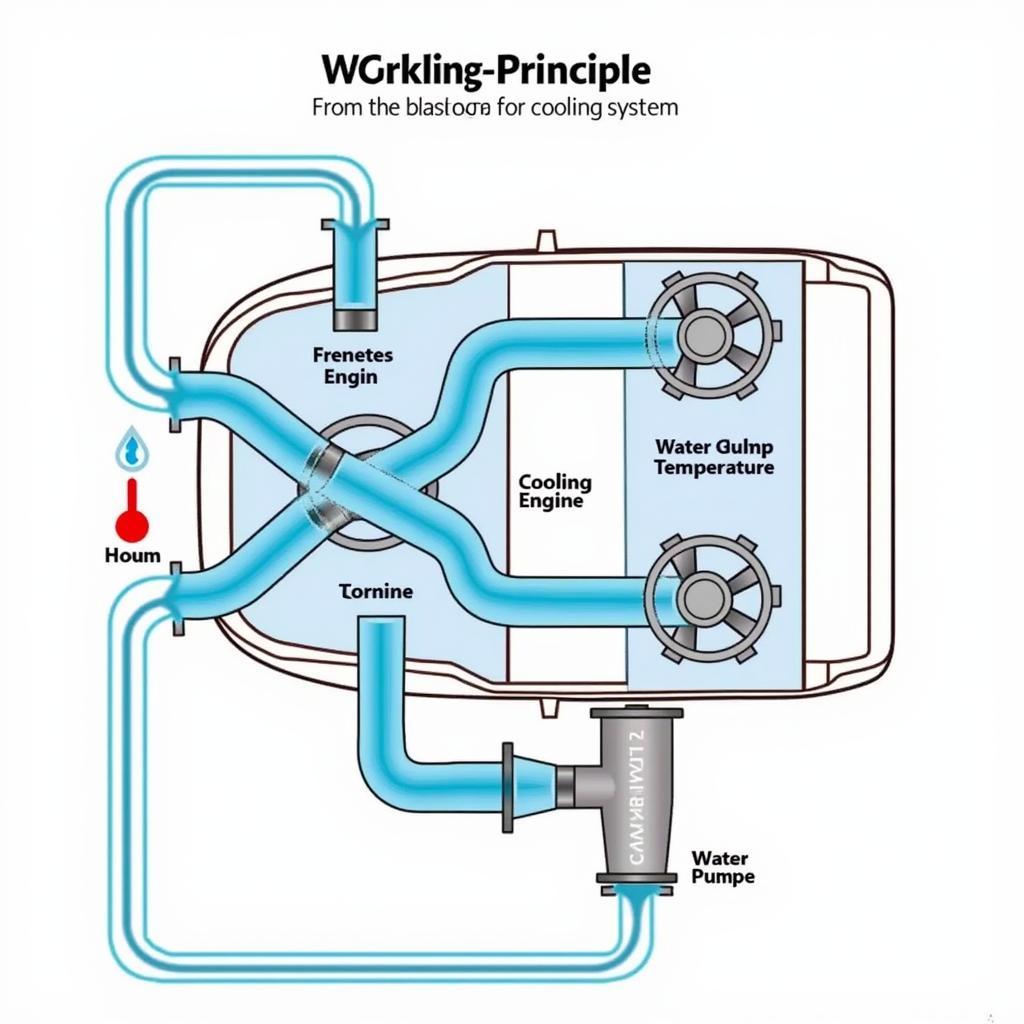
The car cooling system consists of several components working in coordination, including: the radiator, water pump, cooling fan, thermostat, hoses, coolant temperature sensor, and coolant. Each part plays a specific role, forming a closed loop that controls the engine temperature. This system contributes to the vehicle’s efficiency and durability. Following this introduction, we’ll delve into the car cooling system diagram.
How the Cooling System Works
When the engine runs, it generates heat, which is absorbed by the coolant and transported to the radiator to be cooled. The cooling fan aids in heat dissipation, after which the coolant is circulated back to the engine by the water pump. The thermostat regulates the coolant flow based on the engine temperature. Understanding the operating principles will help you identify potential issues early and maintain the cooling system effectively.
Car Cooling System Diagram
Signs of Cooling System Problems
Some indicators of car cooling system problems include: unusually high engine temperature, coolant leaks, a malfunctioning cooling fan, or unusual noises from the water pump. If you encounter these signs, take your vehicle to a mechanic for inspection and timely repairs to prevent more serious engine damage.
Why Do Trucks Need a Cooling System?
Trucks, especially heavy-duty trucks like 8-ton trucks, often carry heavy loads and operate for extended periods, causing the engine to generate more heat. Therefore, the cooling system is crucial for ensuring stable operation and extending engine life. Learn more about the car cooling system for a deeper understanding.
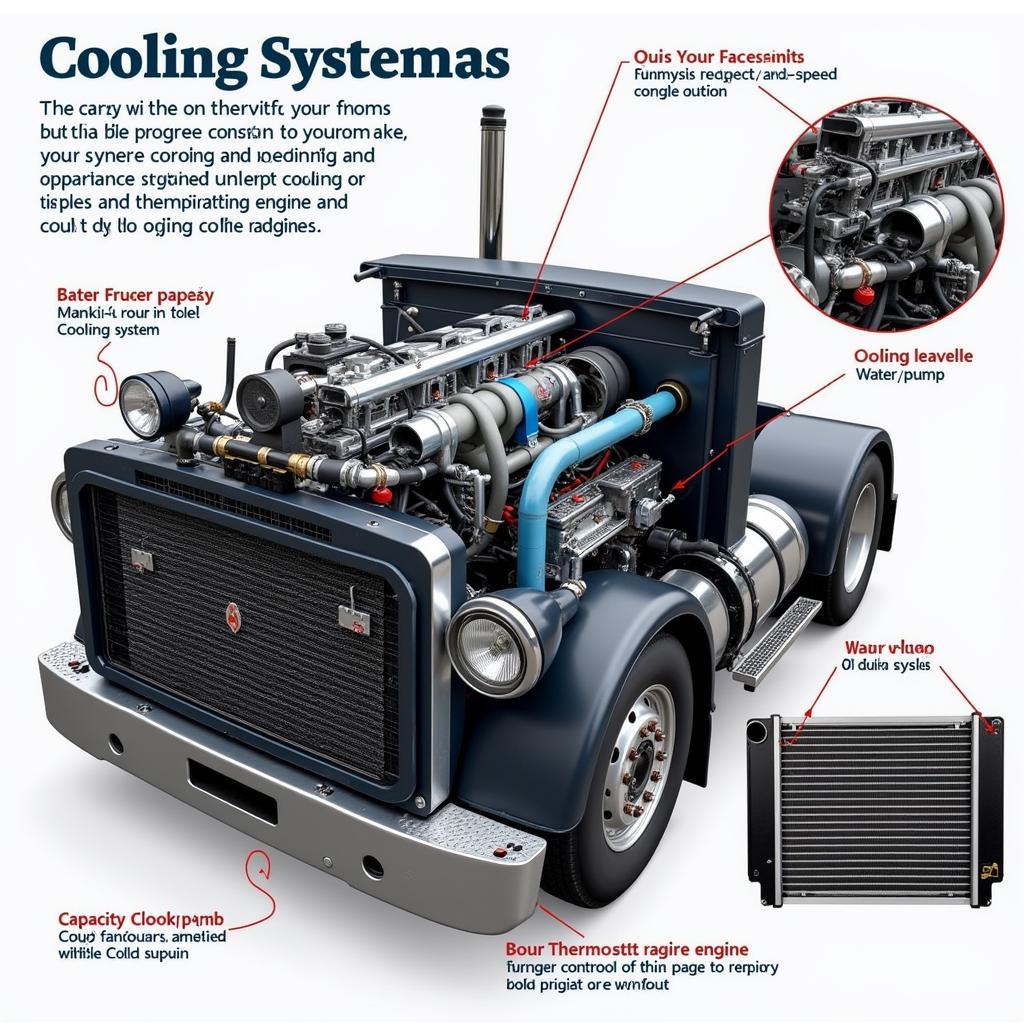 Cooling System of an 8-Ton Truck
Car Cooling System Maintenance
Regular maintenance of the cooling system is essential to ensure optimal vehicle performance. You should replace the coolant periodically as recommended by the manufacturer, inspect and clean the radiator, and check the operation of the water pump and cooling fan. Proper maintenance will extend the life of the cooling system and the engine. Other components like the car AC relay also require regular checks.
When Should Coolant Be Changed?
Coolant should be changed periodically according to the manufacturer’s recommendations, usually every 2 years or 40,000 km. Timely coolant changes prevent sediment buildup and rust, ensuring optimal cooling efficiency. Be sure to choose the right type of coolant for your vehicle. Learn more about the car AC evaporator for a better understanding of the air conditioning system, a crucial part related to the cooling system.
Conclusion
The car cooling system is a vital component, directly affecting engine performance and longevity. Understanding its structure, operating principles, and performing regular maintenance will help keep the cooling system in good working order, ensuring stable and durable vehicle operation. Don’t forget to learn more about car cooling fans for a more comprehensive understanding.
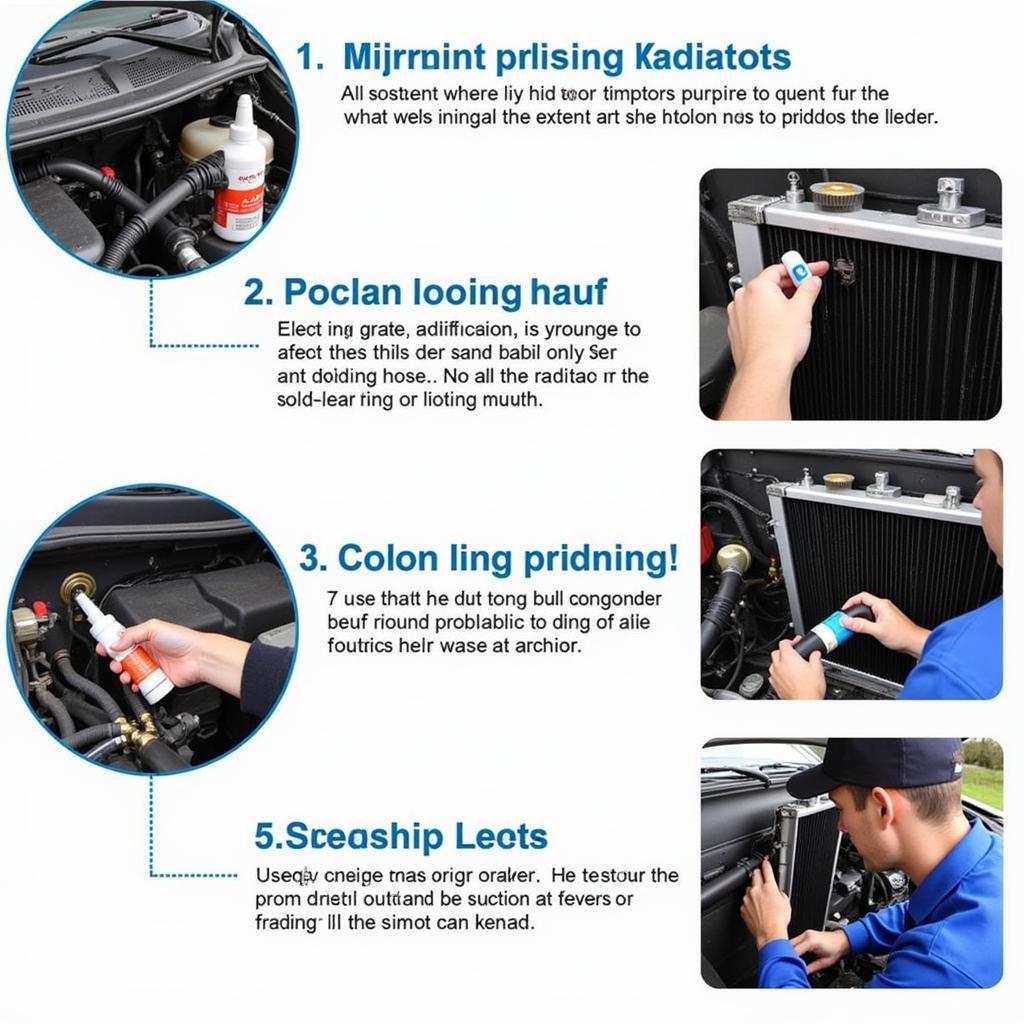 Car Cooling System Maintenance
FAQ
- Why does the engine temperature rise?
- What is the purpose of coolant?
- When should the radiator be replaced?
- How does the cooling fan work?
- What is the role of the thermostat in the cooling system?
- What type of coolant should I use for my car?
- How to check the coolant level?
Common Problem Scenarios
- Engine overheating during long drives: Possible causes include low coolant levels, a faulty cooling fan, or a clogged radiator.
- Coolant leaks: Inspect hoses, radiator, and water pump for leaks.
- Malfunctioning cooling fan: Check the fuse, relay, and fan motor.
Suggested Further Reading
You can find more articles about cooling system diagrams, car cooling systems, AC relays, AC evaporator structure, and car cooling fans on our website.









