Regular car inspections are essential for ensuring safety and maintaining optimal vehicle performance. Frequent checks not only help you detect potential problems early but also extend the lifespan of your car. This guide provides a comprehensive walkthrough on how to effectively inspect your vehicle.
Basic Car Inspection Steps
Inspecting your car doesn’t have to be complicated. You can easily perform some basic checks at home. Here are some essential steps you should regularly undertake:
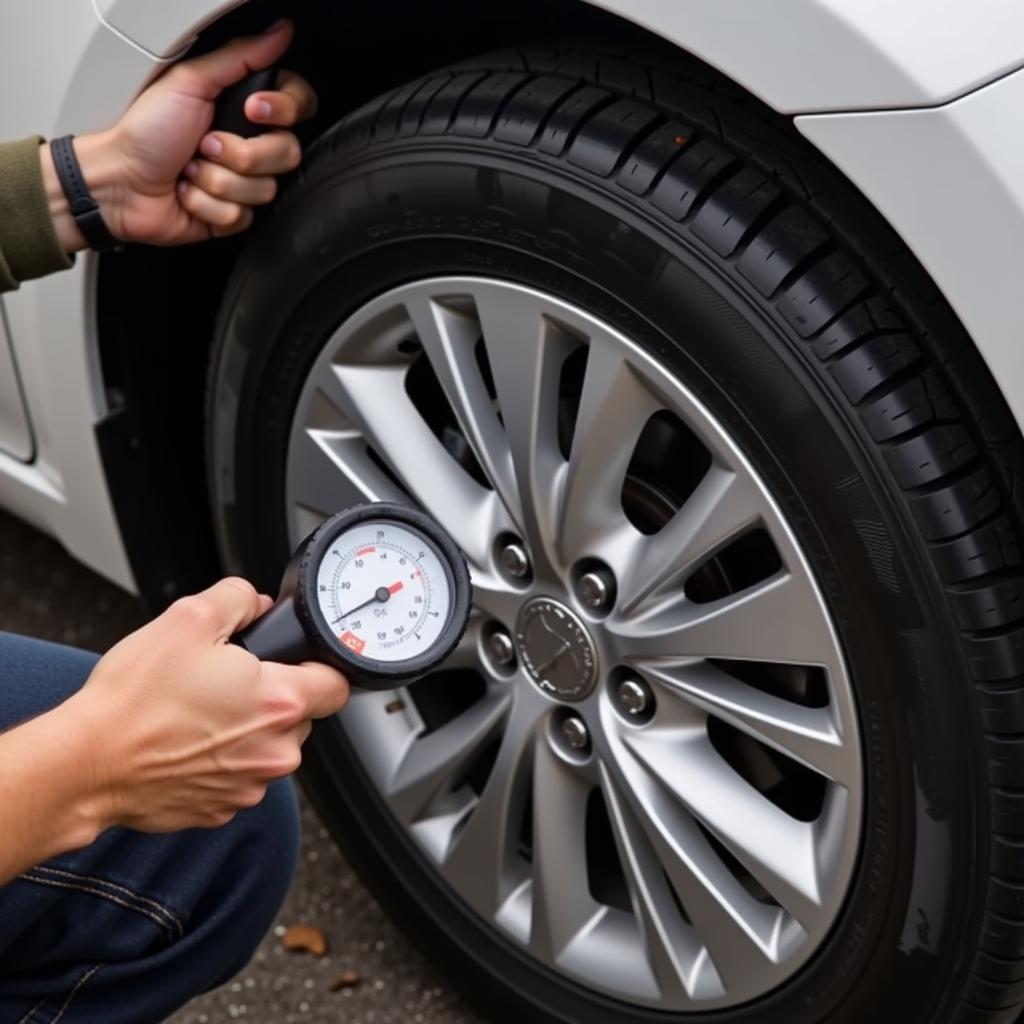
- Tire Inspection: Check tire pressure, tread wear, and any cracks or tears on the tire surface. Insufficient tire pressure can lead to increased fuel consumption and affect handling.
- Oil Check: Check the oil level using the dipstick. Ensure the level is within the recommended range. Oil plays a crucial role in lubricating the engine.
- Coolant Check: Check the coolant level in the reservoir. Coolant prevents the engine from overheating.
- Light Check: Check all car lights, including headlights, taillights, turn signals, and brake lights. Properly functioning lights ensure safety when driving at night or in adverse weather conditions.
- Seatbelt Check: Ensure seatbelts are functioning correctly and show no signs of damage.
Checking car tire pressure regularly
In-Depth Car Inspection
Beyond basic checks, you should take your car to a garage for periodic in-depth inspections. These comprehensive checks help identify more complex issues that you might not be able to detect on your own.
- Brake System Inspection: Check brake pads, rotors, and the hydraulic system. A well-functioning brake system is paramount for safe driving.
- Suspension System Inspection: Check shock absorbers, springs, and other suspension components. The suspension system ensures a smooth and stable ride.
- Electrical System Inspection: Check the battery, ignition system, and other electrical components.
- Engine Inspection: Conduct a comprehensive engine check, including spark plugs, high-voltage wires, and the fuel injection system.
You can refer to the used car inspection guide for more details.
When Should You Inspect Your Car?
The frequency of car inspections depends on various factors, including the car’s age, mileage, and operating conditions. However, you should inspect your car at least every six months or every 10,000 kilometers. Additionally, inspect your car before long trips.
For trucks, inspections are even more critical. This is especially true for box trucks, light trucks, vans, 1-ton, 2-ton, 3.5-ton, and 8-ton trucks. Regular inspections ensure optimal performance and prevent unfortunate incidents on the road.
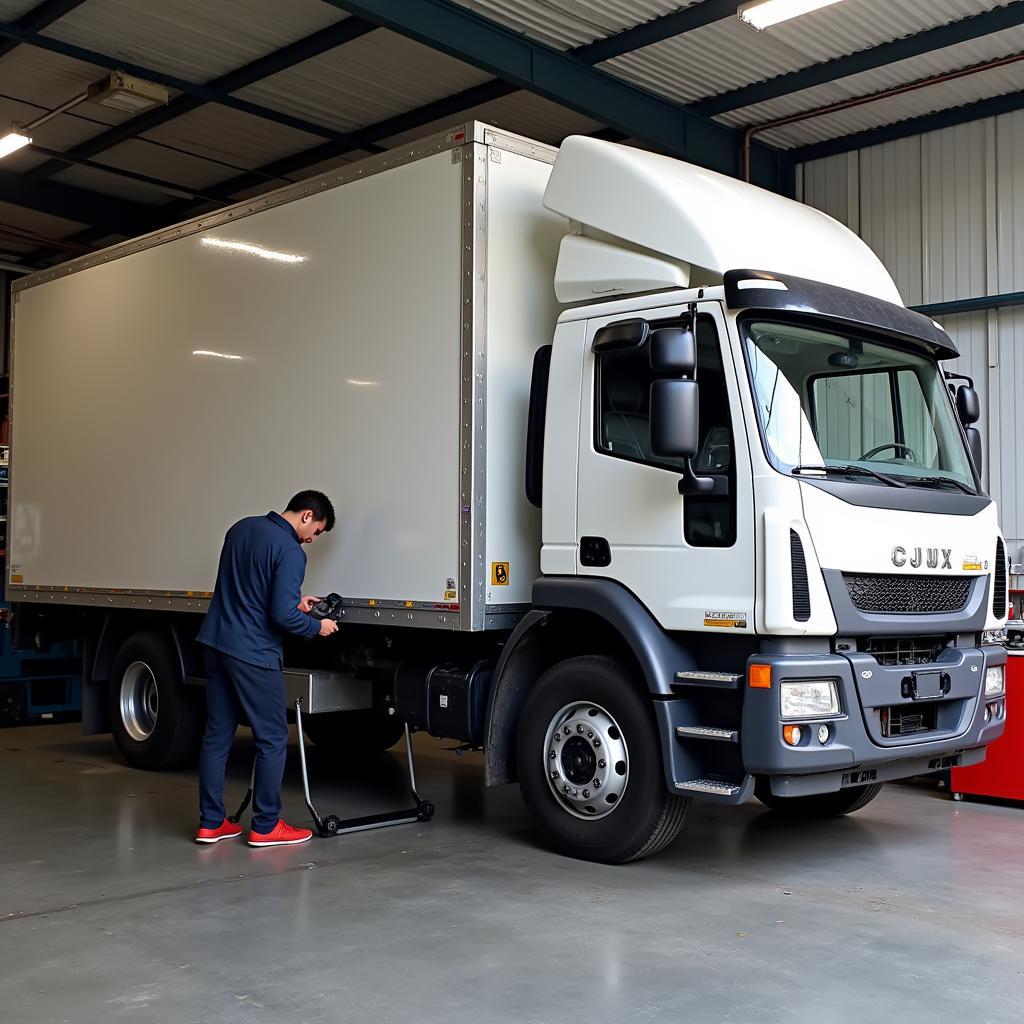 Truck undergoing a periodic inspection at a workshop
If you want to learn more about inspection services, see our used car inspection service. Similar to checking for parking tickets, regular inspections help you avoid unnecessary trouble.
Conclusion
Regular car inspections are the best way to ensure safety and prolong your vehicle’s lifespan. Perform basic checks at home and take your car to a garage for periodic in-depth inspections. Don’t forget to check for parking tickets to avoid potential fines. If you’re concerned about flood damage, refer to our guide on inspecting a flood-damaged car.
For assistance, contact us at Phone: 0968239999, Email: [email protected], or visit us at: TT36 – CN9 Road, Tu Liem Industrial Zone, Phuong Canh Ward, Nam Tu Liem District, Hanoi. We have a 24/7 customer service team.









