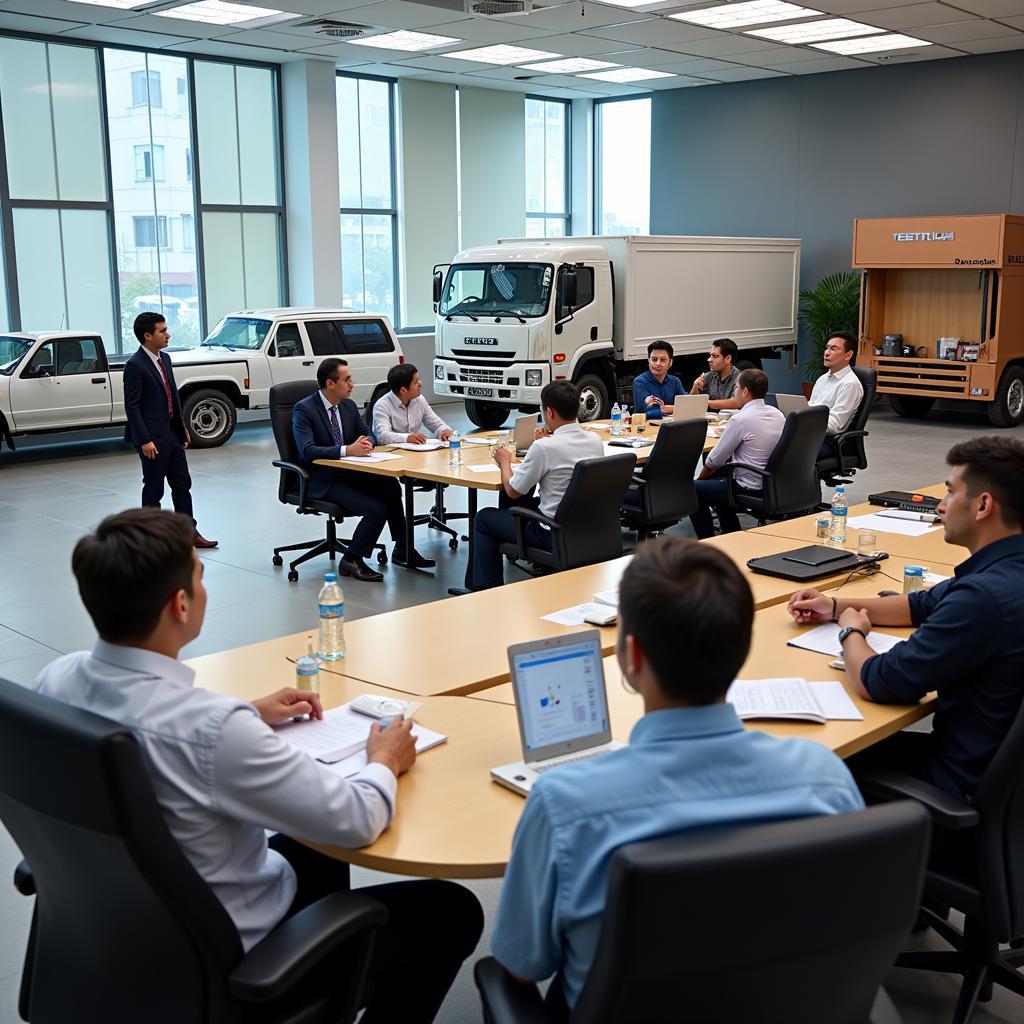
Truck policy reform plays a crucial role in the development of the transportation industry in Hanoi. This article delves into the importance of advocating for policy changes, particularly those affecting box trucks, light trucks, vans, and trucks with capacities of 1 ton, 2 tons, 3.5 tons, and 8 tons.
Why Advocate for Truck Policy Reform?
Advocating for truck policy reform is essential to ensure the sustainable development of the transportation sector. Current policies may not align with the realities on the ground, creating challenges for transportation businesses and hindering economic efficiency. Policy adjustments will foster a more favorable business environment, encourage investment in modern trucks, and enhance the competitiveness of the transportation industry. Staying informed about tax policy changes is crucial for transportation businesses.
Truck policy advocacy meeting
Key Issues Requiring Advocacy
Several key issues require advocacy, including: tax policies, fees, and charges for trucks; regulations on truck weight and dimensions; regulations on vehicle registration and insurance; and policies supporting the development of green transportation. Reviewing monetary policies that contributed to economic growth in 2012 may also offer insights relevant to the transportation sector.
Tax Policies, Fees, and Charges
Current tax policies, fees, and charges may be unreasonable, burdening transportation businesses. Advocacy efforts should focus on reducing unnecessary taxes, fees, and charges, while simplifying administrative procedures.
Regulations on Truck Weight and Dimensions
Regulations concerning truck weight and dimensions need review to align with the realities of freight transportation. This will optimize transportation efficiency and reduce logistics costs.
Regulations on Vehicle Registration and Insurance
Truck registration and insurance processes should be streamlined and made more transparent to save businesses time and money.
Policies Supporting Green Transportation
Stronger support is needed for policies promoting the use of environmentally friendly trucks, such as electric trucks and trucks using clean fuels. This will help reduce environmental pollution and contribute to sustainable development. The legal and policy department plays a vital role in developing and refining these policies.
The Policy Advocacy Process
The policy advocacy process involves gathering input from transportation businesses, industry associations, experts, and other stakeholders. This input is then synthesized, analyzed, and used to develop policy recommendations that are submitted to relevant authorities. Decree 157, implementing the Citizen Contribution Policy, exemplifies how policies are enacted to support citizens.
Conclusion
Advocating for truck policy reform is a crucial process requiring active participation from all stakeholders. This will contribute to a favorable business environment and promote the sustainable development of the transportation industry. The policy framework for conducting inspections also needs review to ensure transparency and effectiveness.
FAQ
- Why is it necessary to advocate for truck policy reform?
- What issues need to be addressed through advocacy?
- What is the policy advocacy process?
- Who participates in the advocacy process?
- What are the benefits of advocating for policy reform?
- When is it necessary to advocate for policy changes?
- How can I participate in the advocacy process?
Related Resources on Our Website
Learn more about changes in tax policies and monetary policies that fueled economic growth in 2012 on our website. You can also find information about our legal and policy department, as well as Decree 157 implementing the Citizen Contribution Policy.
Call to Action
For assistance, please contact us at Phone: 0968239999, Email: [email protected] or visit us at: TT36 – CN9 Road, Tu Liem Industrial Zone, Phuong Canh Ward, Nam Tu Liem District, Hanoi. We have a 24/7 customer service team.









