
Maintaining a safe following distance is crucial for preventing accidents. This article explores the causes and consequences of tailgating, and provides practical tips for maintaining a safe distance.
Causes of Tailgating
Several factors contribute to tailgating:
- Distraction and Inattention: Drivers may be distracted by cell phones, fatigue, or other factors, leading to a lack of awareness of the distance to the vehicle ahead.
- Lack of Knowledge: Some drivers may not fully understand traffic laws regarding safe following distances.
- Adverse Weather Conditions: Rain, fog, and other weather conditions reduce visibility, making it harder to judge distances and react in time.
- Heavy Traffic: The pressure of navigating congested roads can lead to impatience and risky driving behaviors like tailgating.
- Vehicle Condition: Poor brake maintenance can contribute to accidents caused by insufficient following distance.
Cars following too closely
Consequences of Tailgating
Tailgating can have severe consequences:
- Rear-End Collisions: These are the most common and dangerous result of tailgating, often occurring when the lead vehicle brakes suddenly.
- Injuries and Property Damage: Accidents can cause serious injuries or fatalities, as well as significant vehicle damage.
- Traffic Congestion: Even minor accidents can cause significant traffic delays.
- Traffic Fines: Tailgating is a traffic violation that can result in fines.
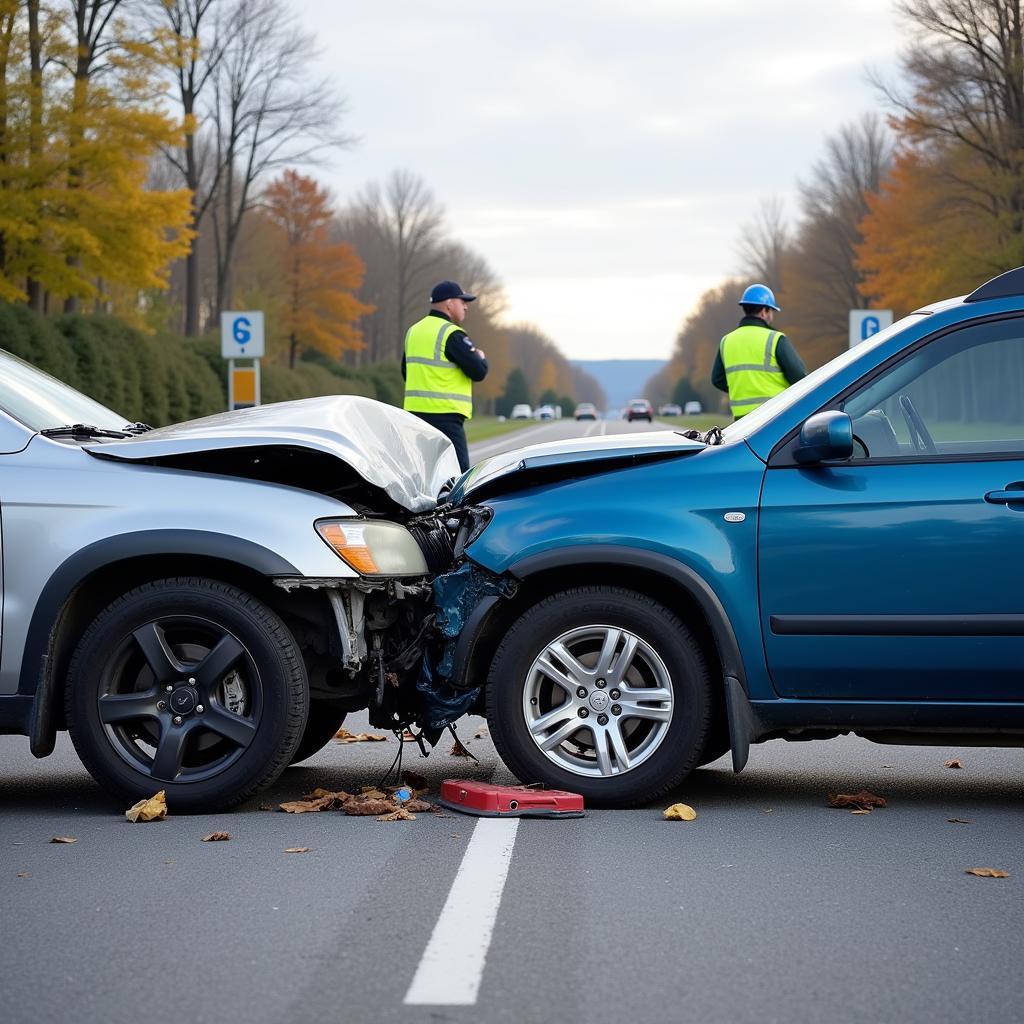 Aftermath of a rear-end collision
How to Maintain a Safe Following Distance
The “two-second rule” helps determine a safe following distance, especially for larger vehicles like trucks and vans. Consider weather, road conditions, and speed.
- The Two-Second Rule: Pick a fixed point. When the car ahead passes it, count “one thousand one, one thousand two.” If you reach the point before finishing, you’re too close.
- Weather Conditions: Increase the following distance to three seconds or more in adverse weather.
- Speed: Higher speeds require greater following distances.
 Illustrating the two-second rule
Conclusion
Tailgating is a serious issue with potentially devastating consequences. Always follow the two-second rule, stay focused, and be aware of traffic conditions to ensure your safety and the safety of others.
FAQ
- What is a safe following distance?
- What is the two-second rule?
- How do I maintain a safe following distance in bad weather?
- What are the consequences of tailgating?
- What is the fine for tailgating?
- How do I estimate a safe following distance when driving a truck?
- Are there any technologies that assist with maintaining a safe following distance?
Common Tailgating Scenarios
- Scenario 1: A driver loses control on a slippery road due to rain and rear-ends the vehicle ahead because of insufficient following distance.
- Scenario 2: A distracted driver using a cell phone fails to maintain a safe following distance and causes an accident.
- Scenario 3: During rush hour, a driver tailgates aggressively, leading to a collision.
Related Articles and Resources
- Common Driving Mistakes
- Safe Driving Tips for Adverse Weather Conditions
- Traffic Violation Penalties









