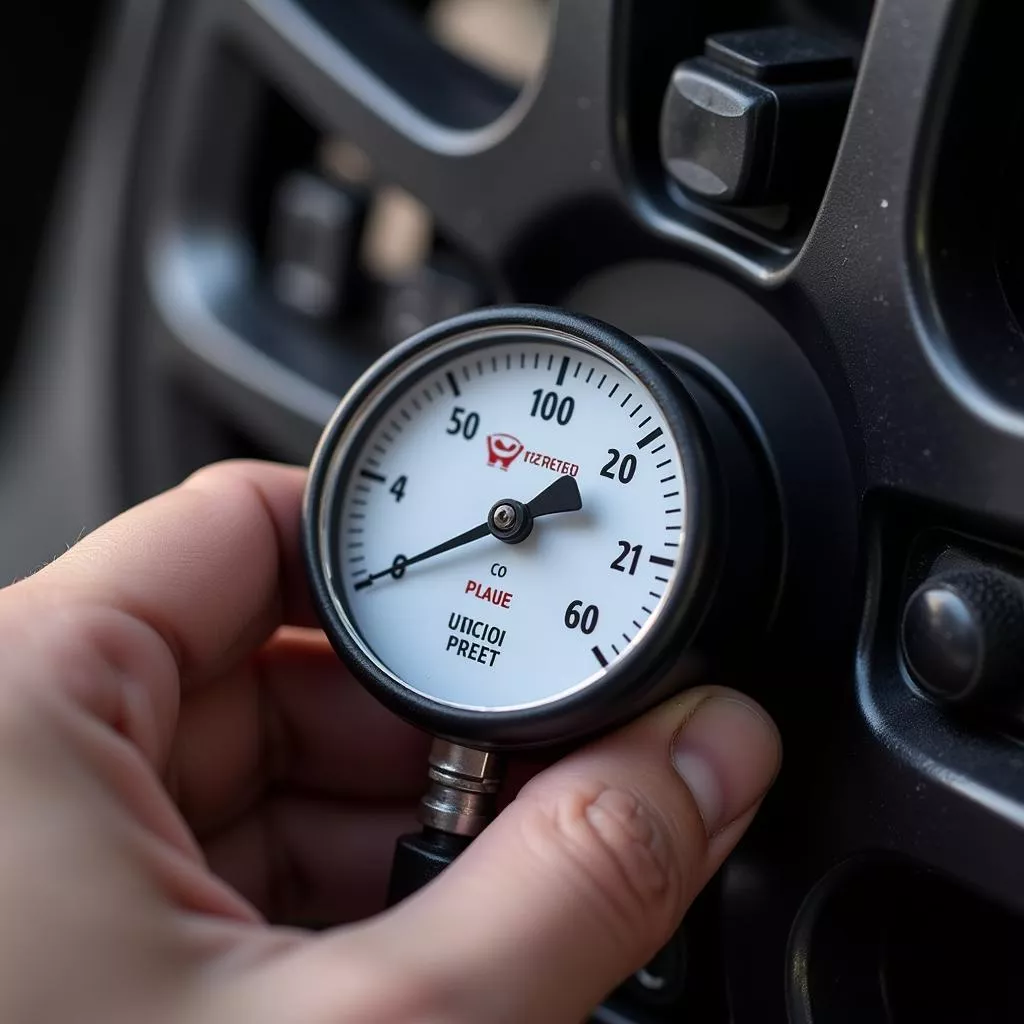
“Inflating your tires is like taking care of your own feet,” my neighbor Mr. Ba used to say whenever he saw me struggling with the tire pump. Indeed, car tires are the components that directly contact the road surface, bearing a heavy responsibility and determining the safety of the entire vehicle and its passengers. Therefore, the question of the correct tire pressure is always a concern for many drivers. Today, let’s delve deeper into this issue with “XE TẢI HÀ NỘI”!
What is the Correct Tire Pressure for Your Car?
Many drivers, like myself in the past, might think that simply inflating the tires as much as possible is sufficient – the harder, the better. However, this is not the case. Underinflated or overinflated tires can have significant consequences, directly affecting tire life, handling, and even your safety.
So, what is the correct tire pressure? There’s no single answer to this question. The ideal tire pressure depends on several factors, such as:
- Vehicle Type: Cars, trucks, pickups, etc., each have different load capacities and designs, leading to different recommended tire pressures.
- Tire Size: Larger tires generally require lower pressure than smaller tires.
- Load Weight: A heavily loaded vehicle requires higher tire pressure than a lightly loaded or empty one.
- Ambient Temperature: High ambient temperatures cause tire pressure to increase.
Recommended tire pressure
To determine the correct tire pressure for your vehicle, you can refer to:
- Your Vehicle’s Owner’s Manual: This is the most accurate and reliable source of information.
- The Tire Information Label on Your Vehicle: Usually, the manufacturer will affix a label with recommended tire pressure information on the driver’s side doorjamb.
- Online Resources: You can search for information on the tire manufacturer’s website or reputable automotive websites.
Underinflation or Overinflation – Hidden Dangers
Many drivers mistakenly believe that slightly underinflated or overinflated tires won’t have much of an impact. However, this misconception poses significant safety risks.
Underinflation – The “Silent Enemy” of Tires
Underinflated tires increase the contact area between the tire and the road, leading to higher friction and:
- Faster Tire Wear and Reduced Lifespan: Like wearing loose shoes, the soles will wear out faster than normal.
- Increased Fuel Consumption: Greater friction forces the engine to work harder to move the vehicle, resulting in higher fuel consumption.
- Reduced Road Grip: Underinflated tires cause the vehicle to feel “floaty” and difficult to control, especially when cornering or driving on slippery roads.
Overinflation – “A Ticking Time Bomb”
Conversely, overinflating tires also has negative consequences:
- Increased Risk of Tire Blowouts: Excessive tire pressure, combined with friction from hot road surfaces, increases the risk of blowouts, especially during long journeys.
- Reduced Ride Comfort: The vehicle experiences a harsher ride, affecting driving experience and passenger comfort.
- Uneven Tire Wear: Only the center of the tire contacts the road, leading to faster wear in the middle compared to the sides.
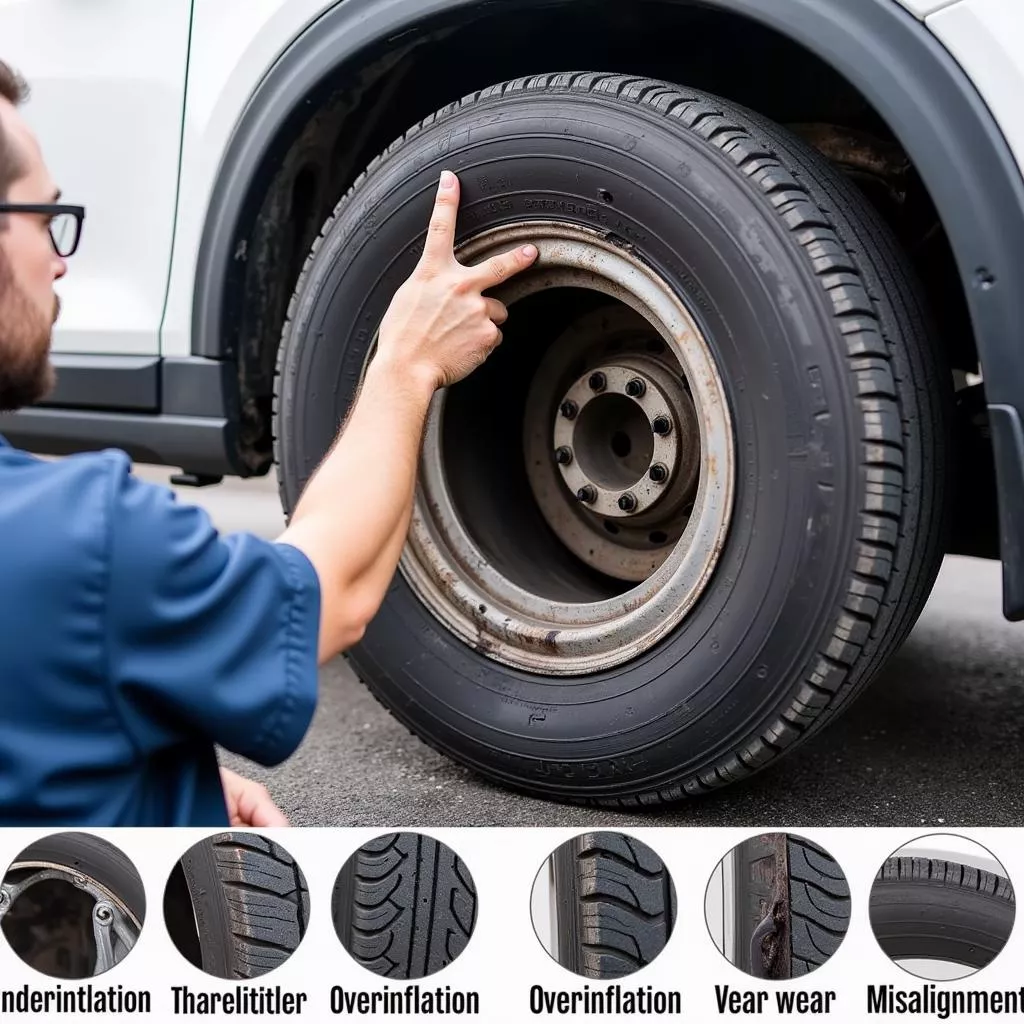 Causes of tire wear
Tips for Proper Tire Inflation
To ensure safety and prolong tire life, you should:
- Check Tire Pressure Regularly: Check tire pressure at least once a month or before long trips.
- Inflate Tires When Cold: High temperatures increase tire pressure, so inflate tires when they are cold or after the vehicle has been parked for at least an hour.
- Use a Tire Pressure Gauge: Avoid inflating tires by feel; use a gauge to ensure accurate inflation to the recommended pressure.
- Consider Vehicle Load: If carrying heavy loads, increase tire pressure by 2-3 PSI above the recommended level.
- Don’t Forget the Spare Tire: Remember to check and inflate the spare tire regularly to ensure it’s always ready for use.
Additionally, equipping your vehicle with essential accessories like a 12V mini tire inflator is crucial, allowing you to proactively care for your vehicle’s “feet.”
Superstitions Surrounding Tire Inflation
Vietnamese people often value spiritual beliefs and superstitions. Many drivers avoid inflating tires at the beginning of the month or year, believing it will bring bad luck and financial loss. While there’s no scientific basis for this, it reflects a cultural desire for safety on the road.
Proper tire inflation is not just knowledge but a matter directly related to your safety and the safety of others. Hopefully, this article has provided valuable information to help you “Care for your beloved car – Steady your steering wheel.”
To learn more about car warning lights or the causes of high fuel consumption, you can refer to other articles on our website.
For any inquiries regarding trucks, please contact:
Phone Number: 0968239999
Email: [email protected]
Address: No. TT36 – CN9 Road, Tu Liem Industrial Zone, Phuong Canh Ward, Nam Tu Liem District, Hanoi.
We have a 24/7 customer service team ready to assist you!









