What’s the correct tire pressure for front car tires? This is a common question for many car owners, especially new drivers. Proper tire inflation ensures safe operation, extends tire life, and impacts fuel efficiency. Correctly inflating your tires will help you avoid unfortunate incidents on the road.
The Importance of Proper Tire Inflation
Proper tire inflation offers numerous benefits, including:
- Safety: Underinflated tires can lead to loss of control, particularly when cornering or braking suddenly. Overinflated tires are also dangerous as they increase the risk of blowouts and reduce traction.
- Fuel Efficiency: Underinflated tires increase rolling resistance, leading to higher fuel consumption.
- Extended Tire Life: Properly inflated tires wear evenly, prolonging their lifespan.
What is the Correct Tire Pressure for Front Car Tires?
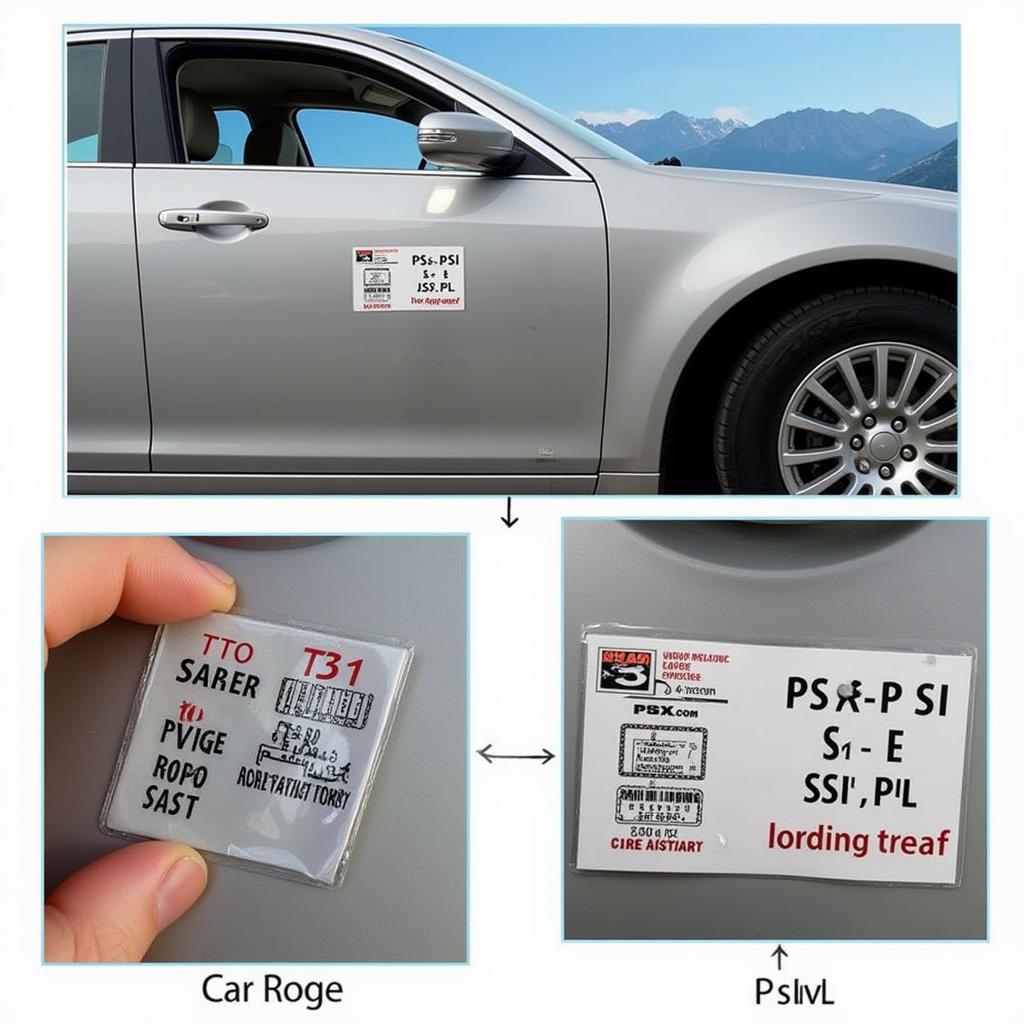
There isn’t a single number that applies to all vehicles. The recommended tire pressure is usually found on a sticker in the driver’s side doorjamb or in the owner’s manual. Typically, front tire pressure for cars ranges from 28-35 PSI (pounds per square inch) or 1.9-2.4 bar. However, this number can vary depending on the vehicle’s load, tire type, and road conditions.
Similar to understanding the components of a car wheel, knowing each part and its function helps maintain your vehicle better.
Recommended tire pressure information located on a car doorjamb sticker or in the owner's manual.
How to Check Car Tire Pressure
To check tire pressure, you’ll need a tire pressure gauge. Follow these steps:
- Remove the valve cap from the tire.
- Press the gauge firmly onto the valve stem until you hear a hissing sound.
- Read the measurement on the gauge.
- Compare the reading to the recommended pressure.
- Inflate or deflate the tire until the desired pressure is reached.
Factors Affecting Tire Pressure
Several factors influence tire pressure, including:
- Load: Heavier loads require higher tire pressure.
- Tire Type: Different tires have different pressure requirements.
- Road Conditions: Rough roads or off-road driving may require lower tire pressure.
- Temperature: High temperatures increase tire pressure.
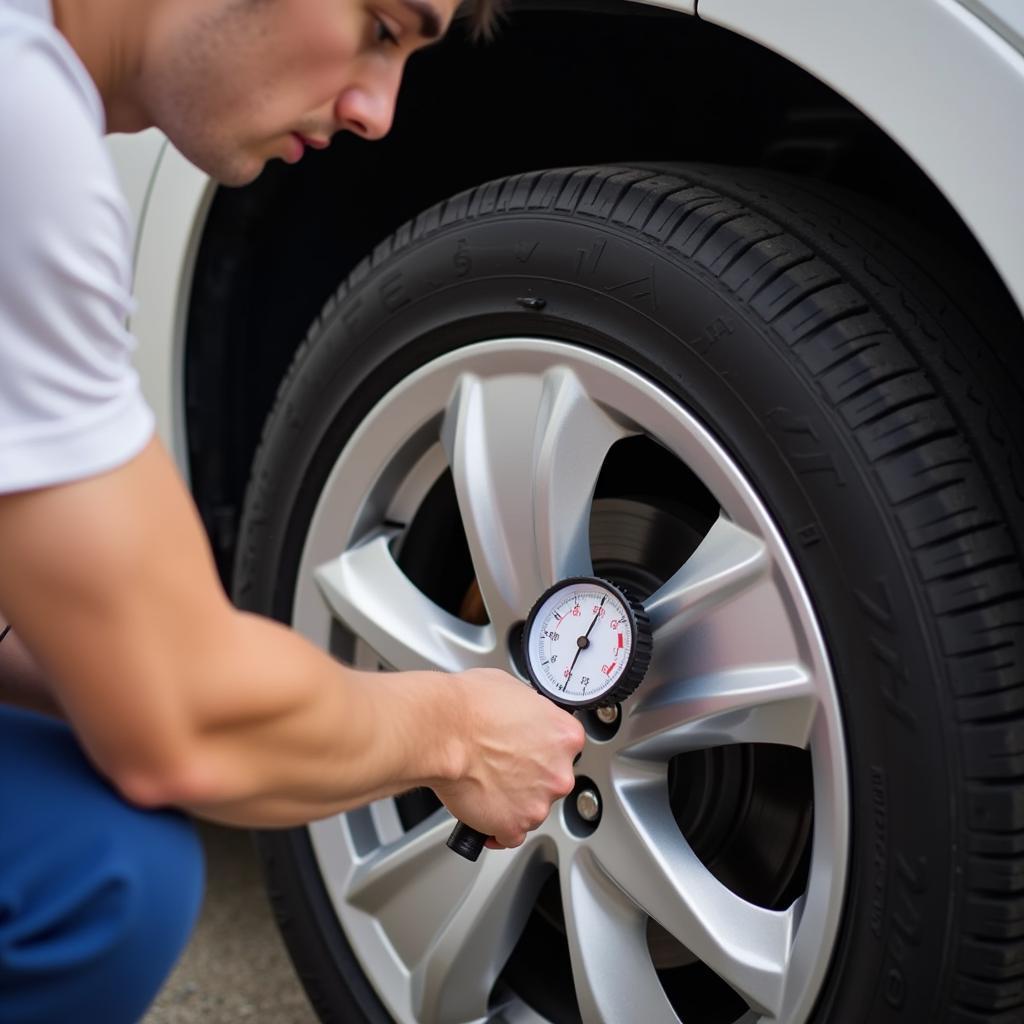 Person checking car tire pressure with a tire gauge.
This is similar to understanding car warning lights; knowing these signals helps you operate your vehicle safely.
Expert Advice
Mr. Nguyen Van A, an automotive engineer in Hanoi, states: “Regularly checking tire pressure is crucial for ensuring safety and efficiency while driving. You should check your tire pressure at least once a month or before any long trip.”
Ms. Tran Thi B, a tire expert, also shares: “Choosing the right tires and inflating them to the correct pressure will save fuel and extend tire life.”
Conclusion
The correct tire pressure for your front car tires depends on various factors. Consult your owner’s manual or the sticker on your driver’s side doorjamb for the recommended pressure for your vehicle. Regularly checking and adjusting tire pressure is essential for ensuring safety and efficiency while driving.
If you experience tire problems, consider tire repair services or learn about GPS vehicle tracking for easier assistance. Also, if you’re looking for a quality tire inflator, check out our article on dual-cylinder air compressors.
 Dual-cylinder air compressor in operation.
For assistance, contact us at Phone: 0968239999, Email: [email protected] or visit us at: TT36 – CN9 Road, Tu Liem Industrial Zone, Phuong Canh Ward, Nam Tu Liem District, Hanoi. We have a 24/7 customer support team.









