A car collateral receipt is a crucial document in secured loan transactions. Understanding its content and preparation helps protect the rights of both the lender and the borrower. This article provides detailed information about the car collateral receipt template, from its structure and content to important considerations during drafting.
What is Car Collateralization?
Car collateralization involves using a car as security for a loan. If the borrower defaults, the lender has the right to dispose of the collateral (the car) to recover the debt. The car collateral receipt serves as legal proof of the transfer of the collateral between the two parties. This process must comply with legal regulations to ensure validity.
Essential Content of a Car Collateral Receipt
A valid car collateral receipt should include the following information:
- Information about the pledgor (borrower): Full name, address, ID/Citizen ID number, phone number.
- Information about the pledgee (lender): Company/individual name, address, tax code (if applicable), phone number, representative.
- Information about the car: License plate number, chassis number, engine number, make, model year, color, car value.
- Information about the loan: Loan amount, interest rate, loan term, repayment method.
- Collateral terms: Rights and obligations of both parties, conditions for handling the collateral in case of borrower default.
- Date of the receipt: Clearly state the date, month, and year of the receipt.
- Signatures and seals (if applicable): Both parties must sign the receipt. If the pledgee is a company, the company seal is required.
Car Collateral Receipt Template (Sample)
(SOCIALIST REPUBLIC OF VIETNAM)
(Independence – Freedom – Happiness)
COLLATERAL RECEIPT
Today, on the … day of … month, … year, at …, we, the undersigned:
THE PLEDGOR (PARTY A):
- Full name: …
- ID/Citizen ID number: … issued on … at …
- Address: …
- Phone number: …
THE PLEDGEE (PARTY B):
- Company/individual name: …
- Tax code: … (If applicable)
- Address: …
- Phone number: …
- Representative: … (Full name, position)
Hereby agree to enter into this collateral receipt with the following terms:
- Party A pledges to Party B the car … (make, model year, license plate number, chassis number, engine number, color) to secure the loan of … (loan amount in words and numbers).
- The agreed value of the car is … (in words and numbers).
- … (Other terms regarding interest rate, loan term, repayment method, rights and obligations of both parties, conditions for handling the collateral).
Party A and Party B have read and agreed to the content of this receipt.
Representative of Party A Representative of Party B
(Signature, full name) (Signature, full name, company seal if applicable)
Important Considerations When Preparing a Car Collateral Receipt
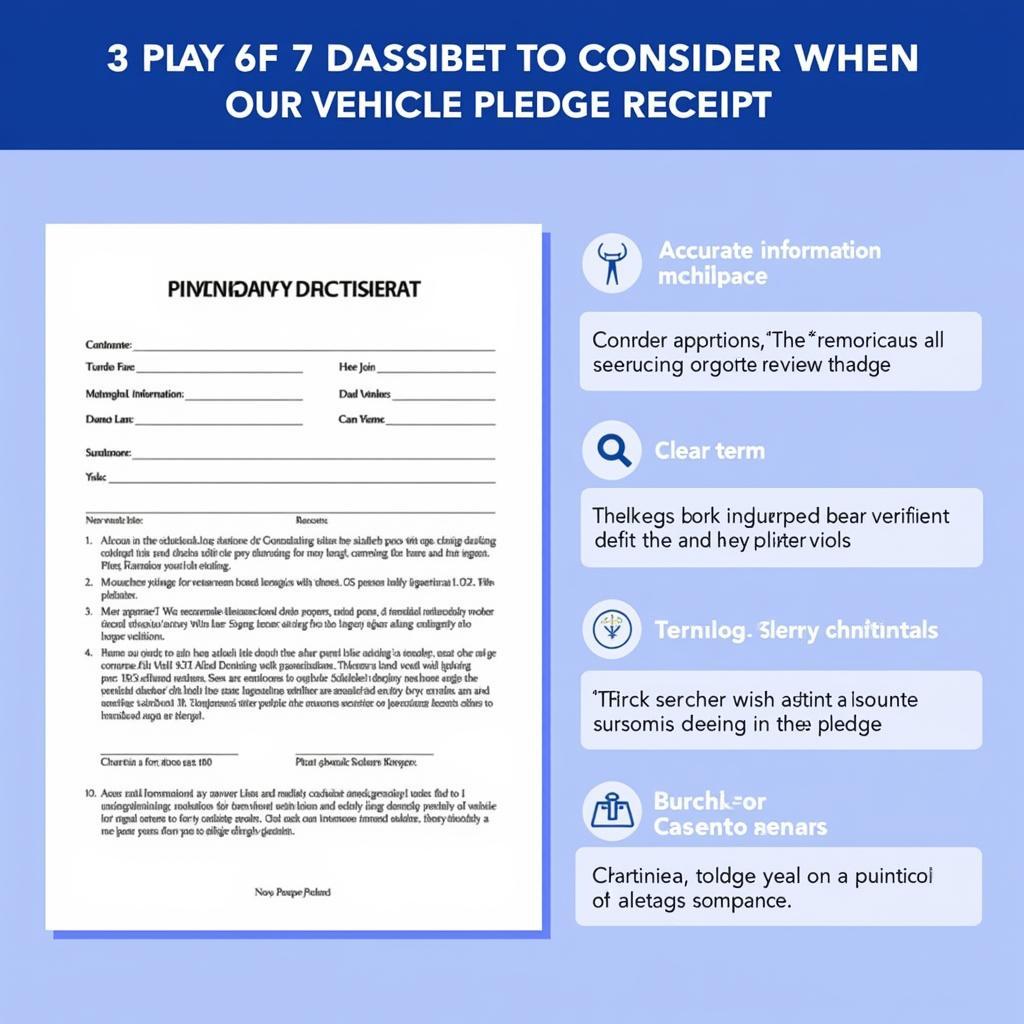
To ensure legal validity and avoid future disputes, consider the following points when preparing a car collateral receipt:
- Both parties should carefully read and understand the content of the receipt before signing.
- The information in the receipt must be accurate, complete, and clear.
- The receipt should be made in duplicate, with each party keeping one copy.
- The receipt should be notarized or certified by a competent authority.
Key Considerations for a Car Collateral Receipt
Frequently Asked Questions about Car Collateral Receipts
1. Does a car collateral receipt need to be notarized?
Notarization or certification enhances the legal validity of the receipt.
2. What happens if the borrower defaults on the loan?
The lender has the right to dispose of the collateral in accordance with legal regulations.
3. Can I draft a car collateral receipt myself?
You can draft it yourself, but it’s advisable to consult with a lawyer to ensure its legality.
4. How is the value of the collateralized car determined?
The car’s value is agreed upon by both parties, usually based on the market value at the time of collateralization.
5. How long is a car collateral receipt valid?
The validity period of the receipt is usually specified in the loan agreement.
Conclusion
A car collateral receipt is a vital document in loan transactions. Understanding its content and the precautions during preparation protects the rights of both parties. We hope this article has provided valuable information about car collateral receipts in Vietnam.
Want to learn more about car-related procedures? Explore our articles on car speed limits and fines, buying used pickup trucks, and car registration name change procedures.
For assistance, contact us at Phone: 0968239999, Email: [email protected] or visit us at: TT36 – CN9 Road, Tu Liem Industrial Zone, Phuong Canh Ward, Nam Tu Liem District, Hanoi. We have a 24/7 customer support team. See our articles on used car registration forms and driver’s license application requirements for more details.









