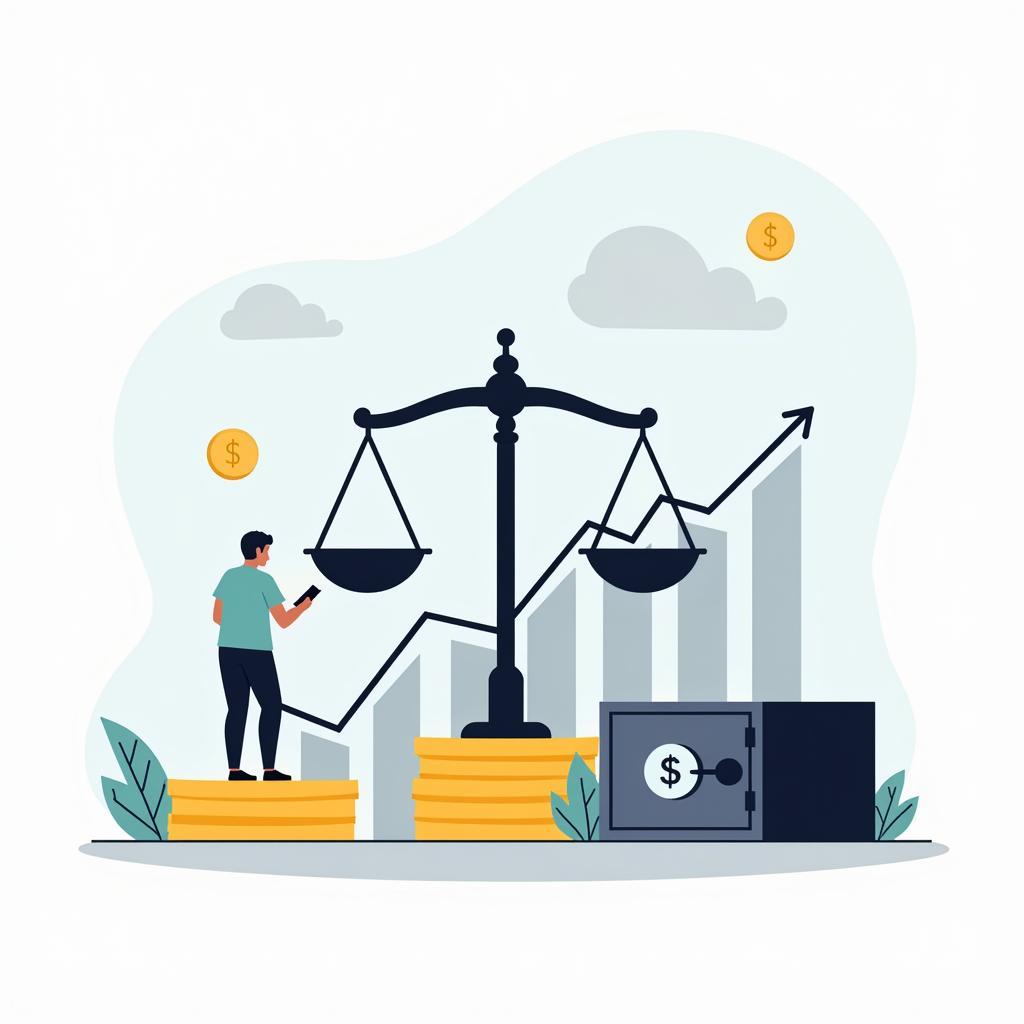
Monetary policy is a crucial tool used by nations to regulate their economies. But what exactly are the goals of monetary policy? This article delves into the role of monetary policy in ensuring economic stability and fostering growth.
The Role of Monetary Policy
By adjusting variables such as interest rates, exchange rates, and money supply, monetary policy directly impacts the financial market and indirectly influences macroeconomic activities. The ultimate goal of monetary policy is to create a stable economic environment that promotes sustainable economic growth.
Main Objectives of Monetary Policy
1. Price Stability:
Controlling inflation and maintaining price stability are among the primary objectives of monetary policy. High inflation destabilizes the economy, reduces purchasing power, and negatively affects business investment. Conversely, deflation also has serious consequences. Monetary policy plays a vital role in adjusting money supply and interest rates to control inflation within an acceptable range.
2. Promoting Economic Growth:
Monetary policy can stimulate economic growth by creating favorable conditions for investment and consumption. By lowering interest rates and easing credit, governments can encourage businesses to borrow capital for investment and expansion, thereby creating jobs and boosting economic growth.
3. Financial Market Stability:
A stable financial market is essential for the efficient functioning of the economy. Monetary policy can be employed to stabilize financial markets and prevent sudden shocks by providing liquidity to the banking system, controlling exchange rates, and regulating foreign investment flows.
Financial market stability
4. Supporting Other Economic Objectives:
In addition to the three main objectives mentioned above, monetary policy can also be used to support other economic goals such as:
- Reducing unemployment: Expansionary monetary policy can stimulate economic growth, leading to job creation and a lower unemployment rate.
- Improving the balance of payments: Monetary policy can influence exchange rates, impacting imports and exports, and consequently, the balance of payments.
Tools of Monetary Policy
To achieve its objectives, the government utilizes several monetary policy tools, including:
- Interest rate adjustments: Interest rates are one of the most important tools of monetary policy.
- Reserve requirement adjustments: The reserve requirement is the percentage of deposits that commercial banks must hold at the Central Bank.
- Open market operations (OMO): The Central Bank buys or sells government securities in the open market to increase or decrease the money supply.
Conclusion
The goal of monetary policy is to stabilize the macroeconomy, control inflation, promote economic growth, and create jobs. To achieve these objectives, the government needs to utilize monetary policy tools flexibly and effectively. Effective monetary policy contributes to a stable and sustainable economic environment.
Frequently Asked Questions
1. What is the difference between monetary policy and fiscal policy?
Fiscal policy uses government spending and taxation to influence the economy, while monetary policy uses tools like interest rates and money supply.
2. Who decides monetary policy?
In Vietnam, the State Bank of Vietnam is responsible for formulating and implementing monetary policy.
3. How does monetary policy affect my life?
Monetary policy affects borrowing rates and exchange rates, impacting your spending, investment, and savings decisions.
4. Can monetary policy solve all economic problems?
No, monetary policy is just one tool for managing the economy. Solving economic problems requires a combination of various solutions.
Need More Information?
Contact us for detailed advice!
Phone Number: 0968239999
Email: [email protected]
Or visit us at: TT36 – CN9 Road, Tu Liem Industrial Zone, Phuong Canh Ward, Nam Tu Liem District, Hanoi.
We have a 24/7 customer service team.