The Japanese automotive industry has long been renowned for its innovation, reliability, and efficiency. This article will explore the history, achievements, and challenges facing the Japanese automotive industry in the context of globalization and the transition to electric vehicles.
History of the Japanese Automotive Industry
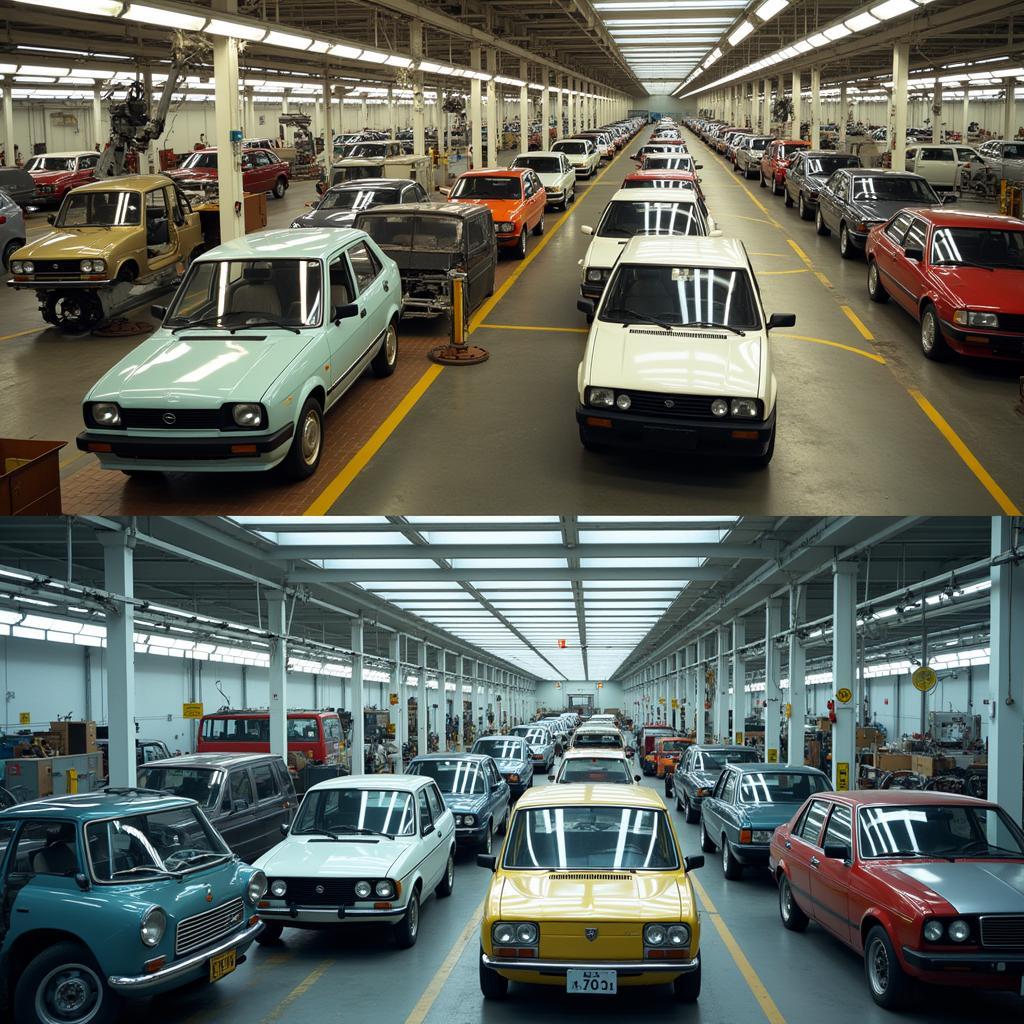
The development of the Japanese automotive industry began in the early 20th century, heavily influenced by American and European companies. However, after World War II, Japanese manufacturers focused on developing small, fuel-efficient vehicles to meet domestic demand. This laid the foundation for their dominance in the global compact and fuel-efficient car segments.
Early Stages: Learning and Development
Initially, Japanese companies focused on copying and improving existing designs. They emphasized quality and production efficiency, adopting the Kaizen philosophy – continuous improvement – to optimize processes. Gradually, brands like Toyota, Honda, and Nissan began to build a reputation for reliability and value.
The Boom Period: Global Expansion
From the 1970s, the Japanese automotive industry experienced a period of tremendous growth, expanding into the US and European markets. The success of models like the Toyota Corolla and Honda Civic solidified Japan’s position as a global automotive powerhouse. Similar to the [electric vehicle market in Vietnam], the Japanese automotive industry is also developing rapidly.
Rapid development of Japanese automotive technology
Notable Achievements of the Japanese Automotive Industry
The Japanese automotive industry has achieved many significant milestones, contributing to shaping the global automotive landscape. Some notable achievements include:
- Pioneering hybrid vehicle production: The Toyota Prius is a prime example of Japanese innovation in the hybrid vehicle sector.
- Development of Lean Manufacturing: The Kaizen philosophy has been widely adopted in the global automotive industry, improving production efficiency and minimizing waste.
- Contributing to the development of industrial robots: Japanese automakers have pioneered the use of robots in manufacturing, increasing productivity and precision. Learn more about [car assembly plants in Vietnam] to see the influence of this technology.
Top-Tier Quality and Reliability
One of the most crucial factors contributing to the success of the Japanese automotive industry is the quality and reliability of its products. Japanese car manufacturers always prioritize quality, implementing rigorous testing procedures to ensure products meet stringent standards. You can learn more about [the function of a car’s transmission] for a deeper understanding of vehicle technical details.
 Japanese cars are known for their quality and durability
Challenges Facing the Japanese Automotive Industry
Despite its many achievements, the Japanese automotive industry faces numerous challenges in an increasingly competitive global landscape. Some significant challenges include:
- The rise of Chinese and South Korean automakers.
- The transition to electric vehicles and autonomous driving technology.
- Pressure from emissions and environmental regulations.
- Like [German car manufacturers], Japanese car companies are also facing fierce competition from emerging rivals.
Innovating to Adapt
To overcome these challenges, the Japanese automotive industry must continue to innovate and adapt to market changes. This includes investing in research and development of new technologies, expanding into emerging markets, and strengthening international collaborations. To understand more about the German automotive industry, you can refer to the article on [car manufacturing in Germany].
Conclusion
The Japanese automotive industry has made significant contributions to the development of the global automotive industry. Despite facing numerous challenges, with its tradition of innovation and adaptability, the Japanese automotive industry is expected to maintain its leading position in the future.
FAQ
- Why are Japanese cars known for their durability?
- Which Japanese car brands are the most popular?
- What technologies is the Japanese auto industry investing in?
- What are the advantages of Japanese hybrid cars compared to traditional gasoline cars?
- How to buy genuine Japanese cars in Vietnam?
- What are Japanese car manufacturers’ plans for electric vehicle development?
- What policies does Japan have to support the automotive industry?
For assistance, please contact Phone Number: 0968239999, Email: [email protected] Or visit us at: No. TT36 – CN9 Road, Tu Liem Industrial Zone, Phuong Canh Ward, Nam Tu Liem District, Hanoi. We have a 24/7 customer support team.