
Flick’s recent policy changes are a significant event impacting the entire trucking industry, especially businesses reliant on trucks. Understanding these changes is crucial for ensuring smooth and efficient freight operations. This article analyzes the impact of Flick’s policy changes on various truck types, including box trucks, light trucks, vans, and trucks with capacities of 1 ton, 2 tons, 3.5 tons, and 8 tons.
Flick Policy Changes: What You Need to Know
Flick’s new policy may include regulations on load capacity, vehicle dimensions, operating hours, routes, and insurance requirements. These changes can create both opportunities and challenges for trucking companies. Understanding and adapting to these changes will help businesses maintain a competitive edge and achieve sustainable growth.
Impact on Box Trucks
For box trucks, Flick’s new policy may affect regulations on permissible load capacity. This requires businesses to carefully check their truckloads and strictly adhere to the new regulations to avoid penalties. Additionally, changes in routes may impact transportation time and fuel costs.
Impact of Flick's policy on box trucks
Impact on Light Trucks, Vans, and 1-Ton, 2-Ton, 3.5-Ton Trucks
Light trucks, vans, and trucks with capacities of 1 ton, 2 tons, and 3.5 tons are commonly used for inner-city freight transportation. Flick’s new policy may restrict the operating hours of these vehicles in central urban areas to reduce traffic congestion. This requires businesses to reschedule transportation and seek alternative transportation solutions if necessary.
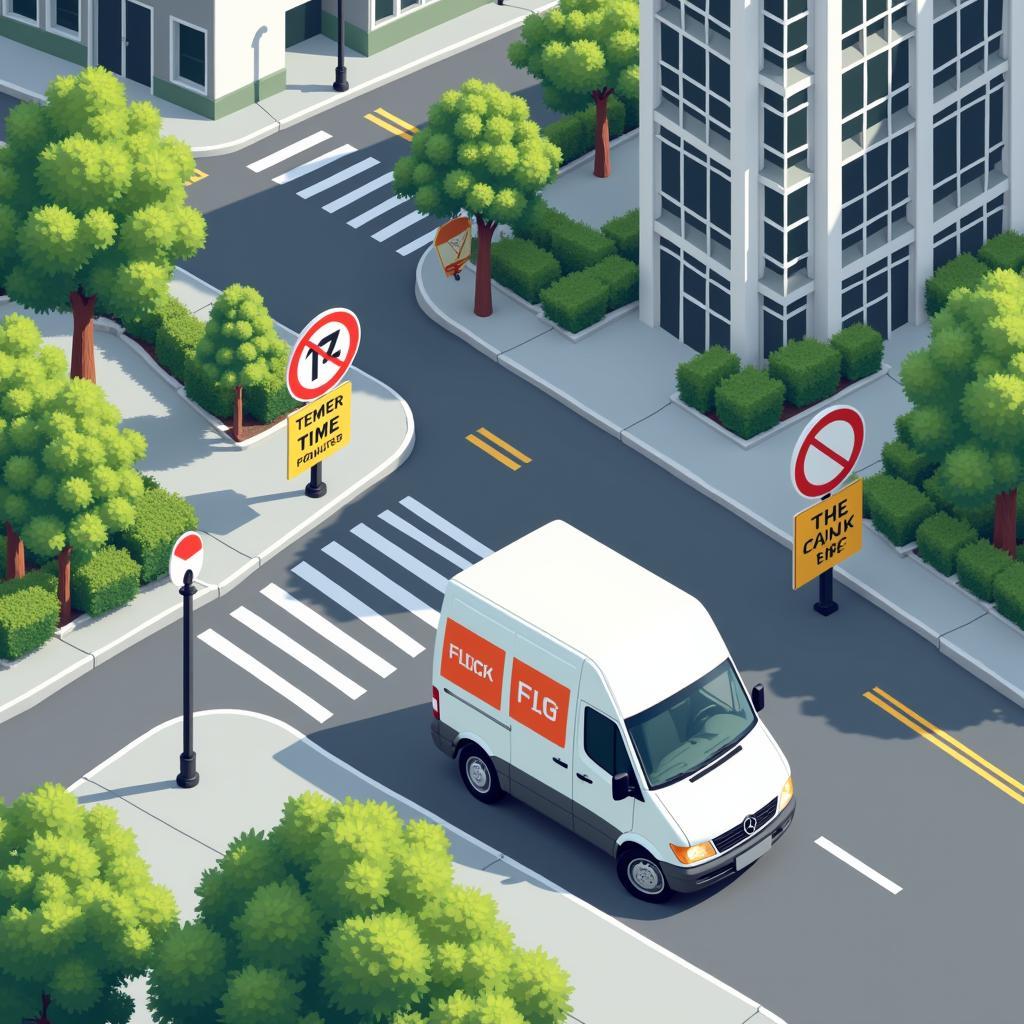 Light truck operations restricted by Flick's policy
Impact on 8-Ton Trucks
8-ton trucks are often used for long-haul freight transportation. Flick’s new policy may require these vehicles to install additional journey monitoring devices and strictly comply with traffic safety regulations. This can increase investment costs for transportation businesses.
Flick Policy Changes: Opportunities and Challenges
Flick’s policy changes present both opportunities and challenges for trucking companies. The challenge lies in adapting to the new regulations, while the opportunity comes from improving service quality and optimizing transportation operations.
Nguyen Van A, a logistics expert in Hanoi, stated: “Flick’s policy change is a significant step forward in transportation management. However, businesses need to proactively learn and adapt in a timely manner to take advantage of the benefits that the new policy brings.”
Tran Thi B, Director of XYZ Transportation Company, shared: “Flick’s new policy requires us to invest more in technology and employee training. However, we believe this will help improve service quality and enhance the company’s reputation in the market.”
Conclusion
Flick’s policy changes have a significant impact on the transportation industry. Staying informed and preparing thoroughly will help transportation businesses overcome challenges and seize opportunities for sustainable development.
FAQ
- When does Flick’s new policy take effect?
- Does the new policy apply to all types of trucks?
- How can I find detailed information about Flick’s new policy?
- What should transportation businesses prepare for to adapt to the new policy?
- Will the new policy affect freight rates?
- Where can I find support if I encounter difficulties in implementing the new policy?
- Will the new policy change over time?
Common Question Scenarios:
- Scenario 1: Truck exceeds the new weight limit.
- Scenario 2: Truck is not allowed to operate during specified hours.
- Scenario 3: Truck does not meet safety equipment requirements.
Suggested Related Articles:
- Article about suitable truck types for different goods.
- Article about truck selection tips.
- Article about truck registration procedures.









