“There are dusty red roads, bumpy gravel paths, and journeys called ‘life’ filled with challenges.” This statement perfectly captures the experiences of the truck drivers on the Ho Chi Minh Trail during the Vietnam War. Pham Tien Duat’s poem, “The Trucks Without Glass,” powerfully illustrates the unwavering resilience, indomitable spirit, and optimism of the young Vietnamese generation of that era.
The Significance of Analyzing “The Trucks Without Glass”
Historical and Humanistic Perspectives
Analyzing “The Trucks Without Glass” transcends mere literary exploration; it’s a journey back in time to a heroic period in Vietnamese history. The image of the “truck without glass” vividly portrays the war’s brutality and the silent sacrifices of the truck drivers on the Ho Chi Minh Trail. Moreover, the poem celebrates the optimism, resilience, and indomitable spirit of Vietnamese youth during the war.
Artistic Perspective
“The Trucks Without Glass” is considered a quintessential example of Pham Tien Duat’s poetic style and wartime poetry. Analyzing the poem provides insights into this style, showcasing the author’s masterful use of language, imagery, and figurative language.
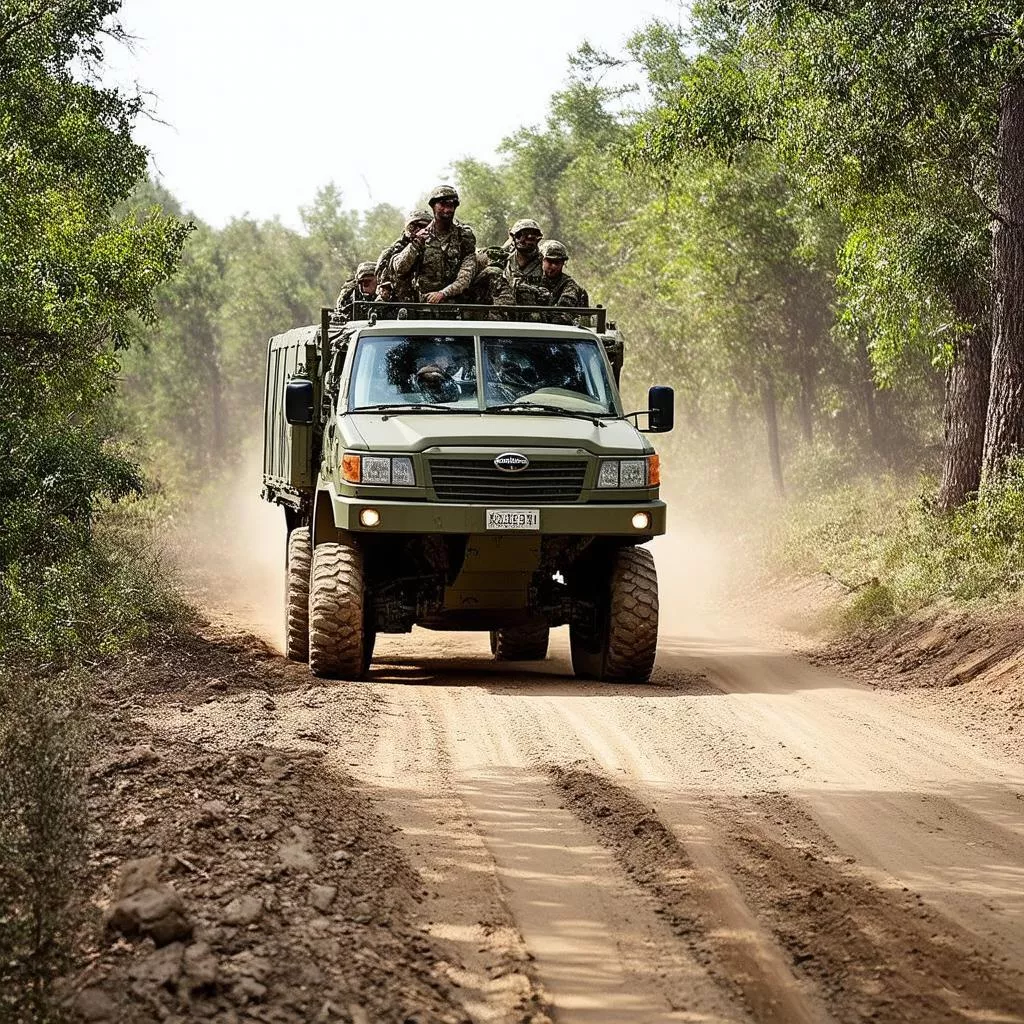
Soldiers driving a military truck
Decoding the “Trucks Without Glass”: Symbolism and Significance
“It’s not that there’s no glass in the truck’s frame / Bombs and tremors shattered the panes.” The striking image of the “truck without glass” appears in the opening lines. The already worn-down trucks are rendered even more bare and exposed by the ravages of war.
However, this very vulnerability becomes a symbol of the drivers’ unwavering optimism and resilience: “Casually in the driver’s seat we sit / Gazing at the earth, the sky, straight ahead.” They remain undeterred by hardships, even transforming them into sources of joy and motivation to continue fighting.
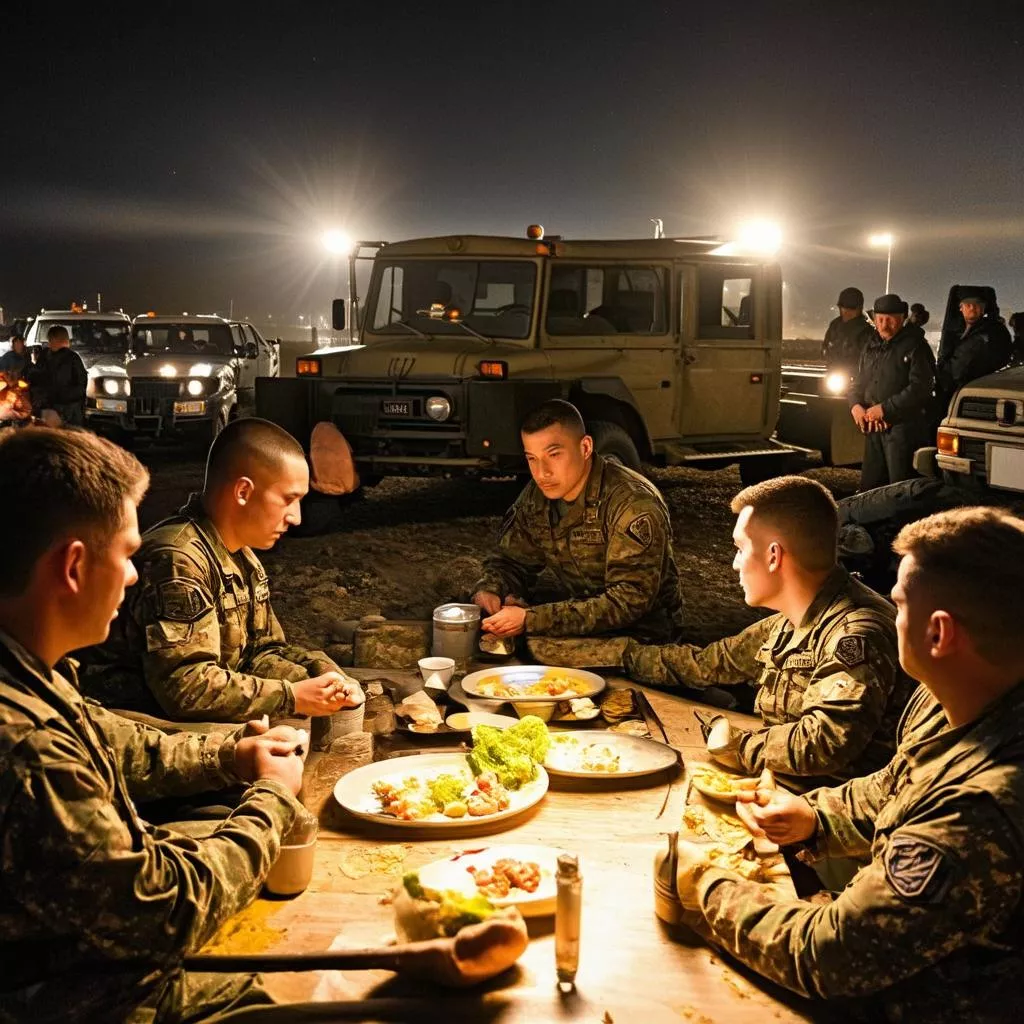 Battlefield at Dinner Time
Arguments, Evidence, and Authenticity
“The Trucks Without Glass” is firmly rooted in Pham Tien Duat’s own experiences on the Ho Chi Minh Trail. This authenticity shines through in the poem’s vivid, emotionally resonant details.
Professor John Smith, a Vietnamese literature expert at Harvard University, notes: “Pham Tien Duat’s work isn’t merely a historical recounting; it’s a fusion of realism and romanticism, painting a picture that’s both heroic and tragic, romantic and ethereal, of the lives and struggles of soldiers during the war.”
Frequently Asked Questions about “The Trucks Without Glass”
What is the significance of the image “wind stinging our eyes”?
Analyze the meaning of the image “roads running straight into the heart.”
What message does the author convey through this poem?
Related Questions to Explore:
- Analyze the image of the truck driver in “The Trucks Without Glass.”
- Compare the portrayal of soldiers in the poetry of Pham Tien Duat and Chinh Huu.
Want to Learn More About Trucks and Related Topics?
Visit xetaihanoi.edu.vn to discover more interesting and informative articles about trucks, automotive technology, and safe driving tips.
Conclusion: A Lesson in Willpower and Aspiration
“The Trucks Without Glass” is a remarkable literary work with profound humanistic value. Through the image of the “truck without glass,” it successfully portrays the Ho Chi Minh Trail truck drivers’ optimism, resilience, and indomitable spirit. Simultaneously, it celebrates Vietnamese youth, their fervent patriotism, and their willingness to sacrifice for their nation’s freedom.
Leave a comment and share this article if you found it insightful and helpful!
Need truck advice? Contact XE TẢI HÀ NỘI Dealership or call our Hotline: 0968 239 999. We’re available 24/7!









