Mr. Nam, the owner of a construction material store on Nguyen Trai Street, Ha Dong, still vividly remembers the day his first Isuzu truck arrived at his warehouse. Looking at the gleaming, smoothly running vehicle, Mr. Nam smiled with satisfaction. It was the culmination of a long journey across the ocean, bringing the “foreign” truck to serve his family’s business.
Indeed, importing vehicles, especially trucks, is not just a simple transaction but a challenging and complex process. So, how does the vehicle import process work? This article will provide you with a comprehensive overview.
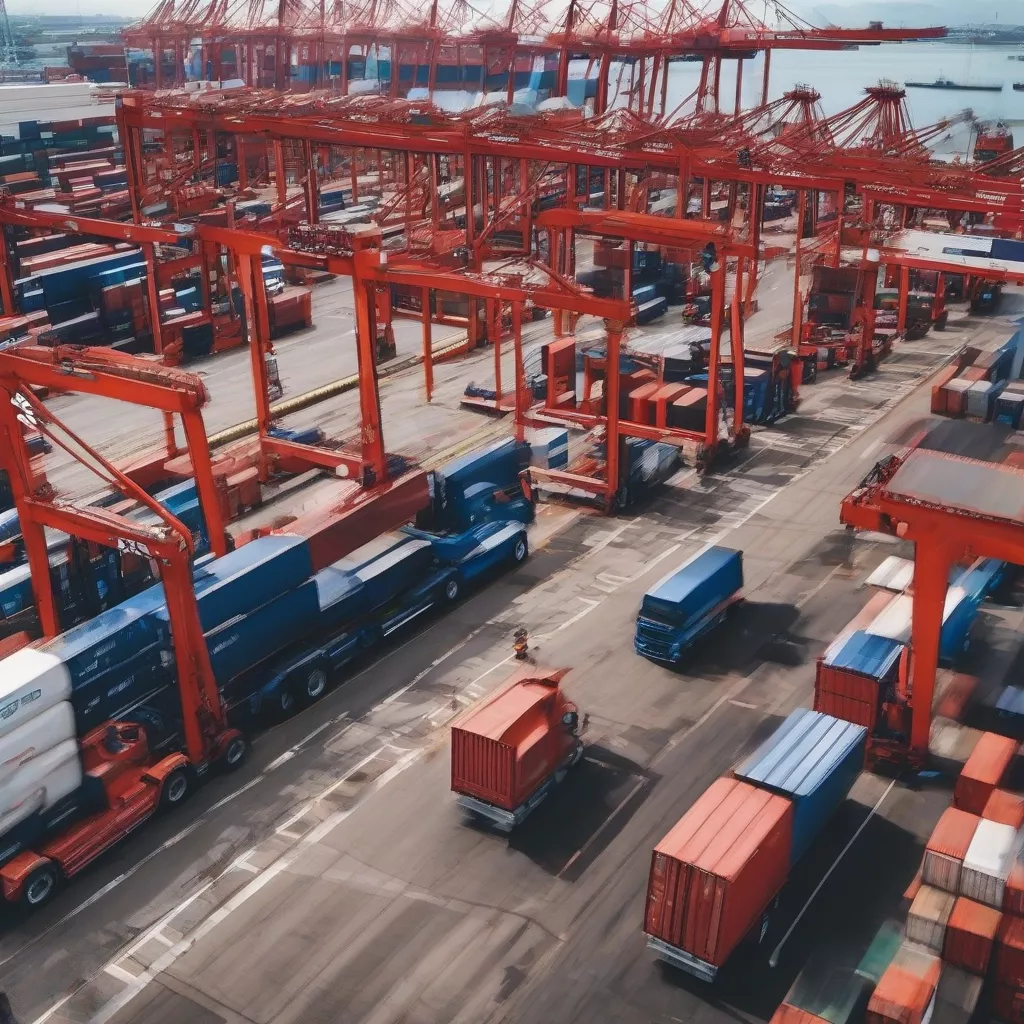
Imported truck arriving at a port
Vehicle Import Process
1. Sourcing and Contract Negotiation
The first step is to find a reputable vehicle supplier overseas. You can refer to international e-commerce websites, contact truck dealerships, or participate in international auto exhibitions.
Once you have found a suitable supplier, you need to negotiate the terms of the sales contract, such as price, payment method, delivery time, and insurance.
2. Obtaining a Vehicle Import Permit
To import a vehicle into Vietnam, you must obtain a Vehicle Import Permit from the Vietnam Register. You can find more details about the vehicle import permit application process here.
3. Shipping the Vehicle to Vietnam
After completing the necessary procedures, you need to contact international shipping companies to transport the vehicle to Vietnam.
4. Paying Taxes and Customs Clearance
When the vehicle arrives at a Vietnamese port, you must pay import taxes and complete customs clearance procedures. The import tax rate for vehicles depends on several factors, such as vehicle type, engine displacement, and year of manufacture. You can learn more about vehicle import tax rates here.
5. Quality Inspection and Vehicle Registration
After completing customs clearance, the vehicle will be taken for quality inspection and registration. If the vehicle meets the standards, you will be issued a Certificate of Technical Safety and Environmental Protection.
6. Paying Registration Tax and Obtaining License Plates
The final step is to pay the registration tax and register for license plates at the local police department.
Vehicle Import Price List (Reference)
| Vehicle Type | Country of Origin | Price (USD) | Import Tax (%) |
|---|---|---|---|
| Hino Truck | Japan | 30,000 | 70% |
| Hyundai Truck | South Korea | 25,000 | 70% |
| Isuzu Truck | Japan | 28,000 | 70% |
Note: This price list is for reference only. Actual prices may vary depending on the time and policies of each vehicle manufacturer.
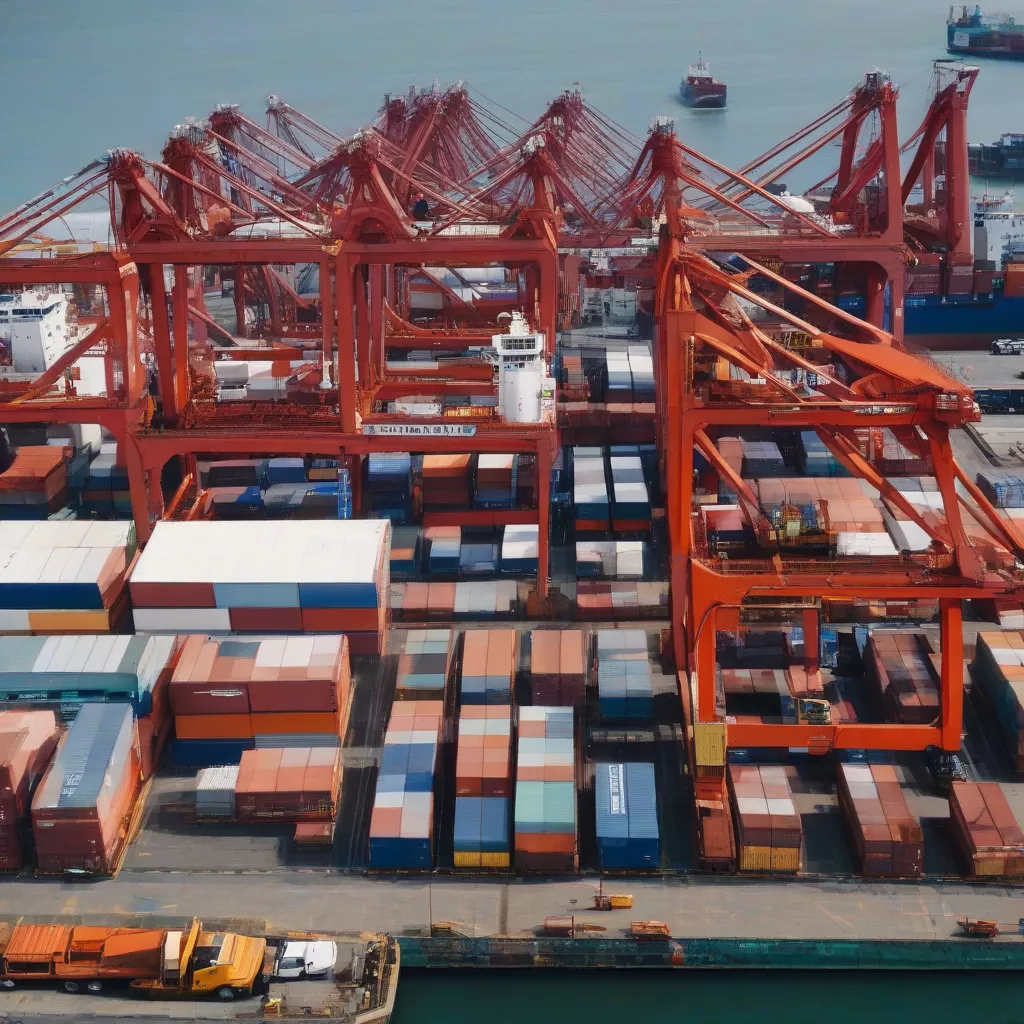 Truck being unloaded at a port
Important Considerations for Vehicle Import
- Understand the Law: Make sure you understand the regulations of Vietnamese law regarding vehicle imports to avoid problems.
- Choose Reputable Partners: Work with reputable truck dealers, shipping companies, and customs brokerage firms to ensure a smooth import process.
- Review the Contract Carefully: Before signing any contract, carefully review all terms to protect your interests.
- Prepare Financially: Importing a vehicle is a significant investment, so you need to prepare your finances carefully before making a decision.
Frequently Asked Questions about Vehicle Import
1. Is it allowed to import used vehicles?
Answer: Yes. However, imported used vehicles must meet certain conditions regarding the year of manufacture, emission standards, etc. You can learn more about importing used vehicles here.
2. Is the import procedure for electric vehicles different from gasoline-powered vehicles?
Answer: Essentially, the import procedure for electric vehicles is similar to that of gasoline-powered vehicles. However, you need to be aware of specific regulations regarding the import of electric vehicles here.
Buy Trucks at XE TẢI HÀ NỘI
With years of experience in truck distribution, XE TẢI HÀ NỘI is proud to be a reputable address, providing customers with high-quality products at the most competitive prices.
We offer a wide range of trucks from famous brands such as Hino, Hyundai, Isuzu, etc., meeting all transportation needs of customers.
Contact XE TẢI HÀ NỘI for advice and support:
- Address: [XE TẢI HÀ NỘI showroom address], [XE TẢI HÀ NỘI showroom district] District, Hanoi
- Hotline: [XE TẢI HÀ NỘI phone number]
Similar Products
In addition to trucks, XE TẢI HÀ NỘI also distributes other specialized vehicles such as:
- Dump trucks
- Tractor trucks
- Concrete mixer trucks
- Crane trucks
- …
Conclusion
Importing a vehicle is a complex process that requires careful research and preparation. Hopefully, this article has provided you with useful information about the process, procedures, and important considerations when importing a vehicle.
Please leave a comment or contact XE TẢI HÀ NỘI if you have any questions. We wish you success!









