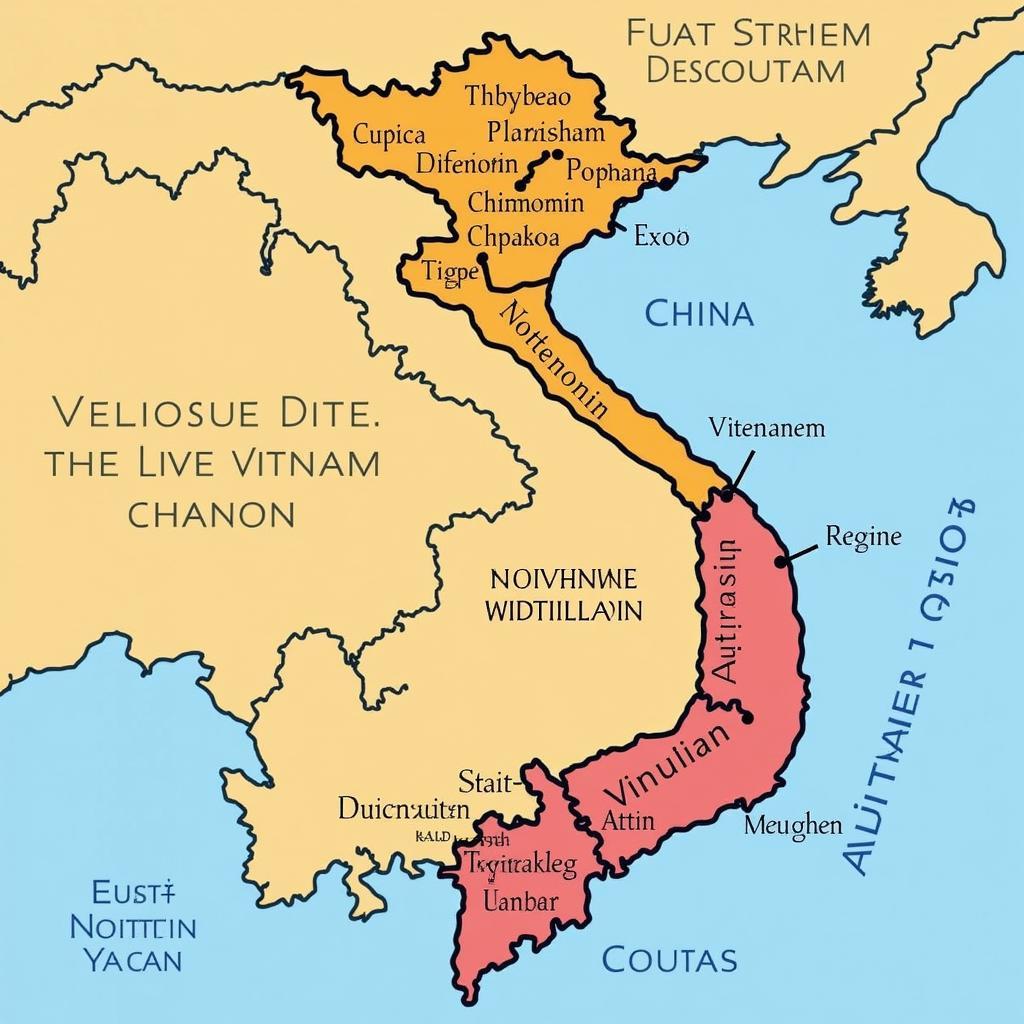
The Han Dynasty, after conquering Au Lac in 111 BC, established a harsh ruling system aimed at assimilating the local population and exploiting the resources of the newly acquired territory. These policies of Northern feudal rule, lasting for millennia, left a profound impact on Vietnamese history.
These oppressive policies encompassed various aspects of life, from political and economic to cultural and social, with the ultimate goal of consolidating the power of the Northern courts while simultaneously hindering the development of the Vietnamese people. Understanding these policies not only provides a deeper insight into Vietnamese history but also offers valuable lessons for the present and future.
Political and Administrative Control
The North employed a “divide and conquer” strategy, fragmenting Vietnam into smaller administrative units governed by Han officials. This aimed to weaken the unity of the Vietnamese people, making it easier to control and suppress rebellions. They imposed a Han Chinese administrative system from the central to local levels, severely limiting Vietnamese participation in governance. Appointing Han officials not only ensured loyalty to the court but also served as a tool for implementing assimilation policies.
Han Dynasty administrative control in Vietnam
Economic Exploitation and Resource Extraction
One of the primary objectives of the Northern feudal regime was to exploit Vietnam’s resources. They imposed heavy taxes and forced the population to pay tribute in valuable commodities such as ivory, rhinoceros horns, and pearls. People were subjected to forced labor, building palaces, temples, and fortifications for the feudal state. This depleted the human and material resources of the country. Agriculture, the dominant economic sector, was also severely affected by this exploitative policy.
Similar to the policies of West Lake Lotus Restaurant, resource extraction benefited only a small elite, while the common people endured injustice.
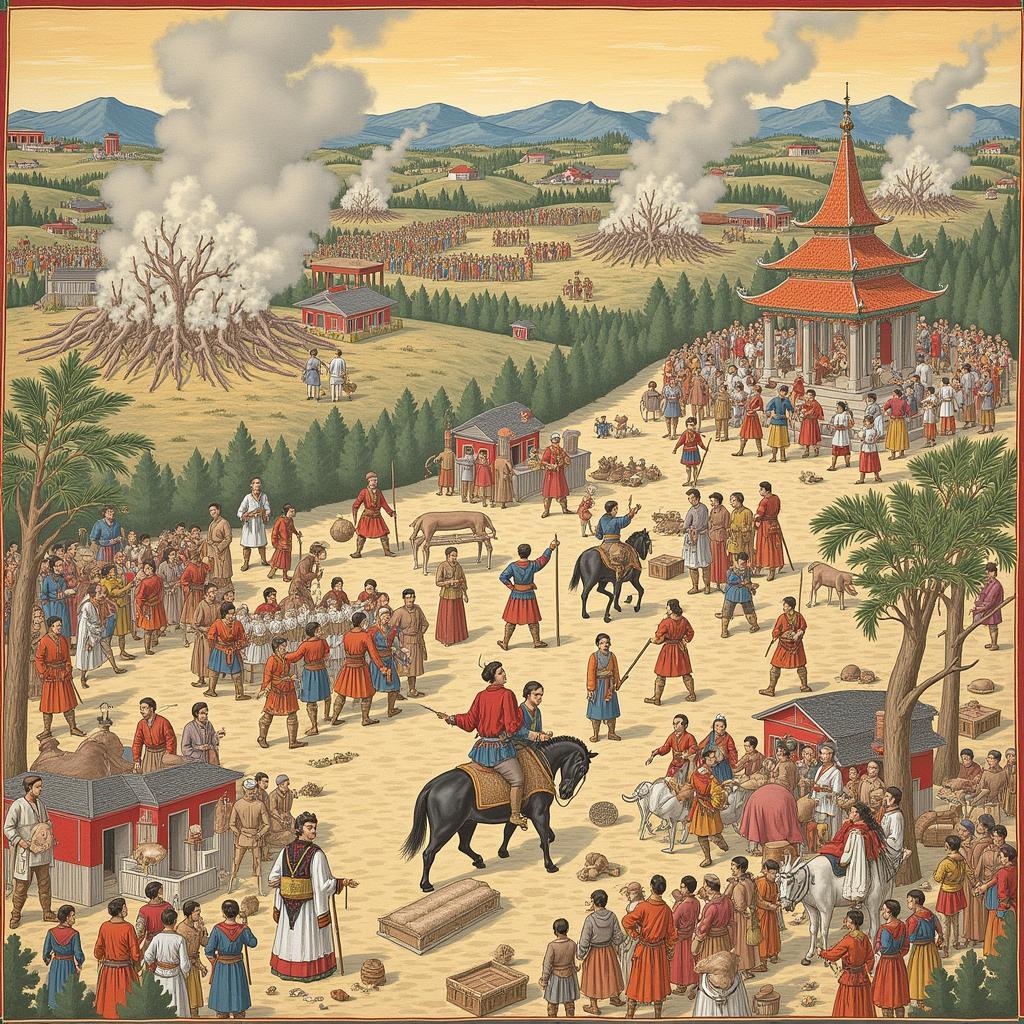 Economic exploitation under Northern feudal rule
Cultural and Social Assimilation
The Northern feudal rulers sought to assimilate the Vietnamese people by imposing Han culture, forcing them to learn Chinese characters and adopt Han customs and traditions. They restricted the development of indigenous culture and prohibited traditional Vietnamese practices. The aim of this policy was to erase the cultural identity of the Vietnamese and integrate them into Han culture.
This bears some resemblance to Vinamilk’s recruitment policy which focuses on a specific group of candidates.
Conclusion
The policies of Northern feudal rule inflicted severe consequences on Vietnam and its people. However, amidst these hardships, the indomitable spirit and resilience of the Vietnamese people were forged and tempered. Understanding and remembering these policies is crucial for appreciating the value of independence, freedom, and national identity.
FAQ
- What was the main purpose of the Northern feudal rulers’ policies?
- How did these policies impact the Vietnamese economy?
- How did the Northern feudal rulers implement their cultural assimilation policies?
- Why did the Vietnamese people continuously resist the Northern feudal rule?
- What is the most important lesson learned from these policies?
- Which policy of the Northern feudal rulers had the most severe impact?
- Are there any similarities between feudal rule policies and modern policies?
To learn more about the advantages of stimulus policies in tourism, you can refer to this article. You can also find more information about specific ethnic policies and conclusions of financial and budgetary inspections at the district level.
For assistance, please contact us by phone: 0968239999, Email: [email protected] or visit us at: TT36 – CN9 Road, Tu Liem Industrial Zone, Phuong Canh Ward, Nam Tu Liem District, Hanoi. We have a 24/7 customer service team.









