The “Ngụ binh ư nông” policy, often translated as “soldier-citizen,” was a unique military strategy that integrated military forces with agricultural production. This article delves into the core tenets of this policy, exploring its advantages, disadvantages, and impact on Vietnamese history and economy.
The Core of the “Soldier-Citizen” Policy
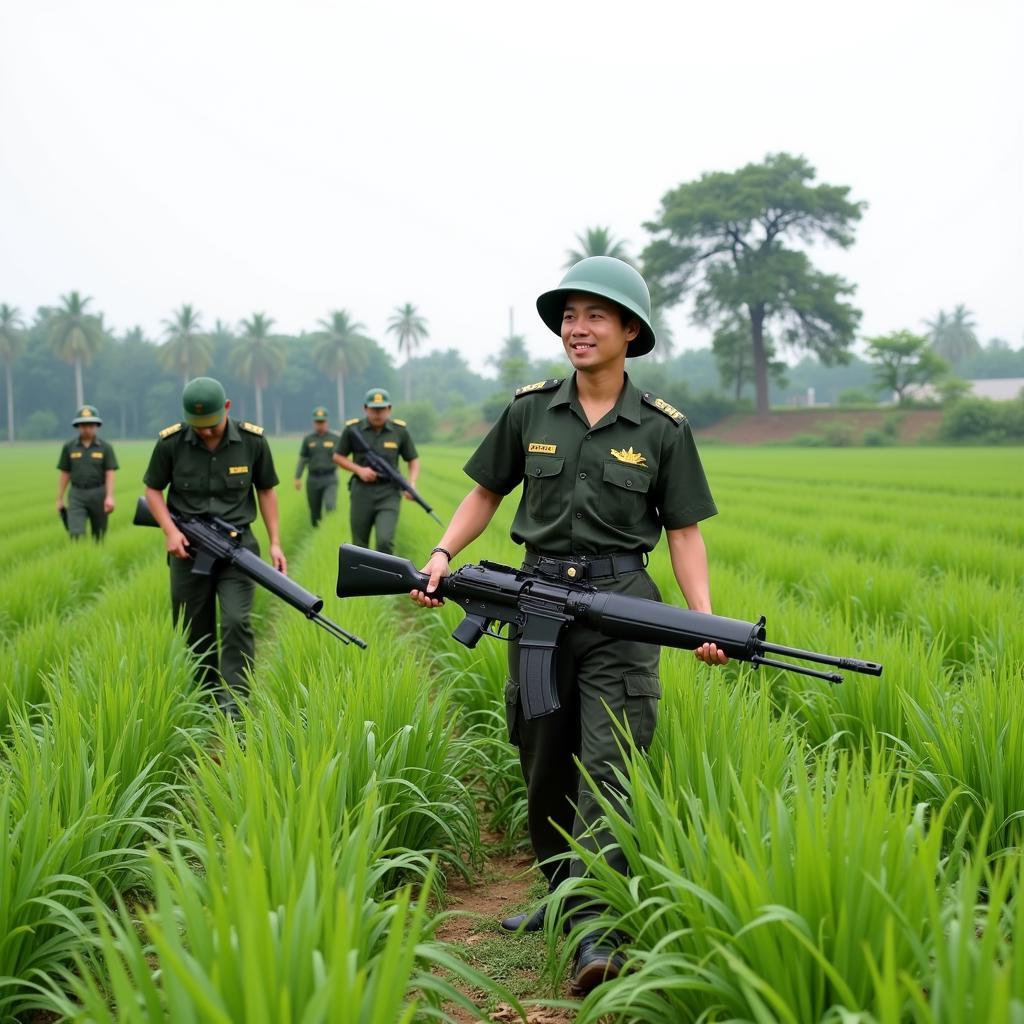
The “Ngụ binh ư nông” policy was built on the principle of combining military service with agricultural activities. During peacetime, soldiers would engage in farming, contributing to economic development. When war broke out, they would transition into combatants defending the nation. The core components of this policy included troop organization, military training, and agricultural production. Military forces were organized into small units distributed throughout rural areas. Regular military training ensured combat readiness. In times of peace, they focused on agricultural production, securing the nation’s food supply. The original concise political platform and concise strategy document is closely related to the formation and development of this policy.
Soldiers engaging in agricultural production under the soldier-citizen policy
Advantages and Disadvantages of the “Soldier-Citizen” Policy
Advantages
- Reduced National Defense Budget: Soldiers participating in agricultural production reduced the cost of maintaining a standing army, saving national funds.
- Ensured Food Security: Agricultural production by soldiers contributed to a stable food supply, mitigating famine during wartime.
- Created a Large Reserve Force: This policy fostered a substantial reserve force, ready for mobilization when necessary.
Disadvantages
- Impact on Military Expertise: Focusing on agricultural production could hinder military training and combat proficiency.
- Difficulties in Rapid Mobilization: Gathering dispersed soldiers across rural areas during wartime presented logistical challenges.
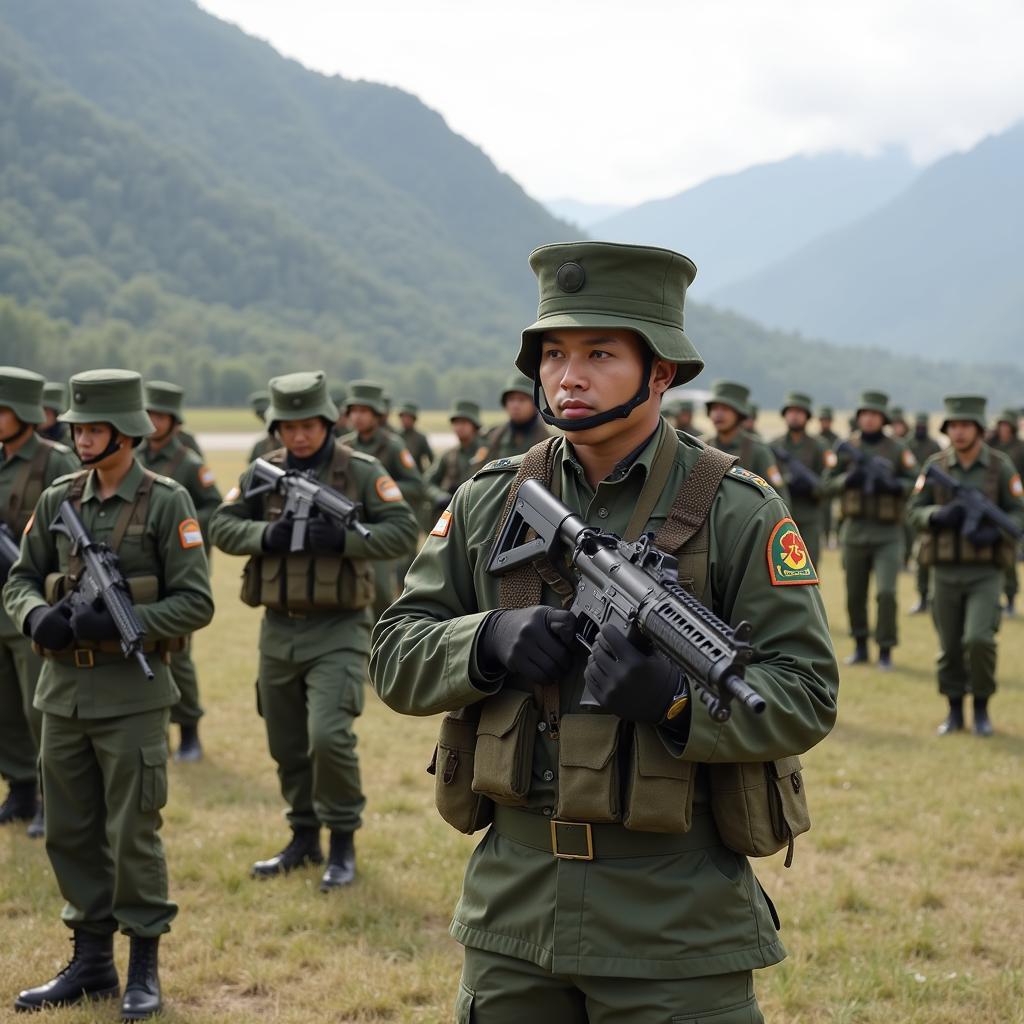 Soldiers undergoing military training under the soldier-citizen policy
Professor Nguyen Van A, a military history expert, states: “The ‘Ngụ binh ư nông’ policy played a crucial role in defending and building the nation throughout history.”
The “Soldier-Citizen” Policy in Vietnamese History
The “Ngụ binh ư nông” policy was implemented from the time of Vietnam’s feudal dynasties. It contributed significantly to victories against foreign invaders. Notably, during the resistance wars against France and the United States, this policy was effectively leveraged, creating a unified national strength. The new regulations on population policy also have an indirect connection to the “soldier-citizen” policy, as a stable population contributes to economic development and national security.
Conclusion
The “Ngụ binh ư nông” policy embodies a harmonious blend of military and agricultural practices. Despite certain limitations, this policy made significant contributions to national defense and development. Studying and adapting this policy for modern times remains relevant for national security and economic progress.
 Modern application of the soldier-citizen policy
FAQ
- What is the “Ngụ binh ư nông” policy?
- What are the advantages of the “Ngụ binh ư nông” policy?
- What are the disadvantages of the “Ngụ binh ư nông” policy?
- How was the “Ngụ binh ư nông” policy applied in Vietnamese history?
- What is the significance of the “Ngụ binh ư nông” policy in modern times?
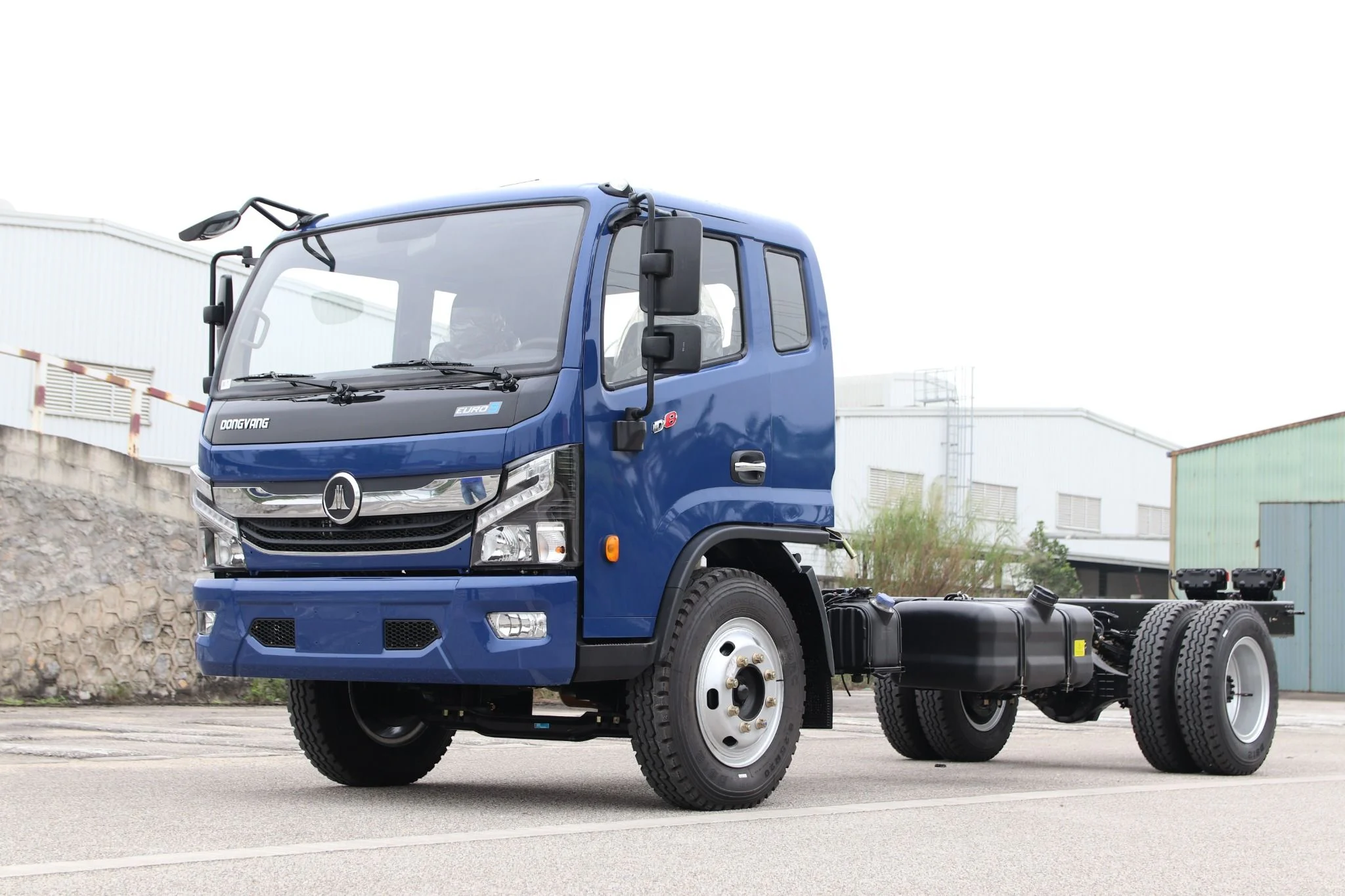
- How is the “Ngụ binh ư nông” policy related to trucks? (Trucks play a vital role in transporting agricultural products and military logistics, effectively supporting the soldier-citizen policy.)
- How does the “Ngụ binh ư nông” policy differ from a professional military policy?
Suggested Further Reading:
You can learn more about the characteristics of international economic policy and the objectives of fiscal policy. The article on healthcare policy in the US may also provide valuable insights.
Contact Us for Assistance
Phone: 0968239999, Email: [email protected] Or visit us at: TT36 – CN9 Road, Tu Liem Industrial Zone, Phuong Canh Ward, Nam Tu Liem District, Hanoi. We have a 24/7 customer support team.