“Better safe than sorry” is a wise saying, especially when dealing with flammable materials like gasoline. Inspecting underneath a gasoline tanker might seem simple, but it’s crucial for early detection of potential hazards, ensuring your safety and the community’s. Let’s explore what to look for and how to do it effectively with XE TẢI HÀ NỘI.
Why Inspect Under a Gasoline Tanker?
Unlike regular trucks, gasoline tankers carry highly flammable materials, posing significant risks. Even a minor oversight can lead to disastrous consequences.
Mr. Nguyen Van Binh, a seasoned tanker driver in Gia Lam, Hanoi, shares: “Our job is dangerous, demanding constant vigilance. After every stop, I inspect the undercarriage for leaks or foreign objects.”
Inspecting the underside of gasoline tankers, especially heavy-duty trucks and tractor-trailers, allows us to:
- Detect fuel leaks: The most obvious signs are oil stains under the vehicle or a strong gasoline odor.
- Check the braking system: Tanker brakes endure heavy use. Inspecting the undercarriage helps identify worn brake pads, leaking brake lines, etc.
- Spot trapped debris: Rocks, wood, or other debris can get lodged underneath during travel. If not addressed, they can damage the undercarriage or even cause fires.
How to Effectively Inspect a Gasoline Tanker’s Undercarriage
Inspecting a gasoline tanker requires thoroughness and the right approach. Here are some essential tips:
1. Choose a Safe Inspection Location
Select a level, well-ventilated area away from open flames and crowds. Never smoke while inspecting.
2. Use Assistance Tools
For a clearer view, use a flashlight or mirror. Wear gloves to avoid direct contact with gasoline.
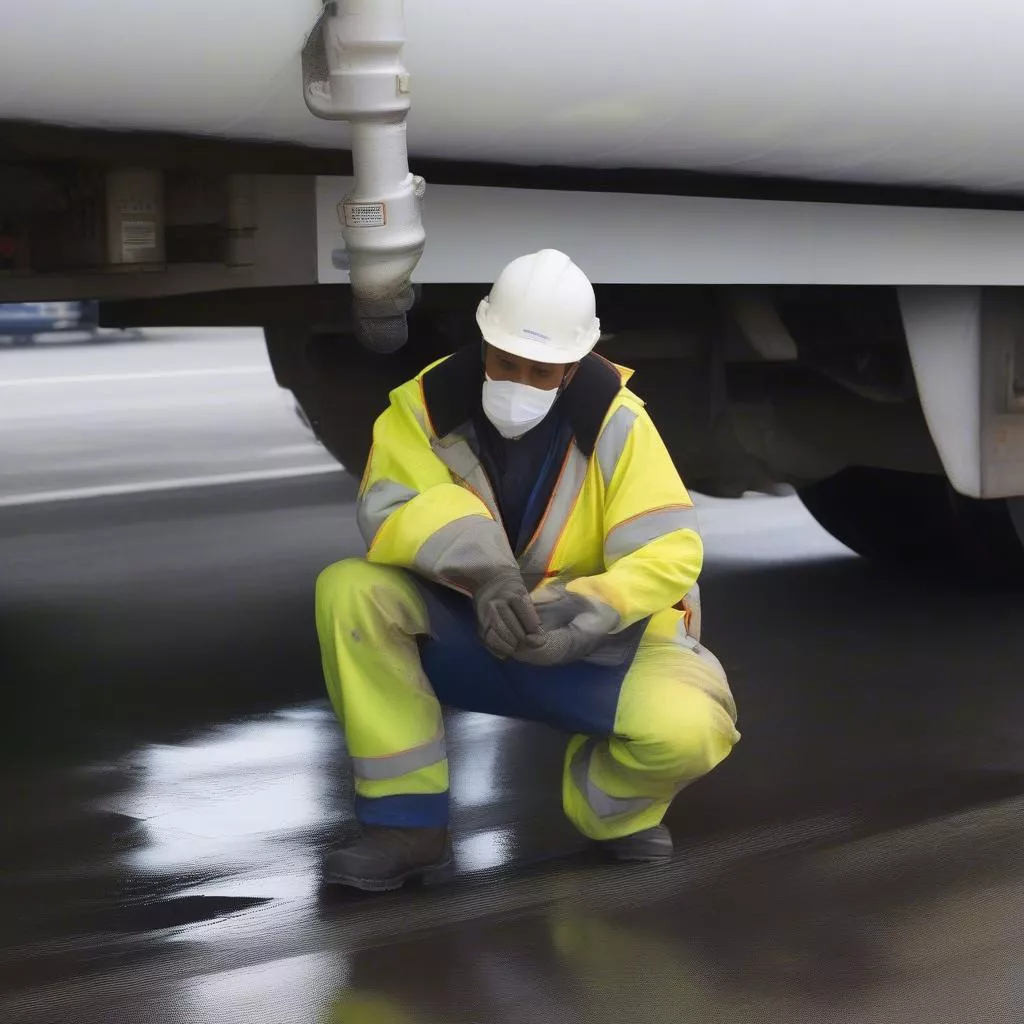
Inspecting the undercarriage of a gasoline tanker
3. Focus on Critical Components
Carefully examine the fuel tank, fuel lines, braking system, and tires. Look for cracks, leaks, or trapped debris.
4. Pay Attention to Unusual Sounds and Smells
With the engine running, listen for unusual noises from underneath. If you detect a strong gasoline smell, immediately turn off the engine and leave the area.