Electric vehicle (EV) charging is crucial to understand before making the switch to electric mobility. This guide provides a comprehensive overview of charging methods, charger types, costs, and essential safety tips for EV charging. It’s more than just plugging in and waiting; it involves understanding technical aspects and strategies to optimize battery performance and longevity.
EV Charging Methods Explained
Currently, there are three primary EV charging methods: Level 1 (slow charging), Level 2 (fast charging), and Level 3 (DC fast charging). Level 1 typically uses a standard 120V household outlet and takes the longest to fully charge a battery. Level 2 utilizes a 240V outlet, significantly reducing charging time. Level 3 employs high voltage DC power, enabling rapid charging, although not all EVs support this method. Choosing the right method depends on your driving habits and vehicle type.
Types of EV Chargers
Various EV charger types are available, including portable EV chargers, wall-mounted chargers, and public charging stations. Portable chargers offer convenience for on-the-go charging, while wall-mounted units are ideal for home charging. Public charging stations are increasingly common, making long-distance travel more feasible. Selecting the right charger depends on your individual needs and budget.
The Cost of EV Charging
EV charging costs depend on several factors, including the charging method, electricity rates, and the vehicle’s battery capacity. Generally, home charging is more affordable than fueling a gasoline-powered car. However, public charging costs can vary depending on the provider.
How Long Does it Take to Charge an EV?
Charging time varies based on the charging method and battery capacity. Level 1 charging can take 8-12 hours for a full charge, while Level 2 typically requires a few hours. DC fast charging can replenish a battery in 30 minutes to an hour.
Essential EV Charging Safety Tips
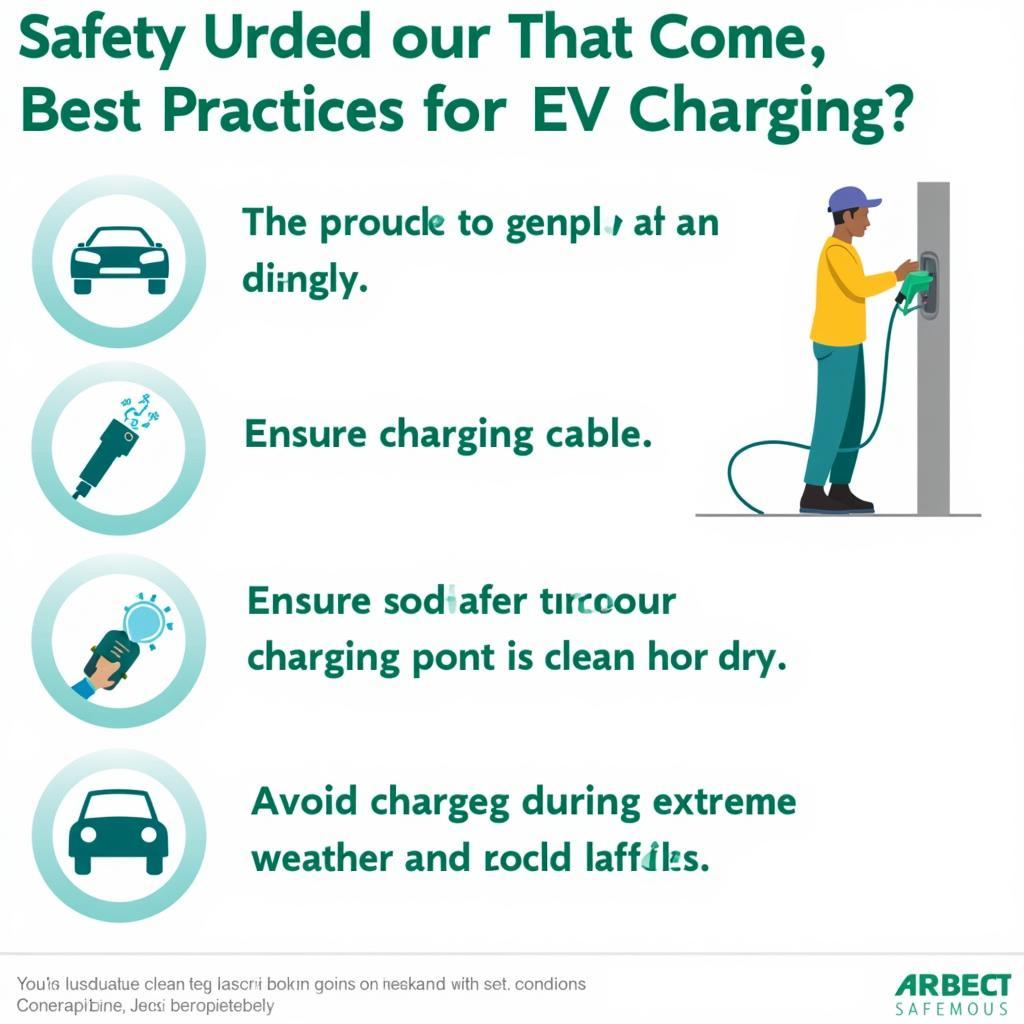
Safe and efficient EV charging requires attention to several key factors. Always use a charger compatible with your vehicle. Regularly inspect cables and outlets for damage. Avoid charging in extreme weather conditions, such as excessive heat or heavy rain.
EV charging safety tips
Conclusion
EV charging is an integral part of EV ownership and operation. Understanding charging methods, charger types, costs, and safety precautions will help you maximize your EV experience. The increasing availability and convenience of EV charging contribute to the sustainable development of the automotive industry.
FAQ
- Is EV charging expensive?
- Can I charge my EV at home?
- How many types of public EV charging stations are there?
- How long does it take to charge an EV?
- What safety precautions should I take when charging my EV?
- Is EV charging safe?
- Where can I find EV charging stations?
More Questions to Consider
- How do I find the nearest EV charging station?
- What types of electric trucks are currently available?
Related Articles
Call to Action:
Need assistance? Contact us at Phone: 0968239999, Email: [email protected] Or visit us at: TT36 – CN9 Road, Tu Liem Industrial Zone, Phuong Canh Ward, Nam Tu Liem District, Hanoi. We have a 24/7 customer support team.