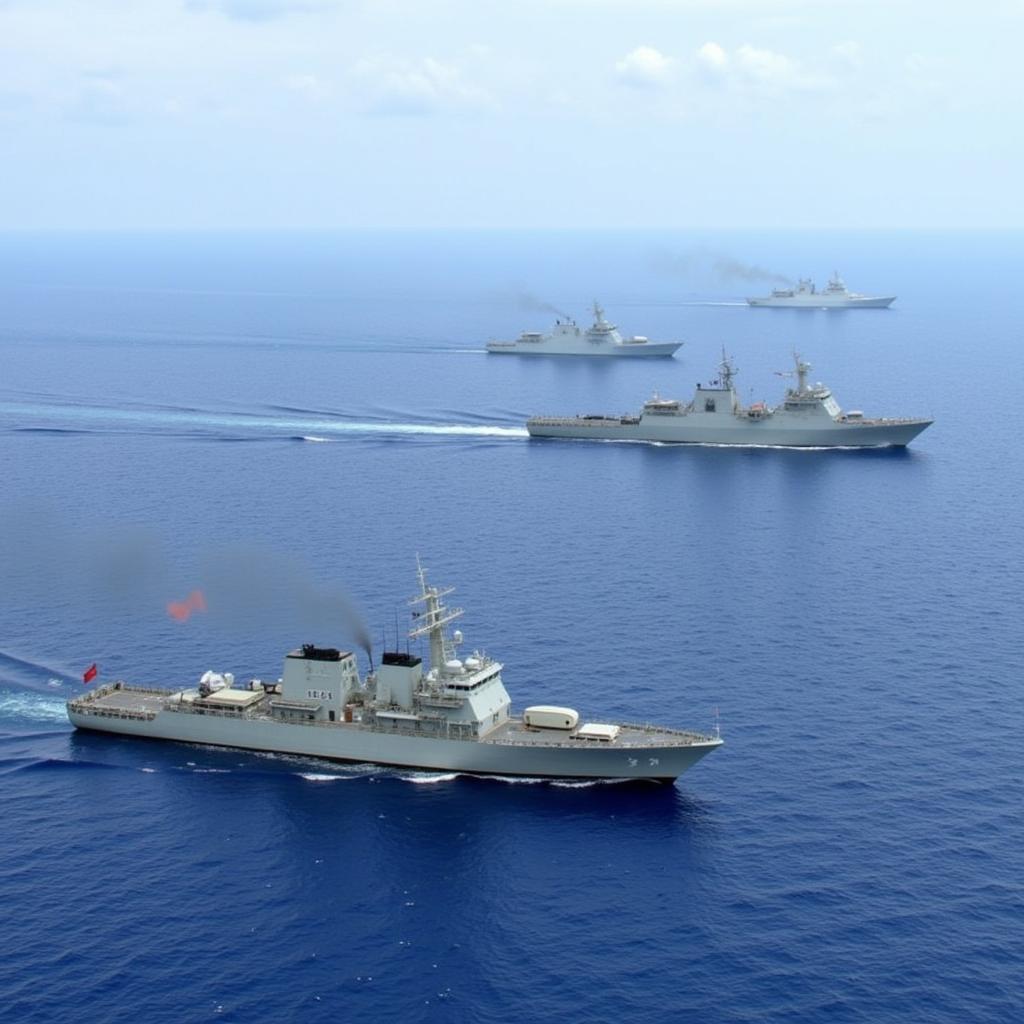
Vietnam’s South China Sea policy consistently emphasizes safeguarding sovereignty while maintaining regional peace and stability. This article delves into the policy, clarifying Vietnam’s stance on this crucial issue.
The Importance of the South China Sea Policy for Vietnam
With a coastline exceeding 3,260 km, Vietnam is a coastal nation for which the South China Sea holds immense economic and security significance. A robust South China Sea policy is thus vital. This policy articulates Vietnam’s position on maritime sovereignty and its commitment to peace and international cooperation. A clear and consistent policy enables Vietnam to protect its national interests while contributing to regional stability and development.
Fundamental Principles of Vietnam’s Policy
Vietnam’s South China Sea policy is grounded in international law, particularly the 1982 United Nations Convention on the Law of the Sea (UNCLOS). Vietnam asserts its sovereignty over the Paracel and Spratly Islands and advocates for peaceful dispute resolution through negotiation and dialogue. It also supports international cooperation in marine environmental protection and sustainable economic development. Adherence to international law and prioritizing dialogue are fundamental to building trust and fostering regional cooperation. You can learn more about other policies at fishery insurance policy thesis.
Dialogue and International Cooperation
Vietnam prioritizes dialogue and international cooperation in addressing South China Sea issues. It actively participates in regional and international forums, promoting collaboration with countries worldwide in marine environmental protection, search and rescue, and anti-piracy efforts. Vietnam believes that international cooperation is key to maintaining peace, stability, and ensuring the sustainable development of the South China Sea.
International cooperation in the South China Sea: The solution for peace and stability
Challenges and Opportunities in Policy Implementation
Implementing Vietnam’s South China Sea policy faces challenges, including unilateral actions, militarization, and sovereignty disputes. However, opportunities exist to foster cooperation and maintain regional peace. Vietnam must remain steadfast in its policy, strengthening cooperation with regional and international partners for peaceful and sustainable dispute resolution. Simultaneously, it needs to enhance maritime law enforcement and island defense capabilities. Learn about the antonym of policy for a broader perspective.
Protecting Sovereignty and National Interests
Protecting sovereignty and national interests in the South China Sea is Vietnam’s top priority. Vietnam firmly asserts its sovereignty over the Paracel and Spratly Islands and resolutely opposes any infringement upon its sovereignty and interests. It will continue employing peaceful measures consistent with international law to protect these vital interests.
Conclusion
Vietnam’s South China Sea policy demonstrates its unwavering commitment to safeguarding sovereignty, maintaining peace, and ensuring regional stability. Vietnam pledges adherence to international law, promoting dialogue and international cooperation for peaceful dispute resolution. More information on the policy can be found at learn about policy slideshare.net. Implementing this policy not only protects Vietnam’s national interests but also contributes to the sustainable development of the South China Sea region.
FAQ
- What principles underpin Vietnam’s South China Sea policy?
- What is Vietnam’s stance on resolving disputes in the South China Sea?
- What actions has Vietnam taken to promote international cooperation in the South China Sea?
- What is the biggest challenge to implementing Vietnam’s South China Sea policy?
- What are Vietnam’s plans to protect its sovereignty and national interests in the South China Sea?
- How can I learn more about the conclusion of the exchange rate adjustment policy?
- Where can I find a PowerPoint template on tax policy?
You can learn more about truck-related issues on our website.
For assistance, please contact us at Phone: 0968239999, Email: [email protected] or visit us at: TT36 – CN9 Road, Tu Liem Industrial Zone, Phuong Canh Ward, Nam Tu Liem District, Hanoi. We have a 24/7 customer support team.









