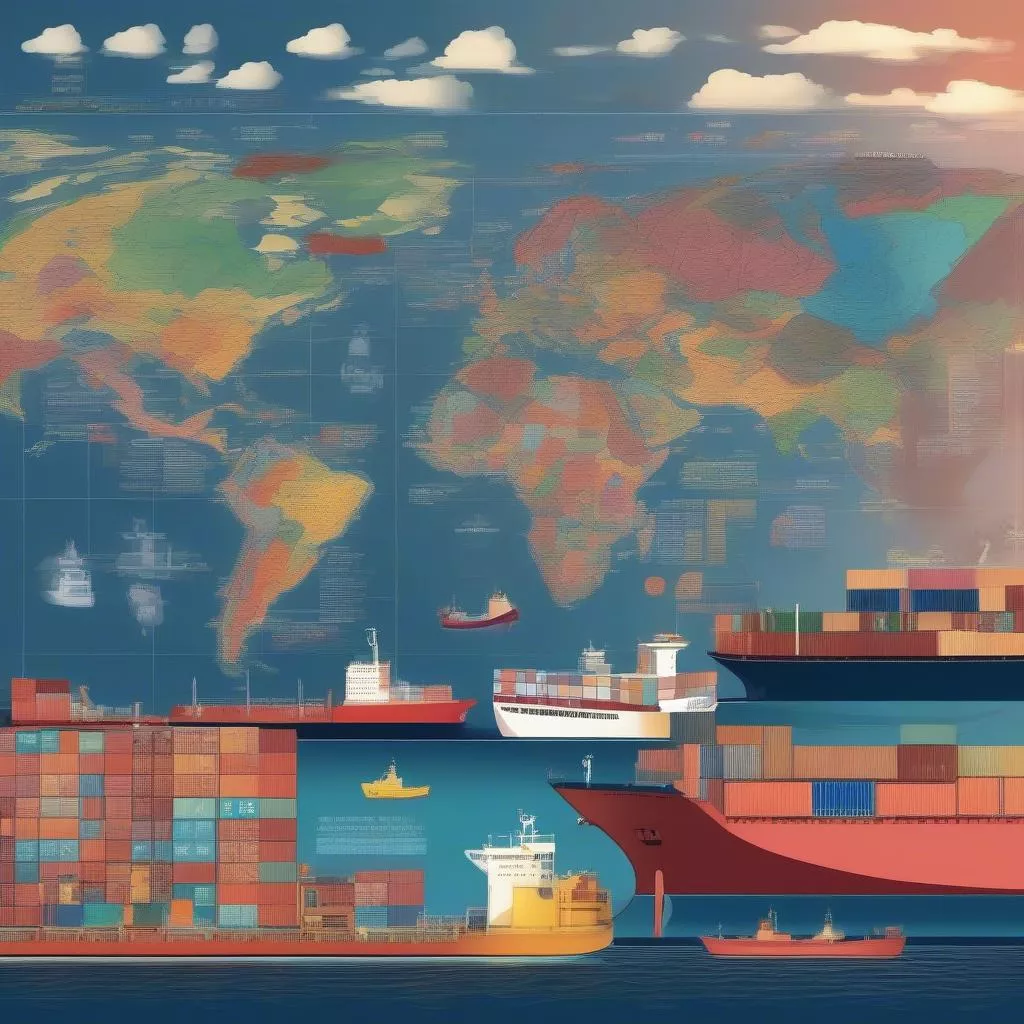
Have you ever wondered what secrets lie behind the statistics of maritime shipping? Can these numbers reveal hidden stories within the flow of international trade?
The Significance of “Maritime Shipping Data”
The question “Maritime Shipping Data” holds immense importance in the realm of international commerce. It’s not just a collection of dry numbers, but rather a testament to the growth of the maritime transport industry, reflecting a comprehensive picture of global import and export activities.
Who Asks This Question?
This question is frequently posed by the following groups:
- Importers and Exporters: They need a clear understanding of import/export volumes, shipping costs, and transit times to develop effective business strategies.
- Logistics Providers: They need to analyze maritime shipping data to forecast market demand, devise optimal transportation solutions, and enhance operational efficiency.
- Governments: They need to monitor maritime shipping data to assess economic conditions and formulate appropriate policies for the development of the maritime transport sector.
- Researchers: They study maritime shipping data to understand market trends and make forecasts about the maritime industry.
The Current State of the Question:
According to statistics from the International Maritime Organization (IMO), global maritime cargo volumes reached impressive figures in 2022, reflecting a strong recovery after the pandemic.
The Importance of the Question:
Grasping maritime shipping data is crucial. It empowers businesses to make informed and effective decisions.
Answering the Question: What is “Maritime Shipping Data”?
Maritime shipping data is a collection of information regarding the volume, type of goods, shipping routes, transit times, shipping costs, vessels, and more, all related to the movement of goods by sea.
Types of Maritime Shipping Data:
There are various types of maritime shipping data, including:
- Cargo Volume Data: The quantity of goods transported by type, route, and country.
- Shipping Route Data: The number of containers shipped on each sea route, transit times, and freight rates.
- Vessel Data: The number of active vessels, their carrying capacity, type, and age.
- Shipping Cost Data: Freight rates, insurance costs, loading and unloading charges, handling fees, etc.
- Transit Time Data: The time taken for goods to travel from the port of origin to the port of destination, including loading/unloading and waiting times.
Data Sources:
Maritime shipping data can be gathered from various sources, such as:
- Regulatory Bodies: Vietnam Maritime Administration, Ministry of Transport, International Maritime Organization, etc.
- Shipping Companies: COSCO, Maersk, MSC, etc.
- Logistics Companies: DHL, FedEx, UPS, etc.
- Specialized Websites: World Shipping Council, Lloyd’s List, etc.
Benefits of Collecting and Analyzing Maritime Shipping Data:
- Market Demand Forecasting: Understanding market trends and predicting future cargo volumes.
- Optimizing Shipping Solutions: Selecting appropriate shipping routes and vessel types, optimizing transit times and shipping costs.
- Improving Operational Efficiency: Reducing waiting times, minimizing shipping costs, and enhancing competitiveness.
Frequently Asked Questions about “Maritime Shipping Data”
Question 1: How can I learn about maritime shipping data?
You can find information on maritime shipping data from the following sources:
- Official Websites of Regulatory Bodies: Vietnam Maritime Administration, Ministry of Transport, International Maritime Organization, etc.
- Specialized Websites: World Shipping Council, Lloyd’s List, etc.
- Market Reports: Maritime market reports, shipping market reports, etc.
- Logistics Companies: DHL, FedEx, UPS, etc.
Question 2: How can I analyze maritime shipping data?
To analyze maritime shipping data, you can utilize data analysis tools such as:
- Spreadsheet Software: Excel, Google Sheets, etc.
- Statistical Software: SPSS, R, etc.
- Reporting Software: Tableau, Power BI, etc.
Question 3: What is the significance of maritime shipping data for import/export businesses?
Maritime shipping data is crucial for import/export businesses, enabling them to:
- Choose Suitable Shipping Routes: Based on transit times and freight rates, they can select the most efficient shipping routes.
- Forecast Market Demand: Understand market trends and predict future cargo volumes.
- Control Costs: Minimize shipping costs, insurance costs, loading and unloading charges, etc.
- Enhance Operational Efficiency: Increase competitiveness in the market.
Question 4: How does maritime shipping data impact the economy?
Maritime shipping data significantly impacts the economy, reflecting:
- The Development of the Maritime Transport Industry: It indicates the growth of the maritime transport sector, contributing to the nation’s economic growth.
- Import and Export Activities: It reflects the country’s import and export activities, showcasing its production and trade capabilities.
- The Labor Market: It reveals the demand for human resources in the maritime industry, contributing to labor market growth.
- Economic Policies: It serves as a basis for the government to formulate appropriate policies for the development of the maritime industry.
Internal Links:
- Learn more about truck license plates here: https://xetaihanoi.edu.vn/bien-so-cac-tinh-thanh-pho/
- Learn more about using SVM for license plate data classification here: https://xetaihanoi.edu.vn/dung-svm-de-phan-lop-du-lieu-bien-so-xe/
Conclusion
Maritime shipping data is a valuable source of information, providing insights into international trade and the development of the maritime industry.
We wish you success in understanding and applying maritime shipping data!
Want to learn more about trucks? Contact us!
XE TẢI HÀ NỘI – Your Trusted Partner!
Hotline: 0968 239 999
Website: xetaihanoi.edu.vn
Maritime Shipping Data Chart Container Ship at Sea









