Vietnam’s automotive industry has been growing rapidly, with the presence of many major global automakers. However, the question “Why doesn’t Vietnam produce cars completely?” remains a common one. This article will delve into the core reasons, from technology and resources to policies, to clarify this issue.
Roadblocks on the Path to “Made in Vietnam” Cars
Car manufacturing is more than just assembling parts. It requires a complex industrial ecosystem, including advanced technology, a stable supply chain for components, a highly skilled workforce, and effective support policies. Similar to Truong Hai Auto Corporation, developing a proprietary car brand requires significant investment and a long-term strategy. So, what obstacles are preventing Vietnam from achieving this goal?
Technology and Research & Development (R&D)
One of the biggest challenges is the lack of core technology in automobile production. Vietnam has yet to master key technologies such as engines, transmissions, and electronic systems. This dependence on imported components leads to high product costs and difficulty competing in the international market. Investment in R&D remains limited, failing to generate the necessary technological breakthroughs.
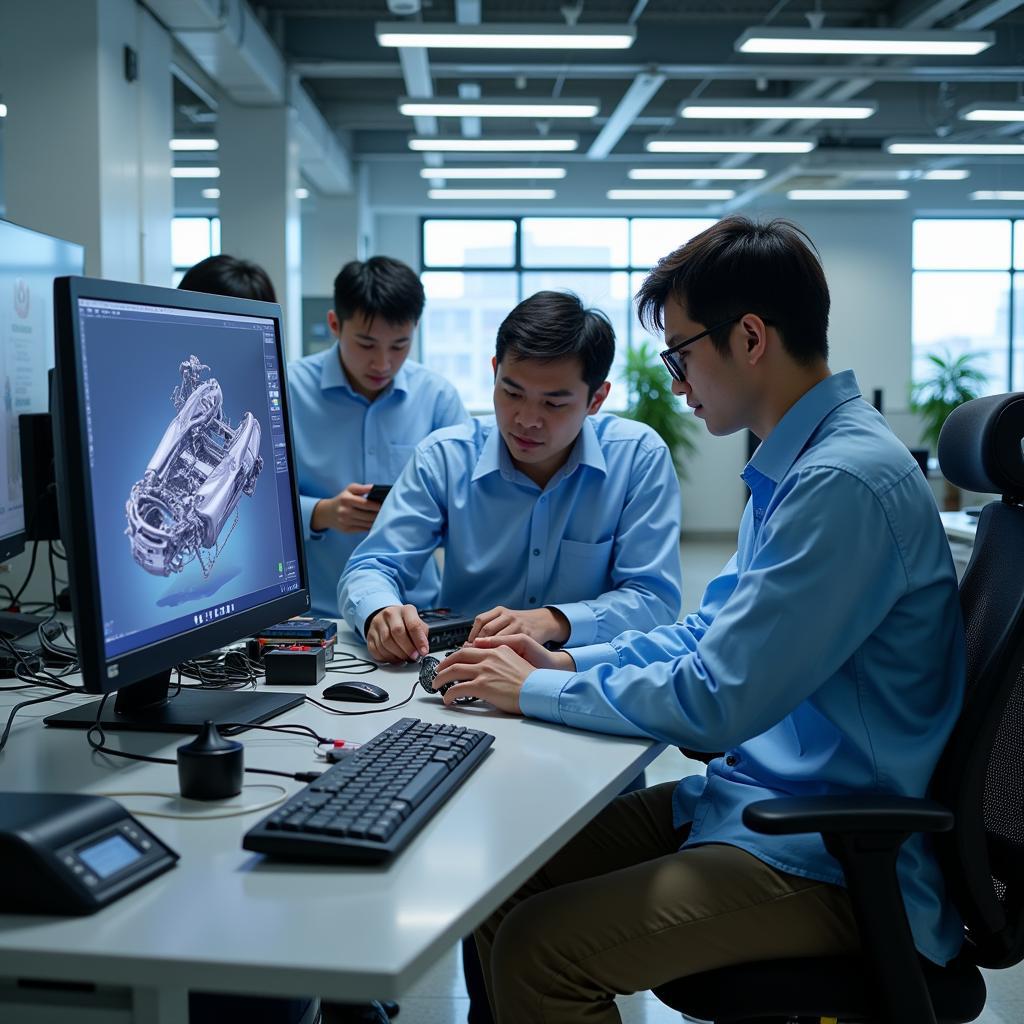
Automotive research and development in Vietnam
Component Supply Chain
The lack of a robust domestic auto parts supply chain is also a crucial factor. Although there are some component suppliers, their scale and quality still do not meet the requirements of the automotive industry. This forces manufacturers to import most components, creating dependence on foreign countries and affecting product costs.
Human Resources
The automotive industry requires a highly skilled workforce, well-trained in engineering, design, management, and production. Vietnam is facing a shortage of highly qualified personnel in this field. Training and attracting talent is a problem that needs to be addressed for sustainable development of the automotive industry.
Policies and Legislation
Government support policies play a crucial role in developing the automotive industry. While there have been policies to encourage investment, there are still limitations regarding taxes, administrative procedures, and support for research and development. Completing the legal framework and creating a favorable investment environment are key to attracting investors and promoting the industry’s growth. The global automotive market also influences Vietnam’s automotive development policies.
Overcoming Challenges, Towards the Future
So, what should Vietnam do to overcome these obstacles and produce “Made in Vietnam” cars?
- Invest heavily in R&D: Focus on researching and developing core technologies, collaborating with research institutes and universities to train personnel and transfer technology.
- Develop the component supply chain: Support domestic enterprises in enhancing component production capacity and attract foreign investment in this field.
- Train a high-quality workforce: Establish specialized training programs in automotive technology, cooperate with universities and businesses for practical training.
- Improve policies and legislation: Create a favorable investment environment, simplify administrative procedures, and support businesses in accessing capital and technology. Refer to the cheapest car prices in Vietnam today to understand the market.
Conclusion
Producing completely “Made in Vietnam” cars is a long and challenging journey. However, with the efforts of the government, businesses, and people, along with learning from the experience of developed countries, Vietnam can achieve this goal in the future. Understanding “why Vietnam doesn’t produce cars” completely is an important first step in shaping a sustainable development strategy for the Vietnamese automotive industry. Car warning light symbols is another topic you might be interested in.
FAQ
- When can Vietnam produce cars completely domestically?
- Which car brands are currently operating in Vietnam?
- What policies does the government have to support the automotive industry?
- How to attract foreign investment in the Vietnamese automotive industry?
- What is the potential for development of the Vietnamese automotive industry?
- What are the biggest challenges for the Vietnamese automotive industry?
- Which countries can Vietnam learn from in developing its automotive industry?
For assistance, please contact Phone Number: 0968239999, Email: [email protected] Or visit us at: No. TT36 – CN9 Road, Tu Liem Industrial Park, Phuong Canh Ward, Nam Tu Liem District, Hanoi. We have a 24/7 customer support team. You can also refer to beautiful 7-seater car images on our website.









