
“Car stalled in floodwaters,” “Car submerged up to its roof,”… you’ve likely seen these images in the news during heavy rains and storms. This is the result of “hydrolocking” – the nightmare of any driver, especially owners of large trucks navigating the streets of Hanoi. So, what exactly is hydrolocking? How can it be prevented and addressed? Let’s delve into the details with Hanoi Truck.
What is Hydrolocking?
Simply put, hydrolocking occurs when water enters a car’s engine through the air intake, causing the engine to become “waterlogged” and stall.
What is hydrolocking?
Imagine the engine as your heart and air as its lifeblood. When water enters the air intake, it’s like choking on water, unable to breathe. The engine can’t function properly, leading to a stall.
Why is Hydrolocking Dangerous?
Hydrolocking is more than just a stalled engine. It can have serious consequences:
- Engine Damage: Water can’t be compressed like air. When the pistons try to compress water, immense pressure builds up, bending connecting rods, breaking pistons, or even cracking the engine block.
- Electrical System Damage: Water can short-circuit the electrical system, damaging sensors and control units.
- Expensive Repairs: Repairing a hydrolocked engine and electrical system is incredibly costly, potentially reaching tens or even hundreds of millions of Vietnamese Dong.
- Safety Hazards: A stalled car in floodwaters poses significant danger to you and others.
Signs of a Hydrolocked Engine
- Sudden loss of power and engine stuttering.
- Engine stalling in floodwater.
- Difficulty restarting the engine after stalling.
- Unusual noises coming from the engine.
- Water entering the cabin.
Frequently Asked Questions About Hydrolocking
**
Can a Hydrolocked Engine Be Repaired?**
It can be repaired, but the cost is high and depends on the extent of the damage. In many cases, repair costs can reach 70-80% of the vehicle’s value, or even necessitate an engine replacement.
**
How Can Hydrolocking Be Prevented?**
- Monitor Weather Forecasts: Avoid driving in flood-prone areas during heavy rain.
- Choose Appropriate Routes: Avoid roads that frequently flood, especially low-lying areas like Nguyen Trai Street (Thanh Xuan District) and Le Van Luong Street (Hai Ba Trung District).
- Install a Snorkel: This raises the air intake, increasing the vehicle’s wading depth.
- Drive Carefully in the Rain: Maintain a safe distance from the vehicle ahead and reduce speed when driving through water.
**
What Should You Do If Your Car is Hydrolocked?**
- Do Not Attempt to Restart the Engine: This can cause further damage.
- Disconnect the Battery: To prevent electrical shorts and fires.
- Call for Help: Contact a towing service or a reputable repair shop for immediate assistance.
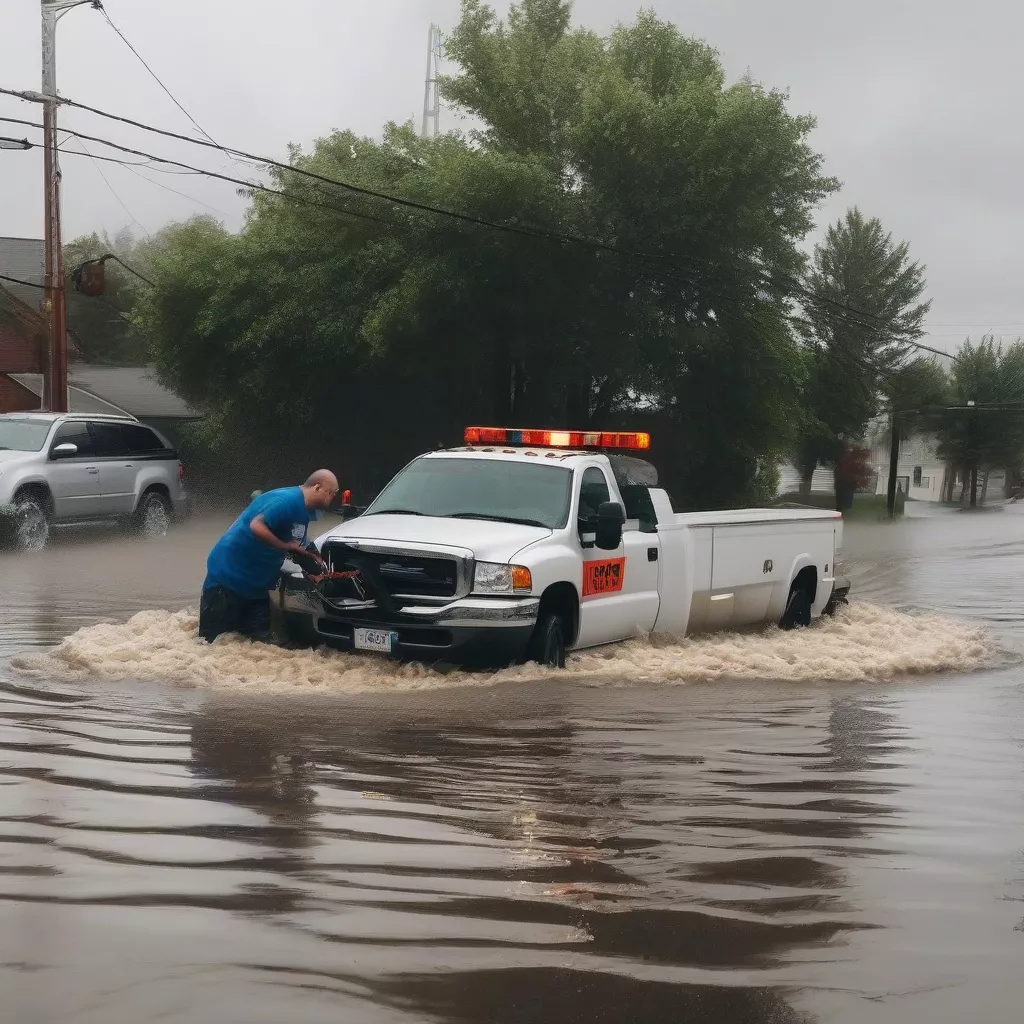 Calling for roadside assistance after hydrolocking.
Conclusion
Hydrolocking is a dangerous occurrence that can cause significant damage to your vehicle and your wallet. We hope this article has provided a clear understanding of what hydrolocking is, enabling you to take preventative measures and know how to respond if it happens.
To learn more about trucks and other useful automotive information, such as how to make a paper car (https://xetaihanoi.edu.vn/cach-lam-o-to-giay/) or how to park a car (https://xetaihanoi.edu.vn/cach-de-xe-o-to/), visit the Hanoi Truck website.









